New Spain rule 2026: Holidaymakers must show €1.089,90 minimum funds even for 4 days
By Farah Mokrani • Published: 07 Jun 2026 • 23:08 • 4 minutes read
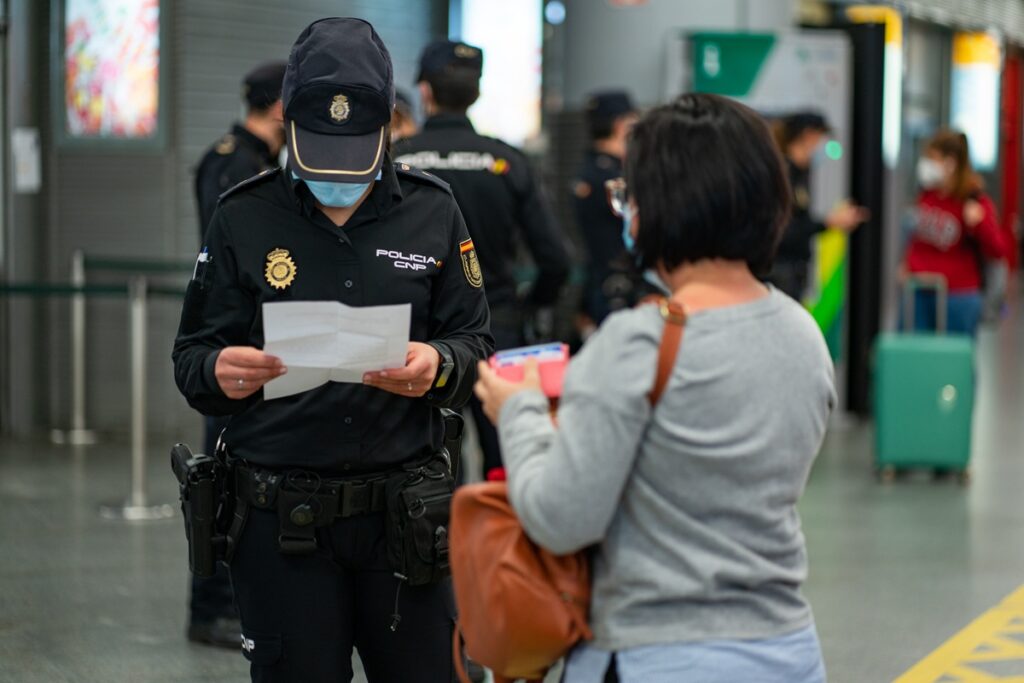
Border officers in Spain can ask non EU travellers to provide proof of sufficient funds for their stay. Credit : Raul Revuelta, Shutterstock
A four day city break doesn’t sound like the sort of trip that requires more than €1,000 sitting in your account.
Yet under the financial requirements applied by Spanish border authorities, some non EU travellers arriving in Spain can be asked to prove they have access to at least €1.089,90, even if they’re only planning to stay for a few days.
The rule has been on the books for years, but it has attracted fresh attention after reports emerged of travellers being refused entry at Málaga Airport during Easter 2026. At the same time, Europe’s new digital border system has changed how entry refusals are recorded, making border checks far more visible than they used to be.
For many holidaymakers, the surprise is not that Spain can ask for proof of funds. It’s the amount involved.
Most people assume authorities simply calculate a daily budget and move on. The reality is slightly different.
Why a short trip can still trigger a €1.089,90 requirement
Spain’s financial entry rules are based on two figures.
The first is a daily amount. In 2026, travellers may be required to show they have access to €122 per day for the duration of their stay.
The second figure is the one catching people off guard.
Spanish regulations also establish a minimum amount of €1.089,90. That minimum applies even when the daily calculation would result in a lower figure.
Imagine someone flying to Barcelona for a long weekend.
Four days at €122 per day would come to €488. However, and because that amount falls below the minimum threshold, border officers can still ask for evidence that the traveller has access to €1.089,90.
The same situation applies to many short holidays.
A five day trip comes to €610. A seven day stay comes to €854.
Both remain below the minimum threshold.
Only when the daily calculation exceeds €1.089,90 does the required amount start increasing beyond that figure.
For example, a ten day stay would require proof of at least €1,220.
The purpose of the rule is to ensure visitors have sufficient means to support themselves during their stay and will not become dependent on public resources.
What travellers can actually use as proof
One of the biggest misconceptions is that visitors must arrive carrying more than €1,000 in cash.
That is not what the rules say.
Spanish authorities accept several different ways of demonstrating financial means.
Cash remains one option, but it is far from the only one.
Travellers can also use payment cards accompanied by supporting documentation, traveller’s cheques and official bank statements showing available funds.
For business travellers, a company sponsorship or invitation letter may also be relevant, particularly when accommodation and travel expenses are being covered by an employer.
Where some visitors get caught out is documentation.
According to official Spanish guidance, online banking screenshots and simple bank letters are not among the preferred forms of proof. Border authorities generally expect official documentation capable of demonstrating available funds.
Most travellers will never be asked to show any of this. But if the question does come up, having evidence readily available can make the process much smoother.
Why 2026 feels different from previous years
The renewed focus on proof of funds is happening at the same time Europe is changing the way it manages its external borders.
On 10 April 2026, the Entry Exit System, commonly known as EES, became fully operational across the Schengen Area.
For travellers, the most visible change is the disappearance of passport stamps.
Instead, non EU visitors are now registered digitally through biometric data, including fingerprints and facial recognition information.
Every entry and exit is recorded electronically.That means border checks are no longer simply a matter of glancing at a passport and adding a stamp.
The new system creates a digital travel record that can be accessed by border authorities throughout the Schengen Area.
Another change is also approaching.
The European Travel Information and Authorisation System, known as ETIAS, is expected to launch later in 2026 before eventually becoming mandatory after a transition period.
When that happens, millions of visa exempt travellers, including British visitors, will need to obtain travel authorisation before boarding a flight to Europe.
Taken together, these changes are creating a travel environment where preparation matters more than it did a few years ago.
Most visitors will continue to enter Spain without any issues. But travellers who assume a passport is the only document they need may discover that border officers have additional questions.
And if those questions involve proof of funds, the amount expected may be considerably higher than many people realise.
Q&A section
Do I need to carry €1.089,90 in cash?
No. The rules refer to available financial resources, not cash alone. Official bank statements and other accepted documents may also be used.
Who can be asked to prove sufficient funds?
The requirement generally applies to non EU travellers entering Spain under the Schengen rules.
Does the rule affect British travellers?
Yes. Since Brexit, British citizens are treated as third country nationals for Schengen border purposes.
Can Spain refuse entry if I cannot prove sufficient funds?
Border officers have the legal authority to refuse entry if entry requirements are not met.
What is EES?
The Entry Exit System is the EU’s new digital border system that records biometric information and border crossings for non EU travellers.
What is ETIAS?
ETIAS is a forthcoming travel authorisation system for visa exempt travellers visiting Europe. It is expected to begin rolling out later in 2026.
Will every traveller be asked for proof of funds?
No. Checks are carried out at the discretion of border authorities, but travellers should be prepared to provide evidence if requested.
Follow Euro Weekly News on Google News
Get breaking news from Spain, travel updates, and expat stories directly on your Google News feed.
Follow on Google NewsSign up for personalised news
Subscribe to our Euro Weekly News alerts to get the latest stories into your inbox!
By signing up, you will create a Euro Weekly News account if you don't already have one. Review our Privacy Policy for more information about our privacy practices.



Farah Mokrani
Farah is a journalist and content writer with over a decade of experience in both digital and print media. Originally from Tunisia and now based in Spain, she has covered current affairs, investigative reports, and long-form features for a range of international publications. At Euro Weekly News, Farah brings a global perspective to her reporting, contributing news and analysis informed by her editorial background and passion for clear, accurate storytelling.
Comments