San Juan 2026: the night of fire and water that lights up the Spanish summer
By Molly Grace • Published: 08 Jun 2026 • 11:36 • 4 minutes read
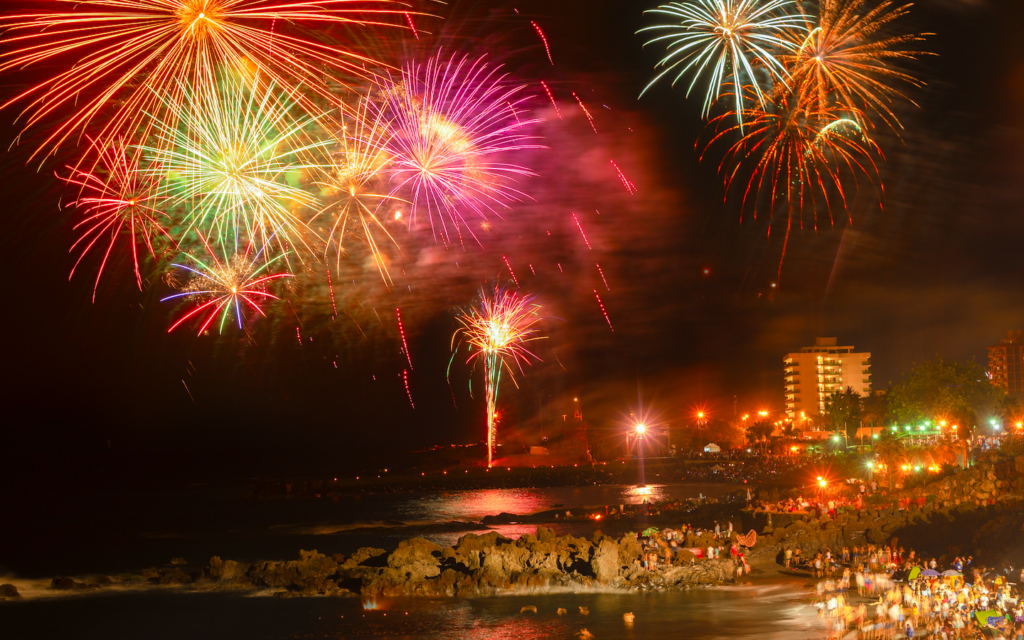
In Galicia, San Juan is often celebrated with coastal bonfires and traditional foods. Photo credit: Neirfy/Shutterstock
Bonfires on the beach, midnight swims, fireworks and thousands of people celebrating until sunrise. Across Spain, the night of San Juan returns on June 23, bringing one of the country’s biggest summer traditions to coastal resorts, cities and villages alike.
As summer arrives in Spain, communities across the country prepare for one of its most distinctive seasonal celebrations, San Juan (Saint John), a night marked by fire, water and a long-standing traditions, taking place on the night of June 23 to 24. While today it is associated with beaches, bonfires and get togethers, its origins predate Christianity and are closely linked to ancient solstice traditions across Europe, think of it as a summer New Years celebration.
Historically, many of the rituals now associated with San Juan are thought to derive from pagan, pre-Christian seasonal customs marking the summer solstice. These celebrations focused on fire and water as symbolic elements of purification, renewal and protection. When Christianity spread through the Iberian Peninsula, the festival was gradually associated with the feast day of Saint John the Baptist, whose official liturgical celebration falls on June 24.
Over time, earlier solstice practices and Christian observance merged into a single cultural tradition that varied significantly by region.
Whether you are living in Spain or visiting for the summer, San Juan is one of the few nights of the year where beaches across the country stay packed until dawn.
What is San Juan and why is it celebrated in Spain?
The most recognisable element of San Juan celebrations across Spain is the lighting of bonfires on beaches, in plazas (town squares) and neighbourhood streets. These fires are traditionally lit on the evening of June 23 and are often accompanied by music, food and gatherings that continue into the early hours of the morning.
One of the most widespread customs involves jumping over the bonfires, a ritual believed in some traditions to bring good fortune or ward off misfortune. In other areas, people write down negative thoughts or experiences from the past year and burn them in the flames as a symbolic act of letting go.
Water also plays a central role in the celebrations. In coastal regions, it is common for people to run into the sea at midnight, a practice associated with purification and renewal. In some inland towns, fountains, rivers or water-based events are incorporated into local festivities, reflecting the same symbolic connection.
Where San Juan is celebrated most in Spain
San Juan is not a single unified festival but rather a mix of regional traditions that share a common date and symbolic framework. In the Valencian Community, for example, the celebration is closely tied to large-scale artistic and pyrotechnic events. In Alicante, the festival known as Las Hogueras de San Juan (the bonfires of Saint John) features elaborate sculptures made of wood and papier-mâché, which are displayed throughout the city before being burned culminating in what is known as the cremà.
In Galicia, San Juan (known there as San Xoán), is often celebrated with coastal bonfires and traditional foods, while in Cataluña and Barcelona, beaches become filled with people gathering for fireworks, music and midnight bathing.
In parts of Andalucía, village and town celebrations may include processions, music and community gatherings that extend beyond a single night. In Inland Andalucia, the village of Lanjarón in Granada celebrates San Juan with a ”water fight” most commonly known as the ‘Carrera del Agua’, where residents and visitors take part in throwing water through the streets using buckets, hoses and water containers.
Talking to Euro Weekly News, Kelly Paige tells us: “I love going to the Carrera del Agua each year. However, it’s not the same as it was 15 years ago; since it’s become popular, it has so many more rules, regulations and limitations. That being said, it is absolute madness and extremely exhilarating. You must come prepared with buckets and water guns, and also spare warm clothes and shoes in the car, as you will be freezing afterwards but definitely cleansed!”
What tourists and expats should know before celebrating San Juan
Across Spain, San Juan celebrations are generally open to public participation, though the nature of involvement varies depending on the location. On beaches, visitors can typically join informal gatherings around bonfires, but keep in mind that some bonfires may belong to families or friends who are celebrating privately. You can also bring food and drink, a towel if you are planning on taking a midnight dip, and some warm clothing for the chillier early hours of the morning. It is also not advised to sleep on the beach, as tempting as it may be at the time; sleeping on beaches is against the law in Spain and can result in a fine of up to €1,500. It is also not advisable to do what I did, which was dig potholes in the sand for all the borrachos (drunks) to fall into, yes, it was highly entertaining at the time, but…
In cities, municipal authorities often organise official events with controlled bonfire zones, music performances and supervised public spaces. These provide structured ways for residents and visitors to take part safely, particularly in urban environments where open fires are restricted.
In coastal towns such as Jávea, long-term visitors often describe San Juan as a highly social celebration taking place both on the beaches and in the streets, where bonfires, gatherings and social events continue late into the night. Alice Fontain, who has attended San Juan events there for several years, tells us: “I’ve participated in the San Juan rituals in Jávea for the past four years. It’s a moment of unity and celebration for the whole community regardless of where you’re from. If I can recommend anything it would be: girls, do not wear long fine dresses or anything that is flammable, I learnt my lesson the first year.”
Why San Juan marks the start of summer in Spain
Although San Juan varies widely across Spain, it consistently marks a symbolic transition into summer. Its combination of ancient seasonal pagan symbolism and local cultural adaptation has allowed it to remain one of the country’s most widely recognised annual celebrations.
From bonfires on Mediterranean beaches to variations in inland towns, the festival reflects both regional diversity and shared cultural heritage. What unites these celebrations is the emphasis on collective experience, seasonal change and long-standing traditions that continue to evolve while remaining rooted in centuries of history.
Follow Euro Weekly News on Google News
Get breaking news from Spain, travel updates, and expat stories directly on your Google News feed.
Follow on Google NewsSign up for personalised news
Subscribe to our Euro Weekly News alerts to get the latest stories into your inbox!
By signing up, you will create a Euro Weekly News account if you don't already have one. Review our Privacy Policy for more information about our privacy practices.


Molly Grace
Molly is a British journalist and author who has lived in Spain for over 25 years. With a background in animal welfare, equestrian science, and veterinary nursing, she brings curiosity, humour, and a sharp investigative eye to her work. At Euro Weekly News, Molly explores the intersections of nature, culture, and community - drawing on her deep local knowledge and passion for stories that reflect life in Spain from the ground up.
Comments