Drivers are spotting speed cameras in the strangest places across Spain and many are not happy
By Farah Mokrani • Published: 17 Jun 2026 • 23:34 • 3 minutes read
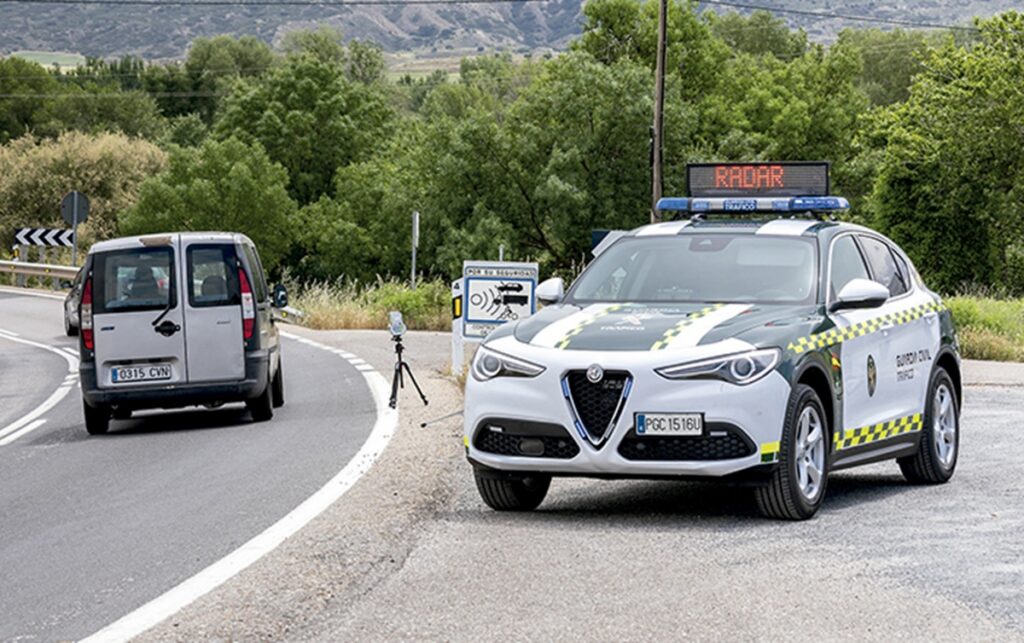
Spain's traffic authorities are expanding the use of mobile and harder to spot speed cameras. Credit : revista.dgt.es
A small black box hidden behind a kilometre marker in León has reignited a debate that never really goes away in Spain. The Guardia Civil is using a new generation of compact speed cameras that can be tucked behind road signs and roadside furniture, making them far harder for drivers to spot before it’s too late.
A driver passing through Hospital de Órbigo, a town in León province, noticed something unusual attached behind a roadside kilometre marker. It was not rubbish, a maintenance device or part of the sign itself. It was a speed camera.
Within hours, the image was circulating on social media, attracting thousands of comments. Some drivers called it a trap. Others shrugged and pointed out that anyone sticking to the speed limit had nothing to worry about.
Either way, the photo highlighted something many motorists are only just beginning to realise. Spain’s traffic authorities are increasingly using speed cameras that are designed to blend into their surroundings.
They’re smaller than many people expect, easier to move around and much harder to spot than the traditional radars drivers have become used to over the years.
Why drivers are suddenly talking about these cameras
Most motorists know where the fixed cameras are. Regular commuters often slow down automatically before reaching them. Navigation apps frequently warn drivers about their location and local motorists usually know every enforcement point on their route.
These newer devices change that.
Measuring roughly 40 centimetres and weighing around two kilos, they can be transported easily and installed in places where larger equipment would never fit.
That flexibility allows officers to position them behind signs, next to roadside infrastructure or on small tripods that are difficult to notice from a moving vehicle.
Instead of encouraging drivers to slow down only at known radar locations, authorities want motorists to respect speed limits throughout the journey.
Traffic officers argue that road safety improves when drivers maintain a consistent speed rather than braking suddenly before a camera and accelerating again afterwards.
Many drivers understand the logic while others remain unconvinced. For them, a camera hidden behind a road sign feels very different from one clearly visible beside the carriageway.
The argument that keeps coming back
Every time a new radar appears, the same discussion follows : Is it really about safety, or is it about fines?
The question resurfaced almost immediately after the León photographs appeared online.
Some motorists argued that hiding cameras creates the impression that authorities are trying to catch drivers rather than prevent dangerous behaviour. Others responded that nobody receives a speeding fine without first choosing to exceed the limit.
The debate is unlikely to disappear because the figures involved are substantial.
Spain issued more than six million traffic fines in 2025, according to recent data. The DGT estimates that penalties are processed every few seconds somewhere in the country.
Madrid generated the highest revenue from traffic sanctions, with Barcelona following behind. Those numbers naturally attract attention and fuel suspicion whenever new enforcement technology is introduced.
Yet road safety campaigners point to a different statistic.
Excessive speed continues to play a role in serious and fatal accidents on Spanish roads, particularly on secondary routes where drivers may be tempted to exceed the limit.
From their perspective, the location of the camera matters far less than the behaviour it is intended to discourage.
Why motorists may see more of them
The appearance of these compact radars is not happening by chance. Spain has been steadily investing in smaller and more mobile enforcement systems.
Earlier this year, the purchase of additional dynamic radar units was confirmed through a public contract published in the BOE.
The Guardia Civil also continues to operate Velolaser devices, which have become familiar on roads across the country because of their portability and effectiveness.
Unlike fixed cameras, mobile radars do not have to be publicly identified in the same way. That gives officers far greater flexibility when deciding where to deploy them.
For drivers, it means the familiar strategy of slowing down only where a radar is expected may become less effective.
The reality is that many motorists will never notice the camera that photographs them. And that is precisely why these devices are attracting so much attention.
Whether they are viewed as an effective road safety tool or an unwelcome surprise waiting behind the next signpost probably depends on which side of the speeding ticket a person happens to be standing.
Follow Euro Weekly News on Google News
Get breaking news from Spain, travel updates, and expat stories directly on your Google News feed.
Follow on Google NewsSign up for personalised news
Subscribe to our Euro Weekly News alerts to get the latest stories into your inbox!
By signing up, you will create a Euro Weekly News account if you don't already have one. Review our Privacy Policy for more information about our privacy practices.





Farah Mokrani
Farah is a journalist and content writer with over a decade of experience in both digital and print media. Originally from Tunisia and now based in Spain, she has covered current affairs, investigative reports, and long-form features for a range of international publications. At Euro Weekly News, Farah brings a global perspective to her reporting, contributing news and analysis informed by her editorial background and passion for clear, accurate storytelling.
Comments