Paris takes the rare step of banning public drinking as Europe’s heatwave pushes hospitals to the limit
By Farah Mokrani • Published: 27 Jun 2026 • 0:06 • 4 minutes read
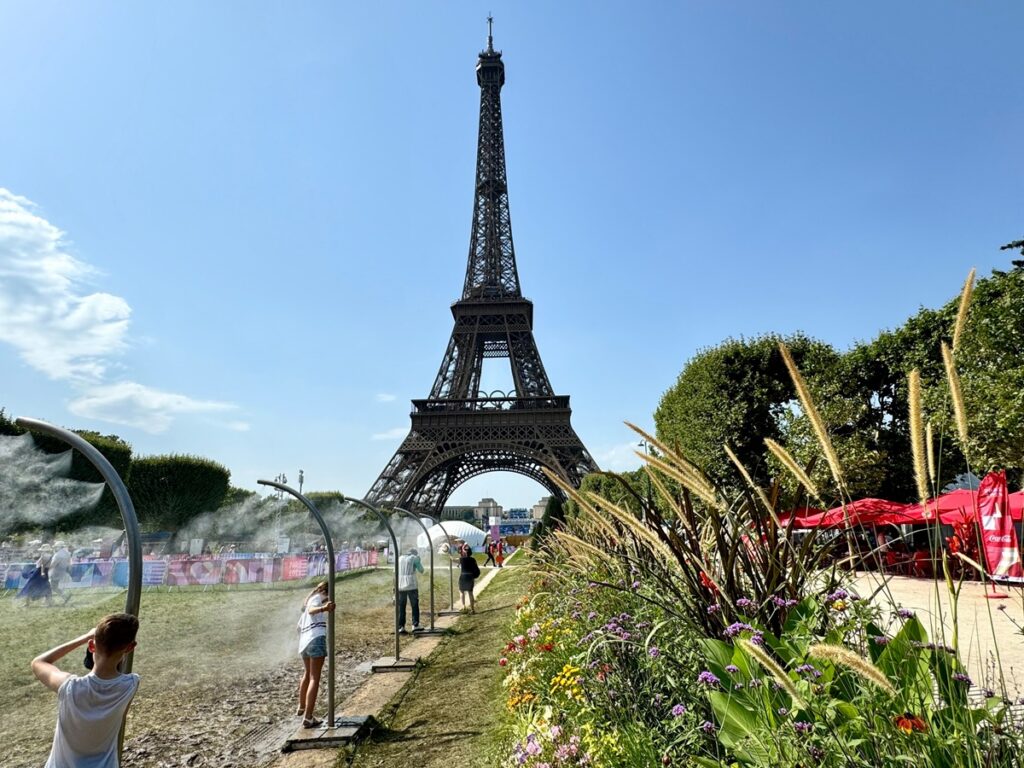
People seek relief from extreme heat near the Eiffel Tower as Paris introduces emergency heatwave measures. Credit : Here Now, Shutterstock
People planning a weekend in Paris will face temporary restrictions that have nothing to do with security or public events. As extreme temperatures continue to grip Europe, the French authorities have announced a ban on drinking alcohol in public and restrictions on takeaway alcohol sales in the capital.
The emergency measures come after officials warned that hospitals are under severe pressure as the heatwave continues, with ambulance crews responding to far more medical emergencies than usual.
The decision underlines how seriously French authorities are treating the current weather conditions. This is no longer simply a question of people feeling uncomfortable in unusually hot weather. Doctors are dealing with more heat related emergencies, intensive care units are filling up and health officials are urging people of every age to change their daily routines until temperatures fall.
Why Paris has introduced temporary alcohol restrictions
The measures will be in force over two consecutive nights.
From midday on Friday until 7am on Saturday, drinking alcohol in public spaces across Paris will be prohibited. The same restrictions will apply again from midday on Saturday until 7am on Sunday.
In addition, shops will not be allowed to sell takeaway alcohol between 6pm and 7am on both evenings.
The rules do not affect bars, cafés or restaurants, which can continue serving customers as normal.
According to the French authorities, the aim is to reduce the number of alcohol related incidents that could place even more pressure on emergency departments already dealing with the consequences of the heat.
Paris police chief Patrice Faure said hospitals in the capital were approaching saturation point.
To help cope with the situation, Prime Minister Sébastien Lecornu announced that France had raised its national health emergency response to its highest level. The move allows hospitals to increase staffing levels and organise resources to protect the most vulnerable patients during the heatwave.
The warnings coming from doctors have become increasingly direct.
Health Minister Stéphanie Rist said many people still believe that extreme heat mainly threatens older adults or those with existing health conditions. She stressed that this assumption is wrong.
According to Rist, young people have also suffered cardiac arrests during the current heatwave. She revealed that ambulance services in Paris dealt with four times the usual number of cardiac arrest cases over a single 24 hour period.
Officials have not released confirmed figures for deaths directly caused by the heat, but Paris deputy mayor Emmanuel Grégoire said mortality in the capital was rising.
Speaking on French television, he criticised people who continued jogging outdoors despite the temperatures, saying there was nothing wrong with taking a short break from exercise until conditions improved.
The message from public health officials has been simple. Drink plenty of water, avoid physical activity during the hottest hours of the day and do not assume that being young automatically protects you from the effects of extreme heat.
Spain already under intense heat, Germany prepares for the next blast of heat
Although France remains under intense heat, the weather pattern is beginning to shift.
Spain, which recorded 45.1C in Andújar earlier this week during its exceptional June heatwave, is expected to cool slightly as Atlantic air begins moving across the country.
Temperatures will remain high in many areas, with forecasts still reaching 38C or 39C, and the impact of the heat in Spain has already been significant.
The country’s MoMo mortality monitoring system estimates that 213 deaths recorded between Sunday and Wednesday could be linked to high temperatures. Of those, 95 occurred on Wednesday alone.
Germany could see temperatures reach 40C, while much of the Czech Republic is now under extreme heat warnings as forecasters expect the same hot air to spread across central Europe.
France also faces another challenge.
After days of exceptional heat, meteorologists are forecasting powerful thunderstorms across parts of the west of the country. Winds of up to 110 kilometres per hour are expected along sections of the Atlantic coast.
The first day of the Garorock Festival has already been cancelled because of the forecast, while temperatures could still climb to 42C before storms arrive.
The extreme weather has also affected France’s electricity network, with three nuclear power plants taken offline because of the heat.
Europe is seeing longer, hotter summers
The latest heatwave has once again highlighted how vulnerable Europe has become to prolonged periods of extreme temperatures.
According to the Copernicus Climate Change Service, Europe is warming faster than any other continent, with temperatures rising at roughly twice the global average.
That trend is bringing more frequent heatwaves, increasing pressure on healthcare systems and placing greater strain on water supplies and energy infrastructure.
Wildfires have also become a growing concern.
More than one million hectares burned across Europe last year, with Spain among the countries most severely affected.
For millions of people, the consequences of this week’s heatwave have been impossible to ignore. Schools have had to adapt, hospitals have activated emergency plans, festivals have been disrupted and governments have introduced measures that would once have seemed extraordinary for a spell of hot weather.
Health authorities across Europe continue to repeat the same advice. Stay hydrated, remain indoors during the hottest part of the day whenever possible and avoid strenuous physical activity until temperatures ease. With much of the summer still ahead, officials believe those precautions could become necessary more than once before the season comes to an end.
Follow Euro Weekly News on Google News
Get breaking news from Spain, travel updates, and expat stories directly on your Google News feed.
Follow on Google NewsSign up for personalised news
Subscribe to our Euro Weekly News alerts to get the latest stories into your inbox!
By signing up, you will create a Euro Weekly News account if you don't already have one. Review our Privacy Policy for more information about our privacy practices.



Farah Mokrani
Farah is a journalist and content writer with over a decade of experience in both digital and print media. Originally from Tunisia and now based in Spain, she has covered current affairs, investigative reports, and long-form features for a range of international publications. At Euro Weekly News, Farah brings a global perspective to her reporting, contributing news and analysis informed by her editorial background and passion for clear, accurate storytelling.
Comments