Terminal patients in Poland ask for the right to say goodbye to their pets
By Harry Dennis • Published: 27 Jun 2026 • 0:53 • 4 minutes read
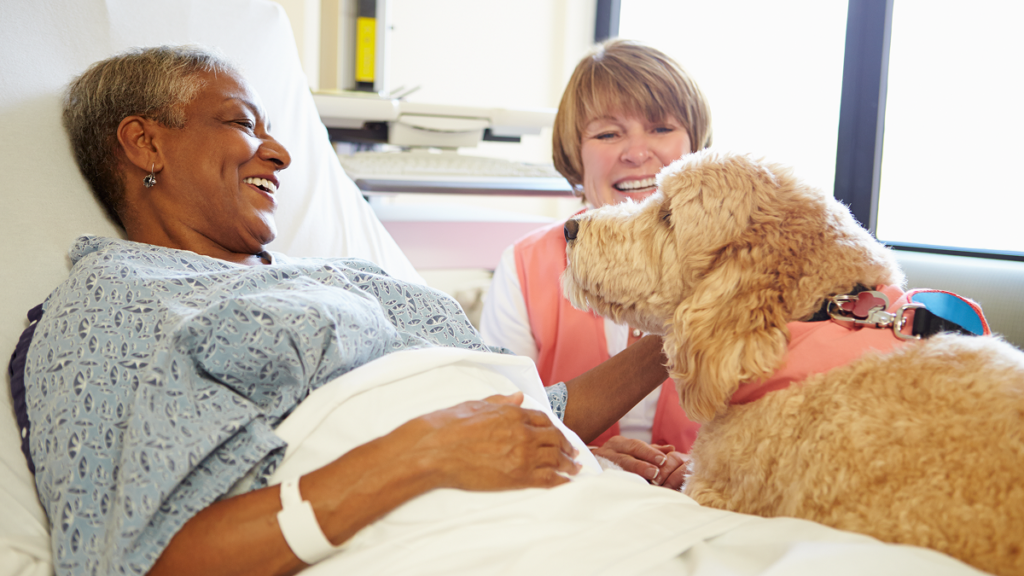
A final visit from a beloved pet can bring the feeling of home into the hospital. Credit: Monkey Business Images / Shutterstock
For some patients in hospice or palliative care, the hardest separation is not only from home, but from the animal that makes it one. A proposed law in Poland would give dying patients the right to receive pet visits, raising difficult questions for hospitals in Spain, the UK and across Europe.
One last pet visit can matter so much at the end of life
For many people, a dog or cat is not just a pet. It is another family member that follows them from room to room, loves unconditionally, waits by the door, sleeps beside the bed and somehow knows when we need their company.
In Poland the question being raised is if a dying patient should have to spend their final days cut off from the animal they love?
Polish MPs have proposed a legal change that would give patients in stationary hospices and palliative medicine wards the right to have contact with their domestic animals. The proposal would amend Poland’s Act on Patient Rights and the Patient Rights Ombudsman, meaning pet visits would no longer depend only on whether a hospital or hospice decides to allow them.
The debate has been shaped by deeply human cases in Warsaw. One woman with advanced cancer was reportedly more worried about the dog waiting at home than about herself. Another seriously ill patient was reunited with his cats in a palliative ward, a moment doctors said showed how much comfort an animal can bring when words are no longer enough.
In practice, the rule would affect the kind of moment that rarely fits neatly into hospital policy: a patient asking to see the dog that has slept beside them for years, or the cat still being cared for by relatives at home.
How Poland’s proposal would turn comfort into a patient right
The Polish proposal would not create an open-door rule for animals in hospitals. Managers would still be able to refuse or restrict visits logically where there are infection risks, safety concerns or practical barriers.
Hospitals also have to protect other patients, staff and visitors. While some wards care for people with weakened immune systems and others have strict hygiene rules or limited space.
But the important change is where the conversation begins. Instead of families asking for an exception, the patient’s need for contact with a beloved animal would be recognised in law.
That shift in the Polish case could influence other European countries to follow suit. It asks whether emotional comfort at the end of life should be treated as an optional extra, or as part of dignified care.
Patients in Spain depend completely on individual hospital rules
Spain does not appear to have a single national rule giving hospital patients a general right to see their pets. Instead, the answer depends on the hospital, the region and the patient’s condition.
In Andalucía, the Hospital Civil in Málaga launched “Tu mascota te acompaña”, meaning “Your pet accompanies you”, through its palliative care unit in 2025. The programme is aimed at terminal patients who have expressed the wish to say goodbye to their companion animal before their last day in hospital.
The scheme allows authorised and identified pets to visit under agreed safety rules. It is a compassionate model, but still a local programme rather than a national guarantee.
How UK patients face the same emotional uncertainty
In the UK, pet visits also depend heavily on local rules.
Royal College of Nursing guidance says patients’ own pet dogs are generally not permitted in healthcare settings, except in exceptional circumstances. Hospices and some care settings are among the places where such visits may be appropriate.
Some NHS hospital policies are more direct. Worcestershire Acute Hospitals NHS Trust, for example, permits domestic pets to visit end-of-life patients only, while also warning about infection, allergies and patient safety.
These uncertainties and lack of general standing rules could sound unreasonable and without sense. A patient is allowed many human visitors, but not the dog or cat that has been a part of their family and daily life for years.
Hospices are often more flexible than acute hospitals, but permission is still usually needed in advance. The visit may require veterinary documents, a lead or carrier, a responsible handler and agreement from staff.
Europe is slowly making space for animals in care
Other European countries show that the idea is spreading. In France, residents in care homes known as Ehpad and independent living residences can now keep pets under certain conditions linked to hygiene, safety and the resident’s ability to care for the animal.
French hospitals are also experimenting. In Paris, Pitié-Salpêtrière hospital has introduced a protocol allowing dogs and cats to visit hospitalised patients under strict hygiene conditions and individual assessment.
In Italy, some local health authorities permit dogs and cats to enter inpatient healthcare facilities if families meet set rules.
It would seem that Europe is beginning to recognise the emotional role of animals in illness, but remains to take any concrete action towards legitimising the issue.
How families can ask for permission for a visit
Families hoping to arrange a pet visit should ask as early as possible, especially if a patient is in palliative care or facing a long hospital stay.
Most hospitals that allow visits will want proof that the animal is healthy, vaccinated and under control. Visits may be refused if the patient is clinically unstable, in isolation, dependent on continuous oxygen, severely immunocompromised, allergic risk is high or the animal is likely to become distressed.
Poland’s proposal has put a quiet but painful question into public view. In the final days of life, should a pet be considered another familiar visitor, as it may be their strongest link to emotional connection and their home?
Follow Euro Weekly News on Google News
Get breaking news from Spain, travel updates, and expat stories directly on your Google News feed.
Follow on Google NewsSign up for personalised news
Subscribe to our Euro Weekly News alerts to get the latest stories into your inbox!
By signing up, you will create a Euro Weekly News account if you don't already have one. Review our Privacy Policy for more information about our privacy practices.





Harry Dennis
Born in the UK and raised on the Cádiz coast, Harry brings his background in design, music, and photography to his writing for Euro Weekly News, sharing stories that celebrate culture and lifestyle across Spain and beyond.
Comments