Morocco returns to GMT: could Europe finally end changing its clocks?
By Molly Grace • Published: 28 Jun 2026 • 3:04 • 4 minutes read
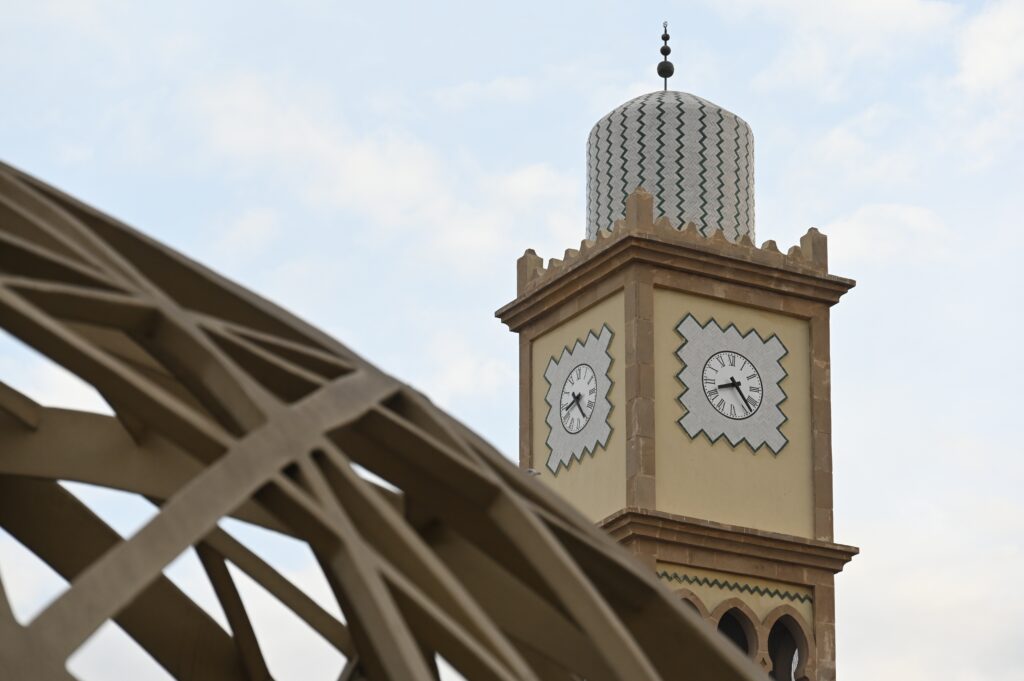
The European Union’s attempt to end seasonal clock changes highlighted this tension. Photo credit: hydebrink/Shutterstock
Morocco is set to move its clocks back by one hour after the summer of 2026, returning to Greenwich Mean Time (GMT) after around eight years on GMT+1. In practical terms, the country will move away from a near-permanent daylight saving system and reintroduce standard time during winter months.
The adjustment itself is simple: clocks go back one hour after the summer period ends. But the wider significance is less about the mechanics and more about what it signals. Time systems are rarely changed unless governments believe the trade-offs between daylight, productivity and coordination have shifted. Morocco’s decision suggests that balance has been reconsidered.
What is happening is a reversal of Morocco’s GMT+1 policy. How it works is a seasonal return to GMT after summer. Why it matters is that it reopens a wider question Europe has been unable to answer for years: whether seasonal clock changes still make sense, and if not, what should replace them.
Europe’s long-running debate on clock changes remains unresolved
Europe has been discussing the end of changing the clocks forward for years, but no reform has been implemented. In 2019, the European Union backed a proposal to stop changing clocks twice a year. The idea was to allow each member state to adopt a fixed time permanently, removing the seasonal shift between winter and summer.
On paper, the reasoning was straightforward. Clock changes were seen as increasingly outdated in a global economy where digital coordination matters more than local daylight savings. They were also criticised for being disruptive, particularly in the days immediately after the shift. But the proposal stalled, member states could not agree on a single approach. Some preferred permanent summer time, others preferred permanent winter time. Geography complicated the issue further, since daylight patterns vary significantly between northern and southern Europe.
As a result, the reform was left in limbo. No new system was agreed, and the existing cycle of changing clocks in March and October continues. This is the key contrast with Morocco. While Europe debates and delays, Morocco has reversed its approach and returned to a more traditional structure.
Why Morocco is moving away from GMT+1
Morocco adopted GMT+1 in 2018, largely to align more closely with European working hours and improve consistency in business and trade. In practice, it reduced time differences with key trading partners for much of the year. But over time, domestic concerns became more prominent than international alignment.
One of the main issues was the effect on daily routines during winter. Later sunrises meant darker mornings for schoolchildren and workers, which became a recurring public concern. While the system was designed for efficiency, it created friction in everyday life.
The return to GMT is therefore not a sudden shift but a correction. It prioritises natural daylight alignment during winter months, even if it reduces the year-round synchronisation with Europe. It also reflects a broader reality: time systems are not neutral. They shape behaviour, routines and even perceptions of the working day. When that balance feels off, governments eventually revisit the structure.
What Europe could realistically gain from ending clock changes
If Europe were to revisit and implement its stalled proposal, the potential benefits would be practical rather than symbolic. The most immediate advantage would be stability. Removing seasonal clock changes would mean no biannual disruption to sleep patterns, schedules and transport timetables.
It would also reduce avoidable friction in cross-border coordination. Airlines, rail networks, logistics companies and digital platforms currently operate across two time shifts each year, requiring constant adjustment. Other potential benefits include:
- fewer scheduling errors during transition weeks
- more consistent international business coordination
- improved clarity for digital communication across time zones
- reduced disruption to sleep and productivity immediately after clock changes
There is also a wellbeing argument. The clock shift has been linked to short-term disruption in sleep patterns and concentration for some people, particularly in the days immediately following the change. While the effects are temporary, they are repeated twice a year across large populations.
However, any reform would still face the same political barrier: agreement on what permanent time should look like. That issue remains unresolved.
Will Europe actually follow this direction?
Despite repeated discussion, there is no confirmed timeline for the end of clock changing in Europe. The European Commission’s proposal remains effectively frozen. Member states still operate under the existing system, changing clocks in spring and autumn as a default.
The core problem has not changed: countries experience the changes very differently. A permanent “summer time” may suit some regions but feel extreme in others, while permanent “winter time” has the opposite effect.
Because of this, the debate has persisted without resolution. The system continues not because it is widely supported, but because no alternative has achieved consensus. Morocco’s decision does not directly force Europe to act, but it does sharpen the contrast. One system is being revised and simplified at national level. The other remains unchanged despite years of discussion.
How Morocco’s change affects its own rhythm
Within Morocco, the return to GMT will be most noticeable in winter. The country will shift back to standard time after summer, resulting in:
- earlier alignment of sunrise and sunset with daily routines
- a clearer separation between summer and winter schedules
- seasonal variation in time difference with external partners
For international coordination, this introduces more fluctuation across the year compared to the previous near-permanent GMT+1 system. Timing will depend more visibly on whether other regions are observing daylight saving time at the same moment. The change is not disruptive in itself, but it removes the sense of a fixed year-round offset.
A small shift that brings a bigger question
On the surface, Morocco’s return to GMT is a straightforward administrative change. But in context, it sits inside a larger unresolved debate about how modern societies organise time. Europe has been discussing simplification for years without implementation. Morocco has now adjusted its system in the opposite direction, prioritising seasonal alignment over permanent offset.
Neither approach is necessarily final. Both reflect attempts to balance local experience with international coordination. What remains uncertain is whether Europe will eventually resolve its debate, or continue adjusting clocks twice a year while others quietly move away from it.
Follow Euro Weekly News on Google News
Get breaking news from Spain, travel updates, and expat stories directly on your Google News feed.
Follow on Google NewsSign up for personalised news
Subscribe to our Euro Weekly News alerts to get the latest stories into your inbox!
By signing up, you will create a Euro Weekly News account if you don't already have one. Review our Privacy Policy for more information about our privacy practices.





Molly Grace
Molly is a British journalist and author who has lived in Spain for over 25 years. With a background in animal welfare, equestrian science, and veterinary nursing, she brings curiosity, humour, and a sharp investigative eye to her work. At Euro Weekly News, Molly explores the intersections of nature, culture, and community - drawing on her deep local knowledge and passion for stories that reflect life in Spain from the ground up.
Comments