Scientists say giant heat ‘flames’ are rising beneath the Mediterranean and almost no one can see them
By Farah Mokrani • Published: 06 Jul 2026 • 23:53 • 3 minutes read
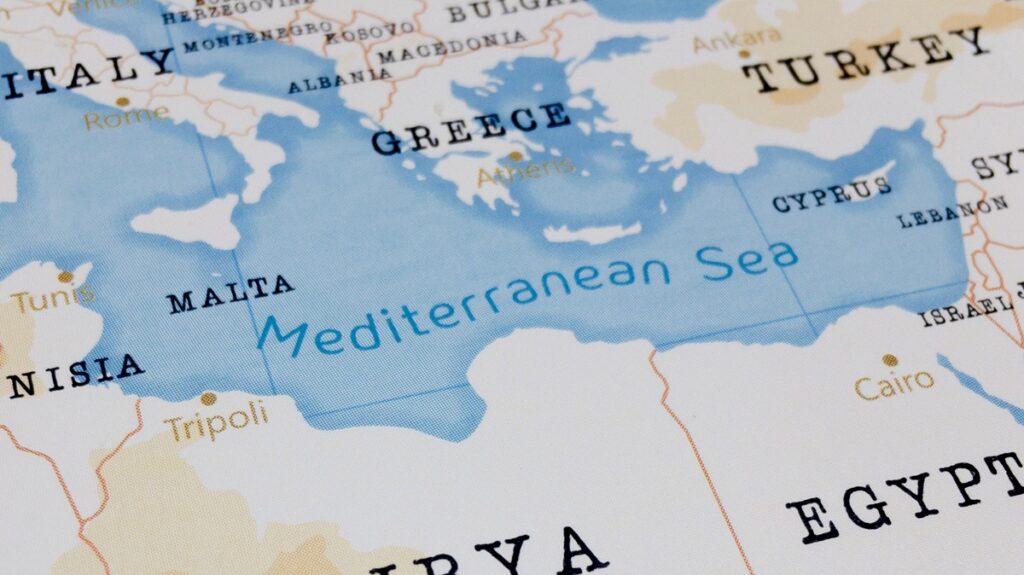
Scientists say giant invisible heat plumes are rising deep beneath the Mediterranean Sea. Credit : hyotographics, Shutterstock
For millions of people, the Mediterranean means beach holidays, turquoise water and lazy afternoons by the sea. Yet far below the yachts, swimmers and sunseekers, something remarkable has been happening unnoticed for thousands of years.
Scientists have discovered giant heat ‘flames’ rising from the Mediterranean seabed, with some reaching around 100 metres high. It sounds like the start of a disaster movie, but the reality is far less dramatic and far more fascinating.
These aren’t flames in the usual sense. There’s no fire, no lava and no underwater volcano erupting beneath holiday hotspots. Instead, they’re slow-moving columns of slightly warmer seawater, gently rising from the seabed so gradually that nobody at the surface could ever see or feel them.
The discovery comes after researchers spent three years watching one of the deepest parts of the western Mediterranean using an enormous network of underwater sensors. For the first time, they were able to create detailed three-dimensional images showing how these hidden plumes form, drift upwards and disappear back into the surrounding water.
Hidden nearly 2.5 kilometres below the Mediterranean
To find these invisible structures, scientists had to go where almost nobody else can.
The research team placed nearly 3,000 ultra-sensitive temperature sensors on the seabed around 2,500 metres below the surface. Spread across 45 mooring lines, the instruments continuously recorded tiny temperature changes over a three-year period, allowing researchers to watch the deep sea in unprecedented detail.
What they found surprised them.
Tiny amounts of heat escaping naturally through the Earth’s crust warm the water sitting directly above the seabed. Because warmer water is slightly lighter than colder water, it slowly rises, creating tall columns that resemble flickering flames when turned into computer visualisations.
Some of these plumes stretched around 100 metres above the seabed, yet the temperature difference between the warmer water and its surroundings was astonishingly small, often measuring just thousandths or even ten-thousandths of a degree Celsius.
That’s why they’ve remained hidden for so long. Without highly specialised equipment, they simply can’t be detected.
They’re invisible, harmless and happening all the time
The word ‘flames‘ may sound alarming, but it’s really just a way of describing their shape.
Nothing is burning beneath the Mediterranean, and there is absolutely no risk to swimmers, divers or coastal communities. The plumes are made entirely of seawater and form almost two and a half kilometres below the surface.
By the time any of that gentle warming mixes into the surrounding ocean, the temperature difference has effectively disappeared.
The researchers also noticed something else. These geothermal plumes weren’t always acting alone.
Around 40 per cent of the time, warmer water arriving from elsewhere in the Mediterranean swept across the seabed, creating even stronger mixing than the geothermal heat itself. In the computer reconstructions, these moving masses looked more like drifting clouds than rising flames, constantly reshaping the deep-water landscape.
Until now, scientists could only study these kinds of movements in limited detail. The vast sensor network allowed them to watch the entire process unfold in three dimensions, revealing a hidden world that had never been seen like this before.
Why this hidden world matters
You might wonder why anyone should care about tiny temperature changes taking place so deep underwater.
The answer lies in the way the ocean stays alive.
The deep sea isn’t a still, silent place. Even without waves or sunlight, water is constantly moving, carrying oxygen, nutrients and organic material that help sustain marine life. The newly observed heat plumes are part of that natural mixing process.
The study suggests that these slow, invisible movements work alongside underwater currents and internal waves to keep deep Mediterranean waters circulating. Without that constant mixing, life on the seabed would struggle to access the oxygen and nutrients it depends on.
Perhaps the most remarkable part of the discovery is how ordinary it really is.
These giant heat plumes are not a new phenomenon. They’ve almost certainly been rising from the Mediterranean floor for thousands of years, completely unnoticed by the millions of people enjoying the sea above them.
Only now, thanks to one of the largest deep-sea monitoring projects ever carried out, have scientists finally been able to watch this hidden underwater world in action, revealing that one of Europe’s most familiar seas still holds spectacular secrets beneath its surface.
Follow Euro Weekly News on Google News
Get breaking news from Spain, travel updates, and expat stories directly on your Google News feed.
Follow on Google NewsSign up for personalised news
Subscribe to our Euro Weekly News alerts to get the latest stories into your inbox!
By signing up, you will create a Euro Weekly News account if you don't already have one. Review our Privacy Policy for more information about our privacy practices.





Farah Mokrani
Farah is a journalist and content writer with over a decade of experience in both digital and print media. Originally from Tunisia and now based in Spain, she has covered current affairs, investigative reports, and long-form features for a range of international publications. At Euro Weekly News, Farah brings a global perspective to her reporting, contributing news and analysis informed by her editorial background and passion for clear, accurate storytelling.
Comments