Could La Manga become the next Spanish resort to push cars aside?
By Molly Grace • Published: 23 Jul 2026 • 16:25 • 2 minutes read
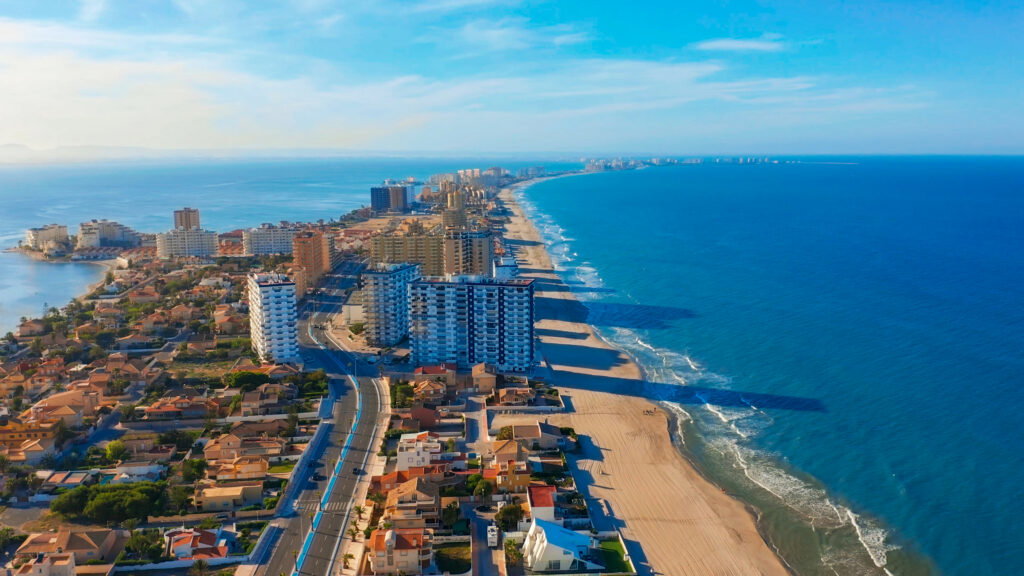
Anyone who has visited La Manga during July or August knows the frustration. Photo credit: aerophoto/Shutterstock
For decades, summer in La Manga has followed a familiar pattern, the beaches fill before midday. The restaurants buzz. Then the traffic begins. Long queues of vehicles crawl along the Gran Vía, parking spaces disappear and pedestrians squeeze along pavements built for a very different era. Now, a growing number of business leaders and local organisations believe it is time to ask a question that would once have seemed unthinkable: does La Manga need fewer cars?
The debate has been launched by representatives of business and community associations from La Manga and Cabo de Palos, who recently met with Spanish MEP Marcos Ros to discuss what the resort should look like over the next 20 to 30 years. Rather than focusing on short-term fixes, the meeting explored how one of Spain’s best-known holiday destinations could become easier to move around, more sustainable and better prepared for the future.
A different vision for La Manga
No decisions have been taken, and no formal plan has been approved. Instead, the meeting marked the beginning of a wider conversation about whether La Manga can continue relying so heavily on private cars during the busy summer months. Among the ideas discussed were reducing vehicle dependence, improving public transport, creating more space for pedestrians and cyclists, expanding green areas and rethinking how residents and visitors move around the narrow strip of land that separates the Mediterranean from the Mar Menor.
Supporters argue that the resort’s popularity has outgrown its infrastructure. Every summer, tens of thousands of visitors arrive, placing huge pressure on roads, parking and public spaces. Congestion has become an accepted part of the holiday experience, but many believe it does not have to stay that way.
Looking beyond the next summer
Rather than introducing isolated projects, those involved want to create a long-term strategy that could guide La Manga’s development for decades. The proposal could bring together public administrations, urban planners, mobility experts and the Universidad Politécnica de Cartagena to design a model capable of attracting European funding while improving quality of life for residents and visitors alike.
The discussion also examined how the resort manages its capacity during peak season. Improving collective transport, reorganising parking and making walking a more attractive option were all identified as possible ways of easing pressure without harming tourism.
A challenge every visitor recognises
Anyone who has visited La Manga during July or August knows the frustration. A journey of only a few kilometres can take far longer than expected as traffic builds along the Gran Vía, while pedestrians often compete with vehicles for limited space.
The issue has already prompted closer cooperation between the municipalities of Cartagena and San Javier this summer, with local authorities strengthening coordination on traffic management, road safety and emergency planning during the busiest weeks of the holiday season. For many residents, the latest debate recognises something they have experienced for years.
A resort at a crossroads
La Manga has reinvented itself before, from its rapid development in the second half of the twentieth century to its growing focus on sustainable tourism, the resort has continually adapted to changing demands. Now another question is emerging, should the future belong to more cars, or more people?
The answer remains some way off, and any major changes would require years of planning, consultation and investment. But one thing is already clear, the conversation has begun, Whether it leads to greener streets, better public transport or wider pedestrian areas, the discussion could shape how millions of people experience La Manga for decades to come.
Follow Euro Weekly News on Google News
Get breaking news from Spain, travel updates, and expat stories directly on your Google News feed.
Follow on Google NewsSign up for personalised news
Subscribe to our Euro Weekly News alerts to get the latest stories into your inbox!
By signing up, you will create a Euro Weekly News account if you don't already have one. Review our Privacy Policy for more information about our privacy practices.

Molly Grace
Molly is a British journalist and author who has lived in Spain for over 25 years. With a background in animal welfare, equestrian science, and veterinary nursing, she brings curiosity, humour, and a sharp investigative eye to her work. At Euro Weekly News, Molly explores the intersections of nature, culture, and community - drawing on her deep local knowledge and passion for stories that reflect life in Spain from the ground up.
Comments