900 years unveiled: Elda museum opens exhibition on the city’s Islamic history
By Anna Ellis • Published: 26 Jul 2026 • 10:31 • 2 minutes read
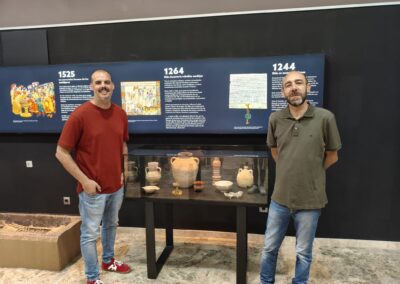
Councillor for Historical Heritage, Iñaki Pérez Rico, at The Islamic Footprint exhibition. Credit: Ayuntamiento de Elda.
Visitors to Elda’s Archaeological Museum can discover more than nine centuries of local history through a new exhibition exploring the city’s Islamic past. Featuring archaeological finds and historical displays, the exhibition offers a fascinating insight into how Islamic culture shaped Elda and the lasting legacy it left on the town’s architecture, religion and daily life.
Exhibition traces 900 years of history
Visitors to Elda’s Archaeological Museum can explore more than 900 years of local history in a new exhibition highlighting the city’s Islamic past.
La Huella Islamica (The Islamic Footprint) will remain on display until May 2027, offering an insight into the Andalusi period in Elda and the legacy it left behind.
The exhibition traces the story from the arrival of Islam in the Iberian Peninsula in 711 through to the expulsion of the Moriscos in 1609.
Visitors can learn how settlements evolved after the Pact of Tudmir in 713, when local communities were allowed to retain their religion and property in return for paying tribute.
Everyday life in medieval Elda
One section focuses on the Almohad period during the 12th and 13th centuries, when Elda Castle was built as a defensive stronghold and an Andalusi settlement grew around it. Archaeological excavations in the old town have uncovered the remains of homes, pottery, cooking utensils, storage jars and oil lamps, providing a picture of everyday life at the time.
The exhibition uses these discoveries to illustrate how people lived, worked and traded, while demonstrating the importance of Elda as a settlement during the medieval Islamic period.
Other displays examine Islamic religious practices, including prayer, burial customs and the location of the town’s former Muslim cemetery, before following Elda’s transition after the Christian conquest in 1244 and the later conversion of the main mosque into the Church of Santa Catalina Martir.
Preserving an important chapter of local history
The exhibition concludes with the expulsion of around 2,200 Moriscos from Elda in 1609, an event that marked the end of a significant chapter in the town’s history.
By bringing together archaeological evidence and historical interpretation, La Huella Islamica offers visitors the opportunity to better understand the cultural influences that helped shape modern-day Elda. The exhibition provides a valuable insight into one of the municipality’s most important historical periods and will remain open until May 2027.
Follow Euro Weekly News on Google News
Get breaking news from Spain, travel updates, and expat stories directly on your Google News feed.
Follow on Google NewsSign up for personalised news
Subscribe to our Euro Weekly News alerts to get the latest stories into your inbox!
By signing up, you will create a Euro Weekly News account if you don't already have one. Review our Privacy Policy for more information about our privacy practices.




Anna Ellis
Anna is a writer originally from Derbyshire, UK, who has called the Costa Blanca home for the past 20 years. Living in a quiet corner of the countryside, she brings a down-to-earth perspective to life in Spain. At Euro Weekly News, Anna covers local stories and community news, drawing on her long-standing connection to the region and its people.
Comments