From Almería to the stars: Calar Alto astronomer celebrated with asteroid honour
By Elli Freeman • Published: 06 Aug 2026 • 6:30 • 2 minutes read
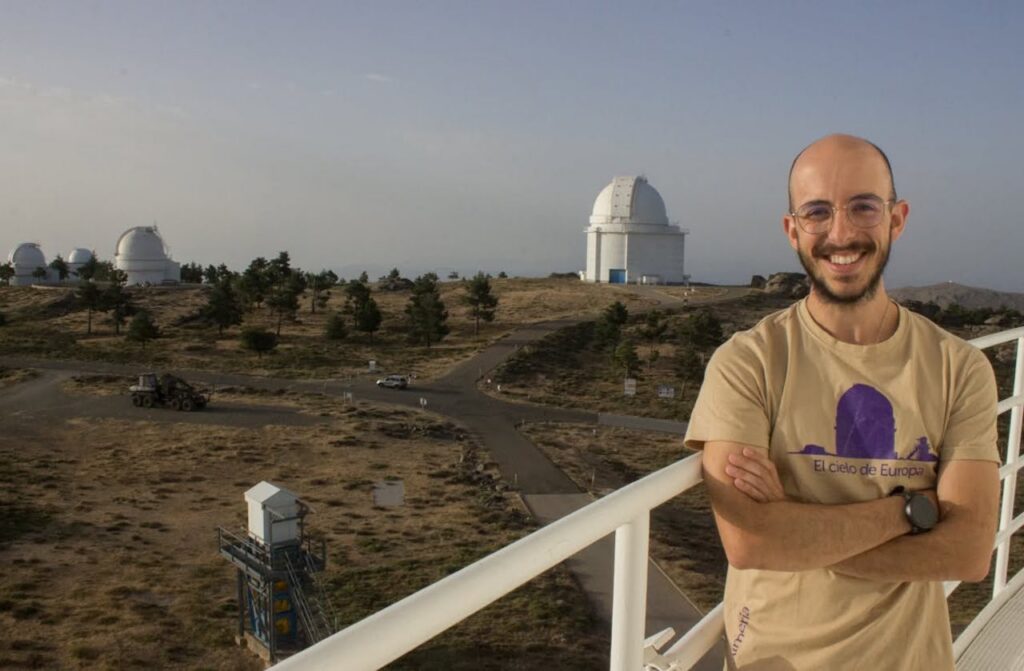
Fernando Tinaut Ruano, Calar Alto astronomer. Credit: Calar Alto Astronomical Observatory
Out in the depths of the solar system, an asteroid, one of many, orbits the Sun. While the celestial body may be located tens of millions of miles away, it in fact has a close connection with Almería as it was recently named in honour of a Calar Alto astronomer whose work has helped advance the understanding of asteroids and other objects beyond Earth.
Asteroid 20327 has been formally dubbed Fernandotinaut by the International Astronomical Union (IAU), in honour of Fernando Tinaut Ruano. Originally from Granada, Tinaut Ruano is a dedicated member of the Calar Alto Astronomical Observatory in Almería, where he works as technical astronomer. The recognition places his name permanently among the stars, celebrating years of scientific contribution and research.
Fernando Tinaut Ruano’s contribution to asteroid research
Over the years, Tinaut Ruano has been instrumental in the observatory’s study of asteroids. His achievements include working with ESA’s Gaia telescope, studying dwarf planets and Saturn’s moons, and most recently collecting samples from the Ryugu and Bennu asteroids for analysis. His scientific contributions have since been recognised with one of the most sought-after accolades in the field.
The naming of an asteroid is a rare distinction within the astronomical community and represents recognition of a scientist’s lasting impact.
Fernandotinaut asteroid linked to the origins of water on Earth
Fernandotinaut is an eight-kilometre asteroid that orbits the outermost part of the asteroid belt. Made up almost entirely of carbon, it is intrinsically linked to the origin of water on Earth, making it a key component to the compatibility of life.
Asteroids such as Fernandotinaut provide scientists with important clues about the early solar system. By studying their composition, researchers can learn more about the materials that existed billions of years ago and how some of those elements may have contributed to the development of planets, including Earth.
Calar Alto Observatory’s role in exploring space
Located in Almería, the Calar Alto Astronomical Observatory has long been recognised as an important centre for astronomical research. It’s telescopes and scientific teams have contributed to discoveries and observations involving stars, planets, asteroids and other distant objects.
The observatory has also played a key role in monitoring asteroids and other bodies in the solar system, strengthening Almería’s connection with space science. The latest honour for Tinaut Ruano highlights not only his personal achievements but also the international importance of the work carried out from Calar Alto.
A name among the stars for a valued Almería scientist
Calar Alto Astronomical Observatory took to social media to announce the achievement, expressing their immense pride in a valued member of the team whose success has quite literally landed him amongst the stars.
The naming of Fernandotinaut ensures that Fernando Tinaut Ruano’s contribution to astronomy will continue to be remembered for generations to come. From his work studying asteroids on Earth to having one officially named after him in space, his career reflects the connection between scientific curiosity and the exploration of the universe.
Follow Euro Weekly News on Google News
Get breaking news from Spain, travel updates, and expat stories directly on your Google News feed.
Follow on Google NewsSign up for personalised news
Subscribe to our Euro Weekly News alerts to get the latest stories into your inbox!
By signing up, you will create a Euro Weekly News account if you don't already have one. Review our Privacy Policy for more information about our privacy practices.




Elli Freeman
Originally from the UK, Elli has lived in Spain for more than half of her life. She holds a B.A in English Literature and Creative Writing. Before joining the Euro Weekly News team, Elli was an avid traveller, with a keen interest in exploring new cultures.
Comments