Why your Spanish country house zaps you every summer, and the simple fix most owners miss
By Adam Woodward • Published: 16 Aug 2026 • 9:20 • 3 minutes read
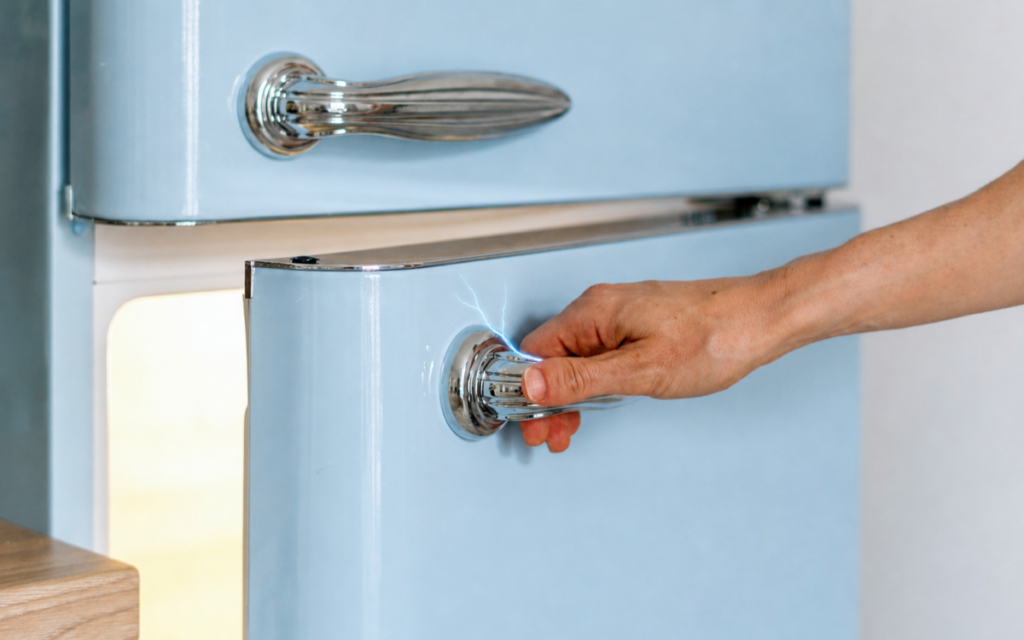
Hand gets electric shock from appliance. Credit: brizmaker - Shutterstock
Feel a sharp tingle or mild shock every time you empty the washing machine, fridge or oven in your rural Spanish home? You are not alone. Hundreds of expats living in country houses, fincas and cortijos report the same problem, and it gets worse after weeks without rain. Dry soil is the most common culprit behind these unwanted electric shocks, and ignoring it can turn a mild annoyance into a real safety risk.
Spain’s electrical system relies on a local earth electrode (often a copper rod) at each property. When the ground dries out, that electrode stops doing its job properly. Current that should disappear harmlessly into the soil instead sits on metal appliance cases, building up, waiting for your hand to complete the circuit.
Why long dry spells make the shocks worse
Rural properties usually sit on a TT earthing system. Your house has its own metal rod or rods driven into the ground for this purpose. Leakage current from an appliance travels down the protective earth wire, into the rod, and through the soil back to the transformer.
Soil needs moisture to conduct electricity well. After months of sunshine and little rain, water under your house disappears and resistivity goes through the roof. A rod that measured acceptably low resistance in spring can easily double or triple its value by August. Light voltage on the washing machine or fridge door rises as a result. You feel it as a persistent tingle, especially if you stand barefoot on a tiled or concrete floor.
Spanish rules recognise this seasonal change. Official guidance tells installers to design and test earth electrodes for the driest conditions of the year (but does this always happen?) Many older rural installations never received that treatment.
How Spanish earthing works in country homes
Most Spanish homes use the TT arrangement. The utility, be it the oven or coffee machine, earths the neutral at the transformer. Your property provides its own independent path to true earth. Residual current devices (diferenciales) protect you by cutting power when they detect a leak, but they only work properly if the earth path is low enough in resistance.
In towns and modern urbanisations a foundation electrode or ring often keeps resistance stable. Out in the countryside a single rod is far more common. Rocky, sandy or clay soils that shrink in drought make the problem worse. Once resistance climbs, even normal appliance leakage becomes noticeable, and often painful.
What you should do right away
Stop using any appliance that gives a clear shock until someone checks it. Unplug it if possible. Test the RCD buttons on your fuse box every month, as they should trip instantly.
Call a registered electrician (instalador autorizado) and ask for an earth resistance measurement with a proper tester. Request the test during or just after a dry spell so you see the worst-case figure. August is often the most practical me for this. Ask them to check continuity of the protective conductors and confirm the RCDs still work correctly. Mild tingles often mean the system is only just failing. A full fault could put mains voltage on the casing with no warning, and can be deadly.
Practical longer-term solutions that work
Extra earth rods spaced correctly and bonded together usually bring resistance down. Deeper rods reach more stable moisture layers. In difficult soils specialists sometimes use conductive compounds or a buried ring. Costs vary with site conditions, but many rural jobs fall into a few hundred euros rather than thousands.
Make sure every circuit that needs it has a working 30 mA RCD. Bonding of metal water pipes and other services should also be confirmed. Once the earth path is solid again, the tingles normally disappear.
Endesa and Iberdrola, the biggest power companies, both publish clear explanations of why a working ‘toma de tierra’ (earthing) matters for everyday safety. Their advice matches what rural electricians see every dry summer: test it, improve it if needed, and the shocks stop. Until you get it fixed, don’t walk on a damp floor, and wear rubber soled footwear.
Follow Euro Weekly News on Google News
Get breaking news from Spain, travel updates, and expat stories directly on your Google News feed.
Follow on Google NewsSign up for personalised news
Subscribe to our Euro Weekly News alerts to get the latest stories into your inbox!
By signing up, you will create a Euro Weekly News account if you don't already have one. Review our Privacy Policy for more information about our privacy practices.





Adam Woodward
Adam is a writer who has lived in Spain for over 25 years. With a background in English teaching and a passion for music, food, and the arts, he brings a rich personal perspective to his work at Euro Weekly News. As a father of three with deep roots in Spanish life, Adam writes engaging stories that explore culture, lifestyle, and the everyday experiences that shape communities across Spain.
Comments