Huge brown bear filmed at dawn in middle of road in northern Spain
By Adam Woodward • Published: 29 Aug 2026 • 12:26 • 2 minutes read
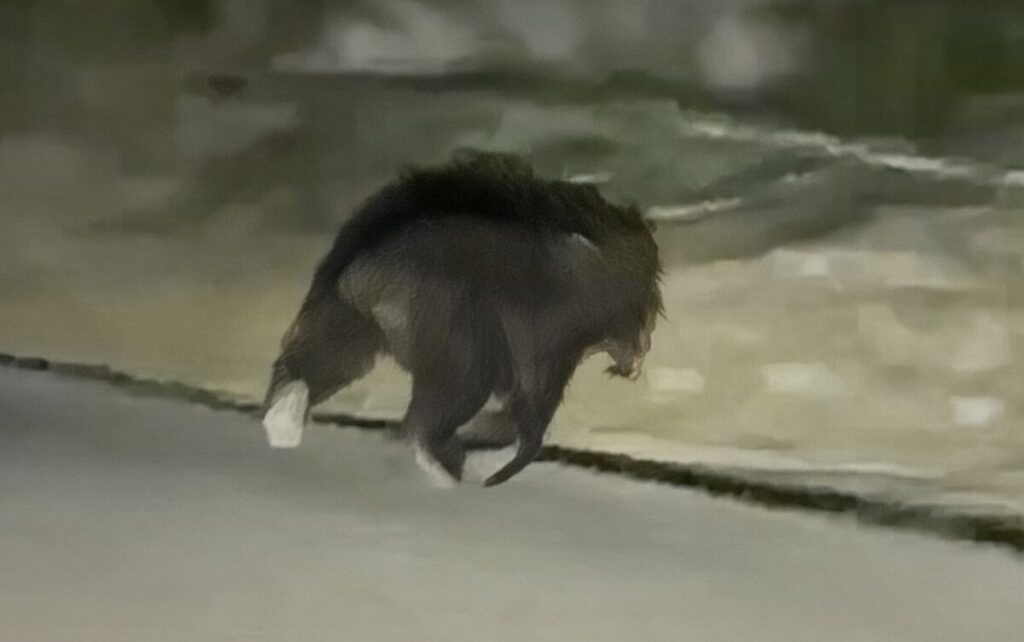
Spanish brown bear strolling in a road in Palencia. Credit: PC X
Night drivers in the high country of northern Palencia got another reminder that Cantabrian brown bears still use these roads too. Volunteer group Proteccion Civil El Refugio posted a video clip on Friday, August 28, after coming across a bulky animal near the hamlet of Cardaño de Abajo, on the road down towards the old mining town of Guardo, a popular hiking route. Headlights catch it jogging the verge, then cutting the corner past a stone wall and a warning sign.
If those names mean nothing, picture the Cantabrian Mountains where Castilla y Leon meets Leon province, inland from Santander and well north of Palencia city. Guardo is the biggest settlement in that valley. The same valley produced another sighting on a night crossing a few days earlier at Otero de Guardo.
🐻🐻 De madrugada un enorme oso en las inmediaciones de Cardaño de Abajo en dirección Guardo nos le hemos encontrado pic.twitter.com/ztesXQkUf6
— Protección Civil El Refugio (@ElRefugioAVPC) August 28, 2026
Why this quiet corner keeps seeing more bears
Eastern Cantabrian bears are the smaller, more fragile group, spread across Palencia, eastern Leon and Cantabria. Numbers across the whole mountain range have climbed from a few dozen in the 1990s towards a few hundred, so a roadside sighting is no longer a once-in-a-decade shock. The trouble starts when a car follows for a better shot, someone steps out, or a sow has cubs nearby.
June already showed the other risk. A young bear of about 110 kilos died on the CL-626 at Liguerzana, a village in the Cervera de Pisuerga district, after a collision with a car. The driver in that case walked away, although the car was worse for wear.
What to do if you have a bear in your headlights
Stay in the car. Dip the beams if you can. Give the animal the bend and do not chase it for footage. Call 112 only if it is hurt or boxed into a village street. Fundacion Oso Pardo and park staff want a glimpse treated as luck, not a pursuit.
Where you might come across Spanish bears
Spain’s wild brown bears live in two mountain belts in the far north. They are not on the Costa del Sol, not around Madrid, and not on most of the Camino Frances.
Cordillera Cantabrica (native population). This is the main stronghold: Asturias, northern Leon, northern Palencia, western Cantabria and a sliver of Lugo in Galicia. Recent figures put the Cantabrian population around 370, with Spain’s total (Cantabrian plus Pyrenees) now over 400. Although, they are still classed as endangered.
Bears have also been turning up again further south-west, in La Cabrera (Leon), Sanabria and La Carballeda (Zamora) and the Ourense edge, after a long absence.
Want to see a bear in the Spanish wilds?
A face-to-face meeting on a path is still highly uncommon. Bears usually hear or smell you first and slip away. The best deliberate chances, at distance with binoculars or a local guide:
- Somiedo (Asturias), especially dawn and dusk in spring and autumn. Viewpoints such as the Mirador del Principe above La Peral
- Fuentes del Narcea, in Asturias
- Guided trips in the Alto Sil / Laciana (Leon)
Late summer and autumn, when they feed hard before winter, and first light or last light, are usually the best time windows. Do not count on seeing one. Count on seeing droppings, clawed trees and prints if you know how to look.
Follow Euro Weekly News on Google News
Get breaking news from Spain, travel updates, and expat stories directly on your Google News feed.
Follow on Google NewsSign up for personalised news
Subscribe to our Euro Weekly News alerts to get the latest stories into your inbox!
By signing up, you will create a Euro Weekly News account if you don't already have one. Review our Privacy Policy for more information about our privacy practices.




Adam Woodward
Adam is a writer who has lived in Spain for over 25 years. With a background in English teaching and a passion for music, food, and the arts, he brings a rich personal perspective to his work at Euro Weekly News. As a father of three with deep roots in Spanish life, Adam writes engaging stories that explore culture, lifestyle, and the everyday experiences that shape communities across Spain.
Comments