One man tried to prove Santa doesn’t live in Finland, and the EU ruled against him
By Harry Dennis • Published: 03 Sep 2026 • 17:37 • 2 minutes read
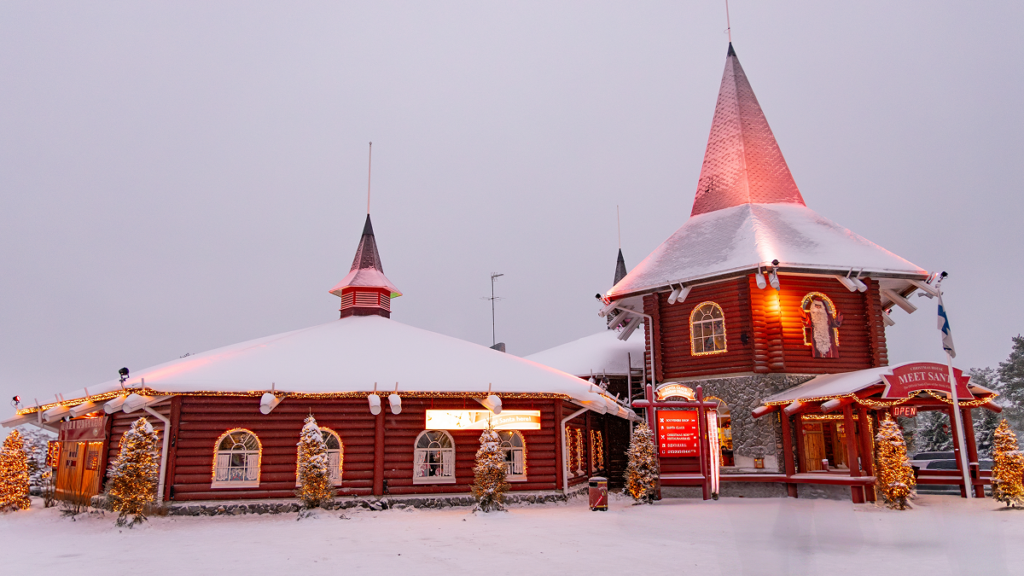
Santa Claus Village in Rovaniemi. Credit: WhyNotChannel / Shutterstock
A Dutch freelance journalist actually tried to convince Brussels that Santa Claus could live anywhere he liked, since he is a fictional character. But the EU’s intellectual property office was not persuaded, upholding Finland’s exclusive claim to being his one true home.
The case that argued Father Christmas doesn’t actually have a fixed address
Lex Boon, a Dutch freelance journalist, filed a request with the European Union Intellectual Property Office (EUIPO) late last year seeking to cancel Rovaniemi’s trademark on the phrase “The Official Hometown of Santa Claus”. His argument was that Santa Claus is a made up character, so nothing stops his hometown being wherever anyone wants it to be. Boon said he was not trying to take anything away from Rovaniemi or spoil the story for children. He told Finnish broadcaster Yle his objection was about principle rather than Christmas itself, arguing that no single town should hold exclusive commercial rights to a character who belongs to everyone.
Why the EU disagreed
The EUIPO rejected the cancellation request this week, finding no grounds to revoke the trademark. Rovaniemi’s registration for “The Official Hometown of Santa Claus” remains valid across the EU. Legally, nobody can own Santa Claus himself; as a folklore figure, he sits in the public domain (and children’s wishes). What Rovaniemi actually holds is protection over a specific branded phrase tied to its own town, not the character, and that distinction was enough for the ruling to leave the trademark exactly where it was.
A small Arctic town built almost entirely around one story
Rovaniemi sits just south of the Arctic Circle in Finnish Lapland, and its Santa Claus Village sits right on the edge, drawing visitors who want a photograph on the exact spot separating the Arctic from everywhere else. Santa’s Main Post Office in the village receives more than half a million letters, cards and parcels every year, according to Visit Rovaniemi.
That popularity has come at a cost though. Recent winters have brought reports of the village straining under visitor numbers, as Rovaniemi wrestles with overtourism pressure more often associated with far larger destinations.
The other trademarks defending Rovaniemi’s Christmas brand
“The Official Hometown of Santa Claus” is not the only mark protecting the claim. Rovaniemi also holds an EU trademark for “Santa Claus Office – Arctic Circle Finland”, while Finavia, Finland’s airport operator, separately owns “The Official Santa Claus Airport” covering the city’s own airport.
Together, the registrations are protected not just within the EU but also in the United States, Britain, Japan and Norway, underlining how seriously the city treats a claim that underpins much of its tourism economy.
What it means for anyone planning a Lapland Christmas trip
For the airlines and travel firms marketing winter breaks to Rovaniemi, some previously flying direct from Spain, the ruling means the “official hometown” label they have been selling remains completely legally accurate rather than just a marketing flourish.
Boon has not said whether he intends to appeal. Until he does, the sleigh, the reindeer and the address on hundreds of thousands of children’s letters each year all point to the same small city on the edge of the Arctic Circle.
Follow Euro Weekly News on Google News
Get breaking news from Spain, travel updates, and expat stories directly on your Google News feed.
Follow on Google NewsSign up for personalised news
Subscribe to our Euro Weekly News alerts to get the latest stories into your inbox!
By signing up, you will create a Euro Weekly News account if you don't already have one. Review our Privacy Policy for more information about our privacy practices.




Harry Dennis
Born in the UK and raised on the Cádiz coast, Harry brings his background in design, music, and photography to his writing for Euro Weekly News, sharing stories that celebrate culture and lifestyle across Spain and beyond.
Comments