Should the motorhome stay or go? Spanish Ministry clarifies rules
By Adam Woodward • Published: 07 Sep 2026 • 11:22 • 2 minutes read
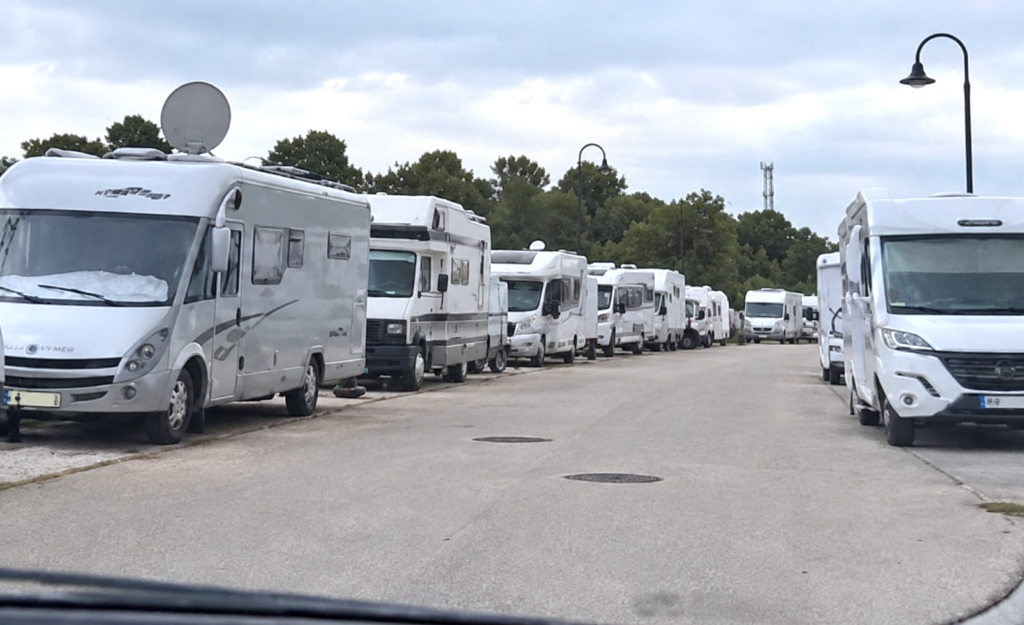
Motorhomes and campervans fill all the parking spaces in Mijas. Credit YL FB
Spain’s Interior Ministry has recirculated a short explainer on X pointing owners to Revista DGT issue 278: sleeping inside a parked motorhome is not camping if nothing spills beyond the vehicle’s footprint, but each council can still cap how long you stay and where you stop. That is not a new law. It is a public nudge towards rules already set out in instruction PROT 2026/04, which Euro Weekly News covered in March.
Spain’s 2026 motorhome law overhaul
#Caravaning ¿Estacionar 🅿️ o acampar 🏕️?
➡️ Dormir dentro no es acampar si no desbordas el perímetro, pero ¡ojo! 👀: cada ayuntamiento puede limitar el tiempo de aparcamiento o fijar ordenanzas locales.
Todas las claves en la revista de @DGTes 🔗 https://t.co/PQ7e8XPay2 pic.twitter.com/Dk2i8Qm39v
— Ministerio del Interior (@interiorgob) September 4, 2026
Owners who treat the tweet as a free pass for a week on the Paseo will come unstuck. However, what they want to reassert is that sleeping inside your campervan or motorhome is permitted, and not necessarily considered “free camping”. National traffic rules treat a closed-up motorhome on its wheels like any other car. But, local bylaws still decide time limits, banned streets and whether an area is for parking or for staying. DGT guidance itself tells drivers to check local council signs rather than assume a Madrid circular overrides a Costa by-law. Full text is on the DGT instructions page (PROT 2026/04).
Why tourist towns still write the overnight rules
Pressure on small high streets is the real fight, not the definition of “parking”. Apparently Spain’s stock at 300,000 to 400,000 units once converted vans that were never legally approved and registered are counted; official DGT figures for registered motorhomes and campers are far lower, around 137,000 in 2025, which is why nobody can give a clean national total.
Coastal ayuntamientos have generally answered with hour limits and no-go zones rather than a blanket ban on the vehicle type. Mijas has already written a 72-hour cap into dedicated motorhome bays. Fuengirola has spent two years arguing over long-stay vans on public streets and the old Feria ground. Cabo de Gata-Nijar recorded 98 denuncias this year for overnight stops inside the natural park, where beaches stay off-limits under coastal law, whatever Interior posts on social media.
Cabo de Gata crackdown – Chairs on the pavement still change the offence
Put out a table, your washing to dry, an awning, or even muddy shoes, and you have left the realm of simple parking and entered the world of camping. That is where fines on the windscreen jump. Reporting around the Interior reminder talks of €2,000 to €3,000 in some settings; protected land and parks can run higher still. In-town overstays are often cheaper but far more common: a time-limited bay, a tow, or a local fine for occupying the same space for days.
Converted vans that skip correct approval and registry add another headache. They are harder to count, easier to trip up at an ITV, and have no protection if a police officer decides the layout has become a campsite. Category N campers over ten years old already face six-monthly ITV checks.
Six-month ITV rule
Winter on the Costa will test this more than August ever did. Check the local bylaw before you settle for the night, keep everything inside the bodywork, and treat official areas, not a supermarket car park, as the place to empty tanks.
Follow Euro Weekly News on Google News
Get breaking news from Spain, travel updates, and expat stories directly on your Google News feed.
Follow on Google NewsSign up for personalised news
Subscribe to our Euro Weekly News alerts to get the latest stories into your inbox!
By signing up, you will create a Euro Weekly News account if you don't already have one. Review our Privacy Policy for more information about our privacy practices.



Adam Woodward
Adam is a writer who has lived in Spain for over 25 years. With a background in English teaching and a passion for music, food, and the arts, he brings a rich personal perspective to his work at Euro Weekly News. As a father of three with deep roots in Spanish life, Adam writes engaging stories that explore culture, lifestyle, and the everyday experiences that shape communities across Spain.
Comments