Workers in Spain gain new rights over pay, hours and workplace AI from October 5: here’s what’s changing
By Harry Dennis • Published: 16 Sep 2026 • 12:21 • 2 minutes read
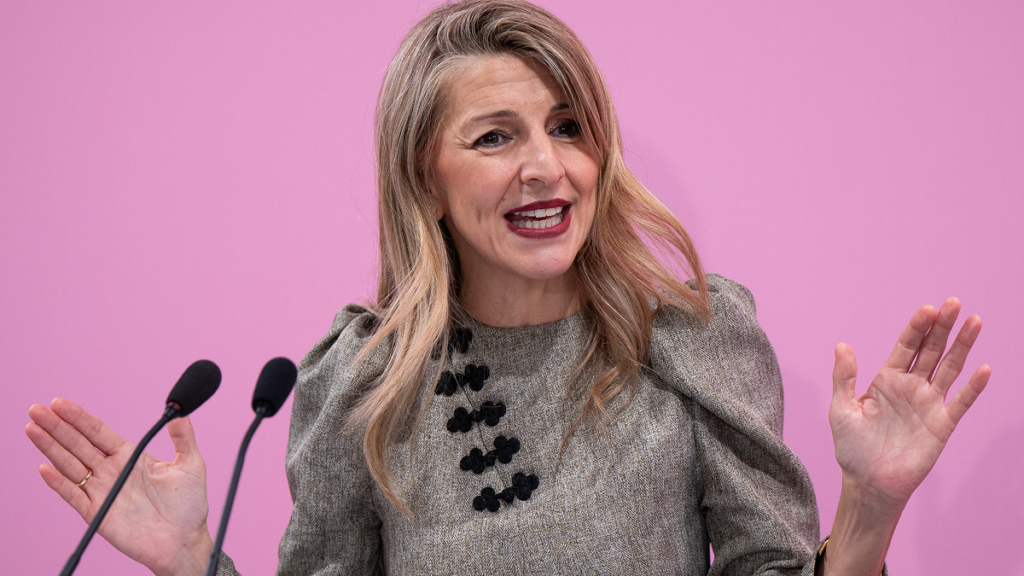
Labour minister Yolanda Díaz has championed the reform, which comes into force on October 5. Credit: Oscar Gonzalez Fuentes / Shutterstock
A computer program can already decide when workers clock in, how much bonus they earn or even when they lose their job, yet until now most had no right to ask why. Well, from October 5, Spanish employees will finally be entitled to know whether algorithms influence their salary, shifts, promotion or dismissal, with existing workers able to request the information in writing.
What employers must now reveal about pay, hours and AI
From Monday October 5, every employer in Spain must be ready to explain how it calculates variable pay and bonuses, alongside daily, weekly and annual working hours, overtime arrangements and the rules for changing an employee’s shift pattern, including how much notice they are entitled to.
The decree, Real Decreto 723/2026, also requires employers to spell out the exact purpose and length of any probationary period, and to share their equality, work-life balance and harassment policies where these exist. Firms of every size must have an anti-harassment protocol in place, regardless of whether they have adopted the other policies.
The right belongs to the worker, not just the union rep
Previously, only staff representatives could formally request this kind of information on behalf of a workforce. The new rules make it a personal right: any employee can go directly to their employer and ask for the details of their own contract, pay structure and working conditions.
Existing staff who make a request must receive a response within 30 working days. Anyone starting a new job after October 5 does not even need to ask, as employers must hand over the information in writing before their first day.
Why the AI disclosure is the biggest change
The most striking addition is the requirement to disclose the existence of “algorithmic or automated decision-making systems” whenever software helps determine an employee’s pay, promotion prospects, shift pattern, workplace location or dismissal. Workers can now ask whether a program, rather than a manager, played a role in a decision that affects their income or their job security.
Labour minister Yolanda Díaz said the wider reform was also designed to make probationary periods more accountable, so that employers must now give a genuine, justified reason before using one to dismiss a member of staff.
What the new rules still don’t cover
The decree stops a bit short of full pay transparency. It doesn’t entitle a worker to see a colleague’s exact salary, only the criteria their own employer uses to decide variable pay, bonuses and promotions.
A separate EU-driven law on gender pay gaps and salary ranges in job adverts, covered by EWN in June, remains stuck without a firm implementation date, so the two changes should not be confused with one another.
Spain is five years late to a rule the rest of the EU already follows
The regulation transposes a 2019 EU directive on transparent and predictable working conditions that should have applied across the Union by August 2022. Spain has missed that deadline by more than four years, and stronger penalties for employers who ignore the new information duties are still waiting on separate legislation to clear parliament.
Follow Euro Weekly News on Google News
Get breaking news from Spain, travel updates, and expat stories directly on your Google News feed.
Follow on Google NewsSign up for personalised news
Subscribe to our Euro Weekly News alerts to get the latest stories into your inbox!
By signing up, you will create a Euro Weekly News account if you don't already have one. Review our Privacy Policy for more information about our privacy practices.




Harry Dennis
Born in the UK and raised on the Cádiz coast, Harry brings his background in design, music, and photography to his writing for Euro Weekly News, sharing stories that celebrate culture and lifestyle across Spain and beyond.
Comments