New road rules in Spain 2026: New driving law changes every driver needs to know from October 1
By Adam Woodward • Published: 25 Sep 2026 • 15:00 • 9 minutes read
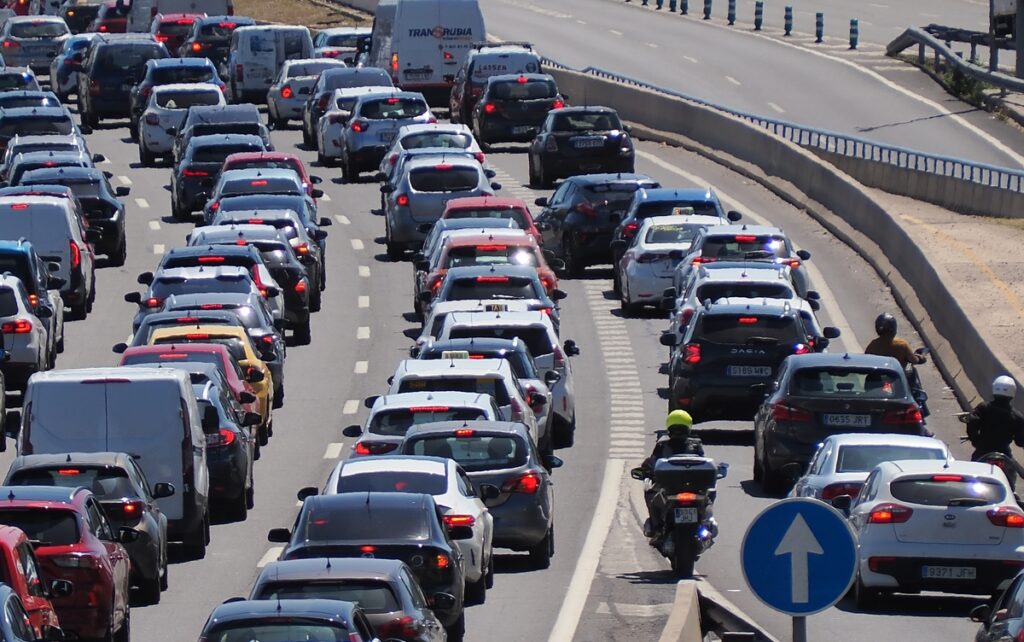
New traffic rules in Spain from October 1. Credit: Juan Jesus Ruiz Toscano - Shutterstock
Spain is introducing a major set of road rule changes on October 1, 2026, affecting drivers, cyclists, motorcyclists, moped riders, pedestrians and electric scooter users. Here is what British residents and visitors are going to need to know.
A major overhaul of Spain’s traffic rules comes into force on October 1, 2026, bringing new requirements for everything from motorcycle clothing and overtaking cyclists to emergency lanes, electric scooters and pedestrian safety.
The changes are contained in Real Decreto 518/2026, which modifies Spain’s Reglamento General de Circulacion. For English-speaking residents and holidaymakers, some of the changes will be easy to follow, while others could catch drivers out if they are used to the existing rules.
Here is a practical guide to what changes from October 1.
Bicycles
Several new rules affect cyclists and the way drivers must interact with them.
If you are driving:
- When overtaking a cyclist outside a built-up area, you must reduce your speed by at least 20 km/h below the applicable speed limit.
- You must leave at least 1.5 metres of lateral space when overtaking.
- If the road has more than one lane in your direction, you must make a complete lane change when overtaking a cyclist.
- The same 20 km/h speed reduction and 1.5-metre safety distance apply when overtaking pedestrians, mopeds, VMPs and other vulnerable road users outside built-up areas.
- If a group of cyclists is travelling together, it is treated as one single moving unit for these rules.
If you cycle in a built-up area:
- Where there is no cycle lane or specific cycle route, bicycles will generally use the road.
- Cyclists should normally ride towards the centre of their lane when it is safe to do so.
- Drivers must leave five metres between their vehicle and a cyclist travelling ahead of them in the same lane.
- Cyclists may pass stationary or slow-moving traffic on either side where appropriate for their safety.
- On some 30 km/h-or-lower streets with one lane, councils can allow bicycles to travel in both directions, provided the road is appropriately signed.
The rules also allow bicycles to carry certain passengers and loads, and to use approved trailers and similar equipment, such as toddlers’ seats, subject to technical requirements.
Roads
Drivers on Spanish motorways and major roads will have new instructions to follow during traffic queues and bad weather.
Emergency lanes become an important new rule:
- If traffic on an autopista or autovia (motorways) comes to a standstill or is moving at walking pace, drivers must position themselves to create a clear route for emergency vehicles once they hear a siren or see the emergency flashing lights in their rear-view mirrors.
- On a two-lane motorway, the emergency lane is formed between the two lanes.
- On roads with three or more lanes, vehicles in the left lane move as far left as possible, while vehicles in the other lanes move as far right as possible.
- Drivers should therefore avoid simply stopping wherever there is space when a motorway queue develops. Basically, ensure you do not block emergency vehicles’ smooth and quick passage.
Snow brings another specific requirement:
- If snow makes motorway or autovia traffic difficult, overtaking will be prohibited.
- Drivers must use the right-hand lane.
- On roads with three or more lanes in each direction, the next lane can also be used where necessary, such as when there is heavy traffic.
- The other lanes must be left clear for emergency vehicles and snow ploughs.
The reform also creates rules for parking motorhomes and other vehicles converted for accommodation. When parked, they must not have equipment extending beyond the vehicle’s footprint, must rest only on their tyres (nothing to make the motorhome rise) apart from safety chocks or wedges, and must not discharge fluids of any kind from the living area. Police will be checking.
Mopeds
Moped riders and passengers face new safety requirements.
From October 1:
- A certified helmet must be used.
- Riders and passengers must wear protective gloves on out-of-town roads.
- Closed footwear covering the whole foot is required on all types of road.
- The helmet must meet the official specified homologation requirements. A list of approved helmets is expected to be published soon.
There is, however, a one-year transitional period for moped helmets. Existing certified helmets can continue to be used for one year after the new decree enters into force. That means moped users do not necessarily need to replace an existing certified helmet on October 1, but they should check the new requirements before the transitional period expires.
Road traffic
Some of the most noticeable changes concern everyday driving.
Overtaking vulnerable road users:
- When overtaking cyclists, pedestrians, animals, animal-drawn vehicles, mopeds and VMPs, drivers must leave at least 1.5 metres.
- On roads with more than one lane in the same direction, a full lane change is compulsory.
- Outside built-up areas, drivers must reduce their speed by at least 20 km/h below the road’s speed limit before and throughout the overtaking manoeuvre.
- Overtaking is prohibited if it puts people travelling in the opposite direction at risk or obstructs them.
Broken-down vehicles:
If a vehicle is stopped because of a breakdown, crash or certain roadside services and is occupying part of the carriageway:
- Drivers passing it must leave at least 1.5 metres of space.
- They must reduce their speed by at least 20 km/h below the applicable speed limit.
- They may need to move into the opposite lane to provide the required space, provided it can be done safely.
Motorcycles in traffic jams:
- Motorcycles can be authorised to use the right-hand hard shoulder on specified stretches when traffic is stationary because of congestion.
- The stretch must be specifically authorised and sign-posted.
- Motorcycles must travel one at a time at a maximum of 30 km/h on a hard-shoulder in this situation.
- Riders must give way to vehicles that are normally required to use the hard shoulder and leave it if necessary.
Personal protective equipment
Several groups will have new or clearer requirements for protective equipment.
Motorcycles, mopeds, three-wheelers, quadricycles and certain quads:
- Approved helmets are compulsory on all roads.
- Protective gloves are compulsory on all roads, even interurban roads between villages.
- Closed footwear covering the entire foot is compulsory on all roads.
Bicycles:
- Helmets are still compulsory on between-town roads.
- Children under 16 must wear a helmet on all roads and at all times.
- People who cycle professionally, such as delivery riders, must wear a helmet on urban roads and in any built-up areas.
- Cyclists travelling at night or in poor visibility on interurban roads must use lights and a reflective item visible from 150 metres.
VMPs (personal mobility vehicles or electric scooters):
- A properly fastened approved or certified helmet is compulsory from October 1, everywhere. This applies in all villages, towns and cities as well.
- At night or in conditions of poor visibility, riders must use a light or reflective element visible from 150 metres.
High-visibility vests:
Drivers of cars, motorcycles, buses, goods vehicles and other specified vehicles must use a high-visibility vest when they get out of the vehicle and occupy the carriageway or hard shoulder on an interurban road.
People who work professionally using motorcycles, mopeds, bicycles, cycles or VMPs must use a high-visibility vest on all types of road.
For car, van, motorhome and lorry drivers, the practical message is simple: check that your vehicle has a compliant high-visibility vest before October 1 and keep it somewhere you can reach without getting out of the vehicle first, such as the glove compartment.
Motorcycles
Motorcyclists will have several new rules to remember. The biggest everyday changes are:
- Gloves are compulsory on out-of-town roads.
- Closed footwear is compulsory on all roads, so no sandals or flip-flops.
- Motorcycles must carry with them a high-visibility vest as part of their mandatory equipment, as do car drivers.
- Motorcycles may use the hard shoulder in authorised congestion situations, but only where the stretch is signed for this purpose.
- The hard-shoulder speed limit is 30 km/h and motorcycles must travel in single file.
- Riders must not put other hard-shoulder users at risk.
The rules also permit motorcycles, three-wheelers and mopeds to tow a trailer or semi-trailer under specified conditions, including daytime travel, good visibility, a 10 per cent reduction from the applicable general speed and no passengers in the trailer.
Road safety
The new rules put greater emphasis on protecting pedestrians and other vulnerable road users.
Pedestrians have priority in several situations, including:
- At properly marked pedestrian crossings.
- On pavements and pedestrian areas.
- When a vehicle turns into another road and pedestrians are crossing.
- When pedestrians are crossing a hard shoulder where there is no pedestrian area.
- When passengers are getting on or off public transport at a marked stop.
- For organised groups such as school groups and military formations.
Drivers must take particular care not to put pedestrians at risk. Pedestrians walking on an out-of-town road or hard shoulder at night or in poor visibility must also use a light or reflective item visible from at least 150 metres. Pedestrians cannot cross the carriageway of a roundabout or plaza unless there is a designated pedestrian crossing.
Drivers should also remember that vehicles approaching with special emergency lights or signals must be given a clear route, with drivers normally moving to the right or stopping if necessary.
All motor vehicles
There are several changes that apply directly to cars and other motor vehicles.
Mobile phones and communication equipment:
- Using a mobile phone or other communication system while driving is prohibited. So, no touching the screen or reading messages.
- Wireless devices certified or homologated and integrated into motorcycle or moped helmets can be used for intercom or navigation, provided they do not affect driving safety.
Radar equipment:
- Radar jammers and devices designed to interfere with traffic surveillance systems, such as speed cameras, are prohibited.
- Drivers cannot carry radar or speed-camera detection equipment in the vehicle.
- Ordinary systems that simply warn drivers about the location of traffic surveillance systems are permitted.
Heavy vehicles:
Vehicles over 3,500 kg generally have to use the right-hand lane outside built-up areas when there is more than one lane in the same direction, subject to the circumstances set out in the regulation. Final details are expected to be published closer to the date.
School buses and dangerous goods:
The maximum speed for vehicles carrying schoolchildren or dangerous goods is reduced by 10 km/h from the normal maximum for that vehicle and road.
A bus carrying standing passengers, or a bus without seat belts, has a maximum speed of 80 km/h on any type of road outside built-up areas.
There are also changes concerning seat-belt exemptions. Taxi passengers in urban traffic can, under the specified circumstances, include children under 135cm in the rear seat without an approved child restraint. However, seatbelts must be worn by passengers and driver.
Personal mobility vehicles (electric scooters)
Electric scooters and other similar vehicles classified as vehiculos de movilidad personal (VMPs) face several new requirements.
From October 1:
- Riders must wear a properly fastened approved or certified helmet on all roads.
- VMPs cannot be used on motorways or autovias.
- They cannot normally be used on travesias or out-of-town roads.
- Exceptions apply to cycle routes, cycle lanes, protected cycle lanes, cycle paths and roads where motor vehicles are prohibited, unless signs specifically prohibit VMPs.
- Riders must use their arm to signal turning, as bicycle riders do.
- The minimum age for riding an electric scooter in public areas will be 15.
- Council authorities (local police) will continue to determine the roads and areas where VMPs can be used.
That means British visitors should not assume that the rules for electric scooters are the same as those in the UK or the rules they may have found on a previous Spanish holiday, especially when hiring scooters. Local council rules can also determine where VMPs are permitted. And do not rely on the old adage of ‘When in Rome’ as many locals may not be up-to-speed on the new rules either yet.
Rules that will come into effect later
Not every requirement in the new regulation has to be followed immediately on October 1.
Moped helmets: one-year transition
Existing certified moped helmets can continue to be used for one year after October 1, 2026. After that transition, the new officially approved requirement applies.
Technical specifications for motorcycle gloves and bicycle equipment
The regulation provides a temporary arrangement until a future Interior Ministry order sets technical specifications for:
- Protective motorcycle gloves.
- Additional bicycle seats.
- Bicycle trailers and semi-trailers.
Until that order comes into force, the existing characteristics for gloves continue to apply, while additional bicycle seats must be homologated and bicycle trailers and semi-trailers can continue to be used.
Daytime lights on VMPs (electric scooters and the like)
VMP riders must use their lights at all times under the new rules, but the requirement to have the lights switched on even during daylight hours does not start until one year after the decree enters into force.
That means the daytime lighting requirement starts from October 1, 2027.
School routes
The DGT has one year from the regulation coming into force to establish technical expert groups to develop recommendations for safe school routes and environments.
For most people, however, the key date is October 1, 2026. From that day, the new rules become part of Spain’s Reglamento General de Circulacion, so drivers, cyclists and other road users should check which requirements apply to them before getting behind the wheel or onto the road.
Follow Euro Weekly News on Google News
Get breaking news from Spain, travel updates, and expat stories directly on your Google News feed.
Follow on Google NewsSign up for personalised news
Subscribe to our Euro Weekly News alerts to get the latest stories into your inbox!
By signing up, you will create a Euro Weekly News account if you don't already have one. Review our Privacy Policy for more information about our privacy practices.





Adam Woodward
Adam is a writer who has lived in Spain for over 25 years. With a background in English teaching and a passion for music, food, and the arts, he brings a rich personal perspective to his work at Euro Weekly News. As a father of three with deep roots in Spanish life, Adam writes engaging stories that explore culture, lifestyle, and the everyday experiences that shape communities across Spain.
Comments