Spain’s night skies are worth watching this week as the ‘Rocket Revolution’ begins
By Molly Grace • Published: 06 Oct 2026 • 19:37 • 3 minutes read
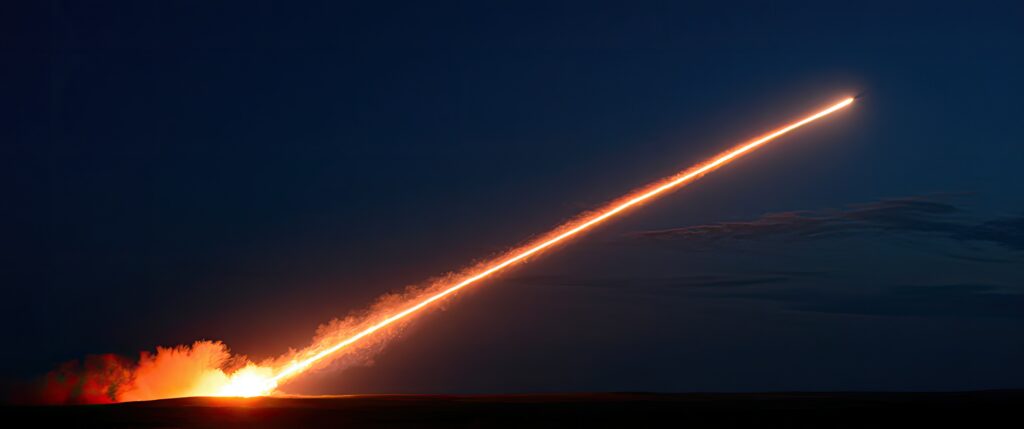
The timing is particularly good for anyone who enjoys looking at the night sky. Photo credit: VanessaHabibi/Shutterstock
You might not think about rockets or space when you check your sat-nav, watch the weather forecast or use your phone to communicate with someone on the other side of the world. But all of those everyday conveniences are connected to technology that depends on getting satellites into space, and the way we do that is changing fast.
That is exactly what makes this year’s World Space Week particularly interesting, and there is plenty to see from Spain’s own skies. If you have a clear view this week, several planets will be visible, the Moon will pass close to Mars and Jupiter, and the Draconid meteor shower will reach its peak, all while World Space Week 2026 celebrates 100 years of rocket development and looks at how a new era of space exploration is taking shape.
Why Spain’s skies are worth watching this week
You don’t need a telescope or any specialist knowledge to join in. Some of the best sights can be seen simply by stepping outside at the right time, making this year’s “Rocket Revolution” something people across Spain can experience for themselves. The timing is particularly good for anyone who enjoys looking at the night sky. Saturn reaches opposition around October 4, meaning it is visible through the night and at its brightest for the year. The Moon then passes near Mars on October 5 and near Jupiter on October 6.
Then comes the Draconid meteor shower, which is active from October 6 to 10 and reaches its peak overnight on October 8-9. This year brings particularly good conditions because there will be very little moonlight interfering with the display. The Draconids are not normally one of the year’s biggest meteor showers, so nobody should expect the sky to fill with shooting stars. But they can produce occasional bright meteors, and the best part is that you do not need specialist equipment to try to see them. Find somewhere away from bright lights, give your eyes time to adjust and look towards the northern sky after dark.
Spain already has a place in Europe’s space story
You also do not have to travel far from home to find Spain’s connection with space exploration. The European Space Agency’s European Space Astronomy Centre, or ESAC, is in Villanueva de la Cañada near Madrid and is the centre where ESA operates space astronomy missions and analyses their scientific data. The centre opened its doors to the public on October 3 for an Open Day featuring scientists, engineers, talks, exhibitions and activities for families and visitors interested in space.
One of the sessions focused specifically on Spain’s growing role in European space activities, with representatives from the Spanish Space Agency and ESA reserve astronaut Sara García Alonso among those taking part. That is a good reminder that the space race is no longer something happening only in the United States or through a handful of huge government programmes. Spain is part of Europe’s space sector, with scientists, engineers and companies working on missions and technology that reach far beyond the country’s borders.
From a cabbage field to reusable rockets
There is another reason 2026 is a fitting year to celebrate rockets. It marks 100 years since Robert Goddard launched the world’s first successful liquid-fuelled rocket in Massachusetts. His rocket, named Nell, flew for just 2.5 seconds, reached 41 feet and landed 184 feet away in a cabbage field.
It sounds almost comically small beside today’s rockets, but Goddard’s work helped establish liquid-fuel propulsion as a route towards modern rocketry. A century later, rockets are carrying satellites, spacecraft and astronauts, while reusable launch vehicles are changing the cost and frequency of getting hardware into orbit.
You don’t have to be an astronaut
That is the idea behind this year’s “Rocket Revolution” theme. Space is becoming more accessible to commercial companies, startups, universities and new national programmes, rather than remaining the preserve of a small number of government space agencies. For those of us living in Spain, you do not have to be an astronaut or a scientist to be part of World Space Week. There are events and activities for the public, while simply stepping outside and watching the night sky is enough to see some of what is happening above us.
And the technology being launched into space has plenty to do with life back on Earth. Satellites support navigation, communications, weather forecasting and Earth observation, while space-based data is used for environmental monitoring, disaster response and connectivity. So while World Space Week may be about rockets, astronauts and the future of space exploration, there is a very simple way to join in from Spain this week. Look up.
Follow Euro Weekly News on Google News
Get breaking news from Spain, travel updates, and expat stories directly on your Google News feed.
Follow on Google NewsSign up for personalised news
Subscribe to our Euro Weekly News alerts to get the latest stories into your inbox!
By signing up, you will create a Euro Weekly News account if you don't already have one. Review our Privacy Policy for more information about our privacy practices.



Molly Grace
Molly is a British journalist and author who has lived in Spain for over 25 years. With a background in animal welfare, equestrian science, and veterinary nursing, she brings curiosity, humour, and a sharp investigative eye to her work. At Euro Weekly News, Molly explores the intersections of nature, culture, and community - drawing on her deep local knowledge and passion for stories that reflect life in Spain from the ground up.
Comments
tranq tranquer
07 October 2026 • 10:32I don’t think Science and Tech is Molly’s strongpoint. The way this article is framed you expect to go outside and see rockets. Sorry no rockets, lots of natural phenomena but no rockets . And this article is meant to be all about rockets.
Comments are closed.