Thousands of deaths linked to Spain’s summer heat: the toll in 90 cities, from Madrid to Málaga
By Harry Dennis • Published: 23 Oct 2026 • 11:41 • 3 minutes read
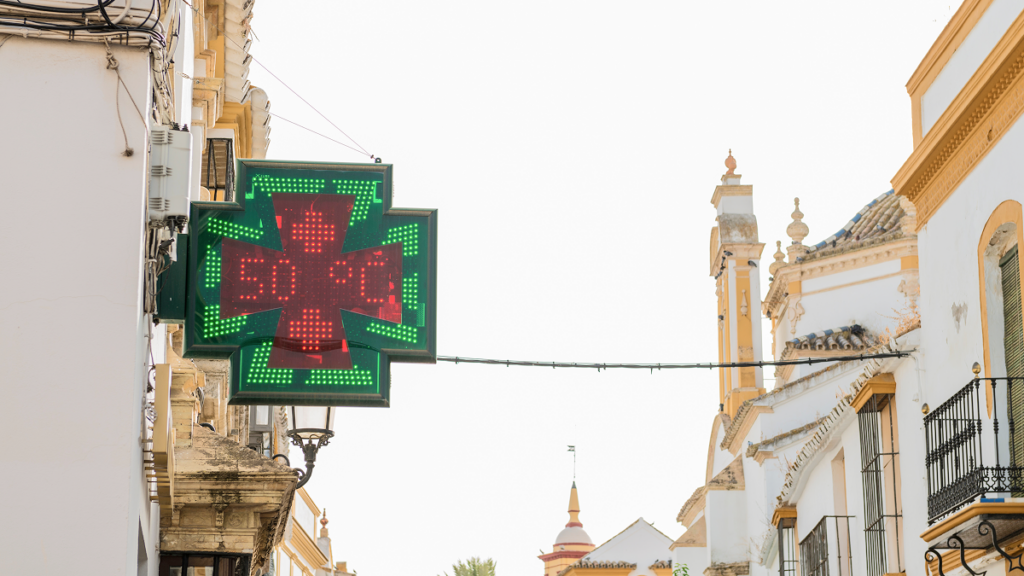
Heat has been linked to thousands of deaths in Spain’s cities this summer. Credit: SeluGallego / Shutterstock
Families in Madrid, Valencia and Málaga are left counting the cost of a deadly summer, with researchers estimating that heat claimed 1.067, 355 and 111 lives in those cities, respectively. Most of those deaths, the scientists say, wouldn’t have happened without climate change.
Three in every four deaths are blamed on climate change
Researchers at Imperial College London and the London School of Hygiene & Tropical Medicine (LSHTM) have estimated how many people died because of the heat between June and August, and the answer for Spain is 6,824. That figure covers 90 Spanish cities and comes from research published on Friday in Nature Health.
The scientists then went a step further, comparing the summer Spain actually had with a modelled one in which human-driven warming never happened. The gap between the two is 5,227 deaths, or 77 per cent, which works out at roughly three in every four.
Spain wasn’t alone, though. Across the 854 European cities studied there were more than 50,000 heat deaths, with about two-thirds blamed on climate change, and only Italy (13,303) and France (7,268) recorded more than Spain. Britain’s cities saw an estimated 4,354.
Across Europe, people aged 85 and over made up 45 per cent of the victims, although roughly 6,000 of them were under 65.
How the toll breaks down city by city
The figures also show how differently the same summer landed from one city to the next. Here’s what the researchers estimated, with the number blamed on climate change shown alongside each total:
- Barcelona: 1,587 blamed on climate change, the second-highest of any city in Europe behind Milan (the city’s overall total wasn’t given)
- Madrid: 1,067 in total, with 967 blamed on climate change
- Valencia: 355 in total, with 262 blamed on climate change
- Zaragoza: 264 in total, with 169 blamed on climate change
- Málaga: 111 in total, with 84 blamed on climate change
- Sevilla: 109 in total, with 77 blamed on climate change
- Granada: 98 in total, with 71 blamed on climate change
Madrid stands out for the share rather than the size, with 91 per cent of its heat deaths blamed on climate change, the highest on that list. Further south, Málaga, Sevilla and Granada each recorded between 98 and 111 deaths, with roughly three in every four blamed on climate change.
The smaller cities were counted too. In Cataluña, the provincial capitals of Lleida, Tarragona and Girona recorded 52, 47 and 36 heat deaths, with around seven in 10 blamed on climate change.
Two weeks in June did the most damage
Across all 854 cities, nearly a third of the deaths came in just two weeks, between June 17 and July 1, when temperatures averaged more than 5C above normal. That’s the same early-summer heat EWN covered when Spain’s official estimates for June passed 1,000. Over the whole summer, western Europe averaged 2.9C above the 1991 to 2020 norm, and on individual days some countries ran as much as 12C hotter than usual.
Experts who reviewed the research for Spain’s Science Media Centre said that could be down to people not being used to the heat yet, with high humidity and unusually warm nights making things worse.
Co-author Dr Clair Barnes, of Imperial College London, said: “Behind these statistics are real people whose lives were lost and real families who grieve for them.” Her colleague Dr Pierre Masselot, of LSHTM, added that European cities remain poorly adapted to the heat, with more green space and less pollution key to protecting people, and called this summer “another dramatic reminder that climate change is everybody’s problem”.
What the figures can’t tell you
These are modelled estimates rather than a list of confirmed deaths. The researchers worked from observed temperatures and the known link between heat and mortality, not from individual death records, so none of the 6,824 are confirmed cases of heatstroke.
The study covers only the cities it looked at, so it isn’t a complete national count either. Nor should it be read as an update to MoMo (Spain’s official daily mortality monitoring system), which uses a different method.
Óscar Zurriaga, an epidemiologist at the University of Valencia, said estimates like these “should never be taken as absolute and immutable figures”. He pointed out that the cities covered make up roughly 40 per cent of the population of the countries studied, and that the authors themselves call their estimate conservative.
However, another Spanish specialist, David García of the Carlos III Health Institute, noted that counting every death above the temperature at which people are least likely to die can produce high estimates, so the numbers are best treated with some care.
Many countries have yet to publish their final figures for the summer, so for now the city totals are best read as the researchers’ own estimate, and one to compare against the official numbers when they arrive.
Follow Euro Weekly News on Google News
Get breaking news from Spain, travel updates, and expat stories directly on your Google News feed.
Follow on Google NewsSign up for personalised news
Subscribe to our Euro Weekly News alerts to get the latest stories into your inbox!
By signing up, you will create a Euro Weekly News account if you don't already have one. Review our Privacy Policy for more information about our privacy practices.





Harry Dennis
Born in the UK and raised on the Cádiz coast, Harry brings his background in design, music, and photography to his writing for Euro Weekly News, sharing stories that celebrate culture and lifestyle across Spain and beyond.
Comments