Shoppers in Spain warned not to eat egg product after Salmonella contamination found
By Farah Mokrani • Published: 24 Oct 2026 • 11:55 • 3 minutes read
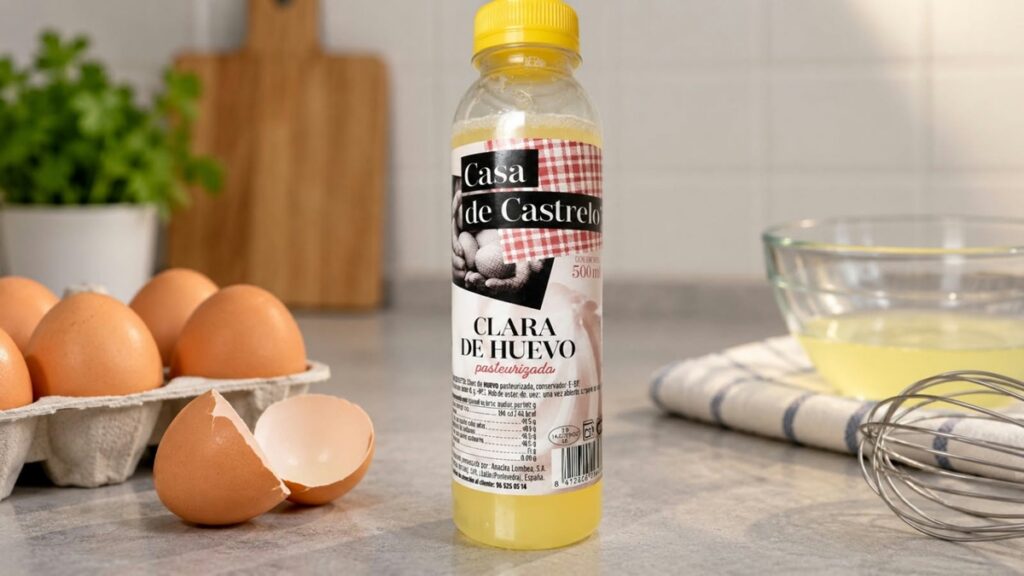
Spain issues a Salmonella warning for a specific batch of Casa de Castrelo pasteurised egg whites. Credit: Editorial illustration generated by AI
Shoppers in Spain, particularly those living in Andalucía, are being urged to check their fridges after health authorities detected Salmonella in a batch of refrigerated egg whites. The warning concerns a specific product sold under the Casa de Castrelo brand, with initial distribution confirmed in Andalucía and the possibility that bottles may have reached other parts of the country.
Spain’s food safety agency, AESAN, issued the alert on Friday, October 23, after receiving information from regional health authorities in Andalucía.
The affected product is sold in 500ml plastic bottles, with a use-by date of October 27, 2026. Consumers are being advised not to eat it, even if the bottle has been stored correctly and appears normal.
According to the official AESAN food safety alert, the warning relates to a particular batch of pasteurised egg whites rather than all eggs or every product sold by the manufacturer.
Which egg product is affected by Spain’s Salmonella alert?
The product concerned is Casa de Castrelo pasteurised egg whites, labelled in Spanish as clara de huevo pasteurizada.
Consumers should check the following details on their packaging:
- Brand: Casa de Castrelo
- Product: Pasteurised egg whites
- Batch number: 6265
- Use-by date: October 27, 2026
- Bottle size: 500ml
- Packaging: Plastic bottle
- Storage: Refrigerated
The batch number is particularly important because the warning identifies a specific production batch. The warning follows a separate Salmonella alert involving Spanish eggs earlier this month, although the two incidents should not be confused. People who have bought the product should check the packaging rather than assuming that every bottle of pasteurised egg whites is affected.
Pasteurised egg whites are commonly used in cooking, baking and protein-rich meals. They can be convenient for people who prefer not to separate fresh eggs themselves.
However, pasteurisation does not mean that a product can never become contaminated. The latest alert concerns Salmonella detected in the specified product, and the authorities’ advice is to avoid consuming the affected batch.
AESAN has not identified a particular supermarket chain in its published notice. Nor does the announcement establish how many bottles are involved or whether any illnesses have been linked to this specific batch.
Where was the contaminated egg product distributed?
According to AESAN, the initial distribution was in Andalucía, where the regional health authorities reported the contamination through Spain’s Coordinated Rapid Information Exchange System, known as SCIRI.
The agency has also warned that redistribution to other autonomous communities cannot be ruled out.
This means shoppers elsewhere in Spain should not automatically assume that the affected product could not have reached their area. However, it would be inaccurate to suggest that distribution has been confirmed nationwide.
The alert has been shared with the relevant regional authorities so they can check that affected products are being withdrawn from commercial distribution.
For foreign residents living in Málaga, Marbella, Estepona, Fuengirola and other parts of Andalucía, the warning is particularly relevant because this is the region where initial distribution has been identified.
Anyone who has bought refrigerated liquid egg whites recently should check the brand, batch number and use-by date before using them.
What should you do if you have bought or eaten the affected egg whites?
If you have a bottle matching the brand, batch number and use-by date, set it aside and do not use it in cooking, baking or drinks.
Consumers should also avoid assuming that a product is safe simply because it smells normal or has been kept in the fridge. The official warning applies to the identified batch regardless of its appearance.
People who have already consumed the affected egg whites do not necessarily have an infection. However, they should be aware of symptoms that could indicate salmonellosis.
According to AESAN, symptoms of concern include diarrhoea or vomiting accompanied by fever and headache.
Anyone who develops symptoms compatible with salmonellosis after consuming the affected product is advised to seek medical attention.
Salmonella infections can cause gastrointestinal illness, and some people may be more vulnerable to complications, including young children, older adults and those with weakened immune systems.
The important distinction is that this is a precautionary food safety warning concerning an identified batch, not confirmation of a widespread outbreak linked to the product.
For shoppers, the most useful immediate action is to check the label. A Casa de Castrelo 500ml bottle bearing batch 6265 and the October 27 use-by date should not be consumed.
The official AESAN notice remains the reference for the affected product and any subsequent information from the food safety authorities.
Follow Euro Weekly News on Google News
Get breaking news from Spain, travel updates, and expat stories directly on your Google News feed.
Follow on Google NewsSign up for personalised news
Subscribe to our Euro Weekly News alerts to get the latest stories into your inbox!
By signing up, you will create a Euro Weekly News account if you don't already have one. Review our Privacy Policy for more information about our privacy practices.



Farah Mokrani
Farah is a journalist and content writer with over a decade of experience in both digital and print media. Originally from Tunisia and now based in Spain, she has covered current affairs, investigative reports, and long-form features for a range of international publications. At Euro Weekly News, Farah brings a global perspective to her reporting, contributing news and analysis informed by her editorial background and passion for clear, accurate storytelling.
Comments