Spain’s AVE trains under scrutiny again as passengers spot missing speed indicators
By Molly Grace • Published: 02 Nov 2026 • 23:31 • 3 minutes read
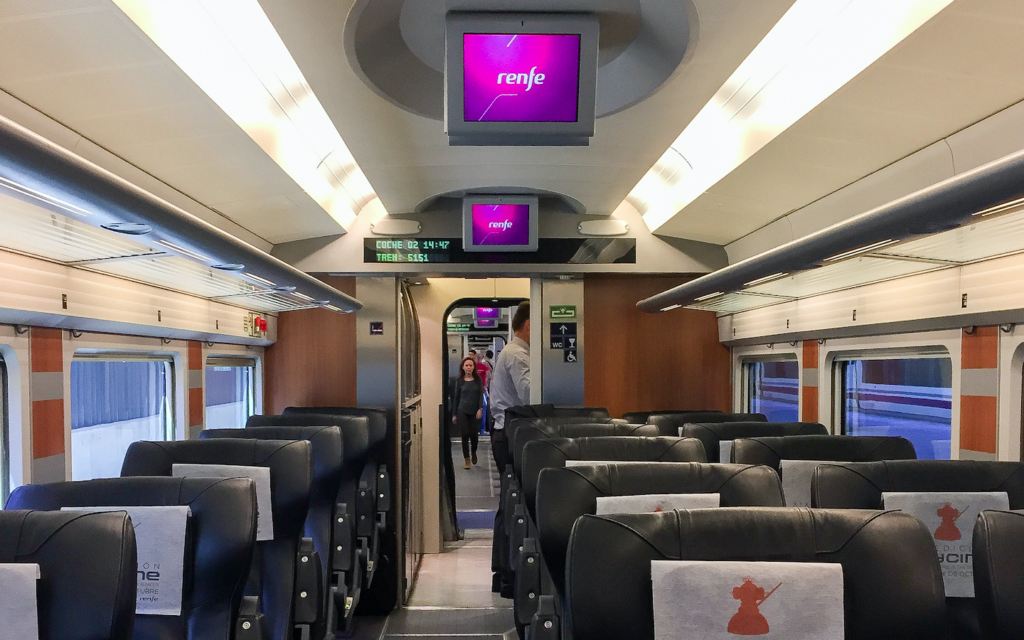
many people have been questioning the safety of Spain's high-speed trains. Photo credit: Saejun Ahn/Shutterstock
Since the deadly railway accident near Urda, many people have been questioning the safety of Spain’s high-speed trains, while others have reconsidered whether to travel at all. Now, another detail has caught passengers’ attention: the speed indicator has disappeared from the illuminated information screens inside some AVE carriages, leaving travellers wondering why they can no longer see how fast the train is moving.
The issue was noticed by passengers travelling on the Madrid–Barcelona route, where the usual speed information was reportedly missing from the displays.
Passengers notice something missing from the screens
One regular passenger reported that the speed had not appeared during the journey. The train crew reportedly confirmed to passengers that the information was not being displayed. The screens themselves were still working. Carriage numbers, train numbers, the time and welcome messages continued to appear as normal.
It was specifically the speed reading that had disappeared. For passengers accustomed to seeing the kilometres per hour displayed during a journey, the change was noticeable, particularly at a time when railway safety is already attracting considerable attention.
Renfe responds to the missing speed indicator
Renfe said that information was being provided to passengers as usual and that it had no knowledge of the reported incident. The operator’s response does not explain why the speed reading was missing from the screens described by passengers.
Nor is it clear whether the problem affected several trains, particular carriages or individual display units. There is also no confirmation that the disappearance was linked to a technical fault with the train itself.
What does the missing display actually mean?
It is important to distinguish between the speed information shown to passengers and the equipment used by drivers to monitor and control a train. The illuminated screens inside carriages are passenger information displays. They allow travellers to see details about their journey, including the train’s speed where that information is available. They do not control the train or determine how fast it is permitted to travel.
The driver’s cab has separate equipment for monitoring speed and receiving information about operating conditions. High-speed trains also use railway signalling and protection systems designed to help drivers maintain safe speeds and respond to restrictions. This means that the disappearance of the passenger-facing speed indicator does not, by itself, show that the train’s speed-monitoring or safety equipment has stopped working.
Railway safety remains under scrutiny after Urda
The report comes just days after the deadly collision near Urda, in Toledo, where a Renfe AVE collided with a stationary Iryo train. The disaster has left 69 people dead and prompted intense scrutiny of the systems and procedures used to manage high-speed rail traffic.
Investigators are examining the failure of the LZB signalling system, which communicates information between the railway infrastructure and trains. It provides drivers with details about permitted speeds and how far they can safely travel, while also allowing the system to intervene if a train does not comply with the required conditions.
The failure of the system and the instructions given to the AVE driver before the collision are among the issues being investigated. On November 1, Renfe issued new instructions requiring drivers to stop if the LZB system fails and, following the appropriate authorisation, resume travelling at no more than 40 kilometres per hour under the specified conditions. The measures are intended to prevent a repeat of the circumstances surrounding the Urda disaster.
Passengers are still waiting for an explanation
The missing speed display is a separate issue from the signalling failure under investigation, and there is currently no evidence connecting the two. However, with public confidence in high-speed rail under pressure, even relatively small changes to what passengers see during a journey are likely to attract attention.
For those who noticed the missing indicator, the question is straightforward: why has information that was previously displayed disappeared while the other screens continue to work? Renfe has not provided a specific explanation for the reports. Until it does, passengers should not assume that the absence of the speed reading means the train’s safety systems are affected.
Follow Euro Weekly News on Google News
Get breaking news from Spain, travel updates, and expat stories directly on your Google News feed.
Follow on Google NewsSign up for personalised news
Subscribe to our Euro Weekly News alerts to get the latest stories into your inbox!
By signing up, you will create a Euro Weekly News account if you don't already have one. Review our Privacy Policy for more information about our privacy practices.

Molly Grace
Molly is a British journalist and author who has lived in Spain for over 25 years. With a background in animal welfare, equestrian science, and veterinary nursing, she brings curiosity, humour, and a sharp investigative eye to her work. At Euro Weekly News, Molly explores the intersections of nature, culture, and community - drawing on her deep local knowledge and passion for stories that reflect life in Spain from the ground up.
Comments