Bomb scares spread across Europe as flights from Spain and Britain are targeted
By Harry Dennis • Updated: 05 Nov 2026 • 13:53 • 4 minutes read
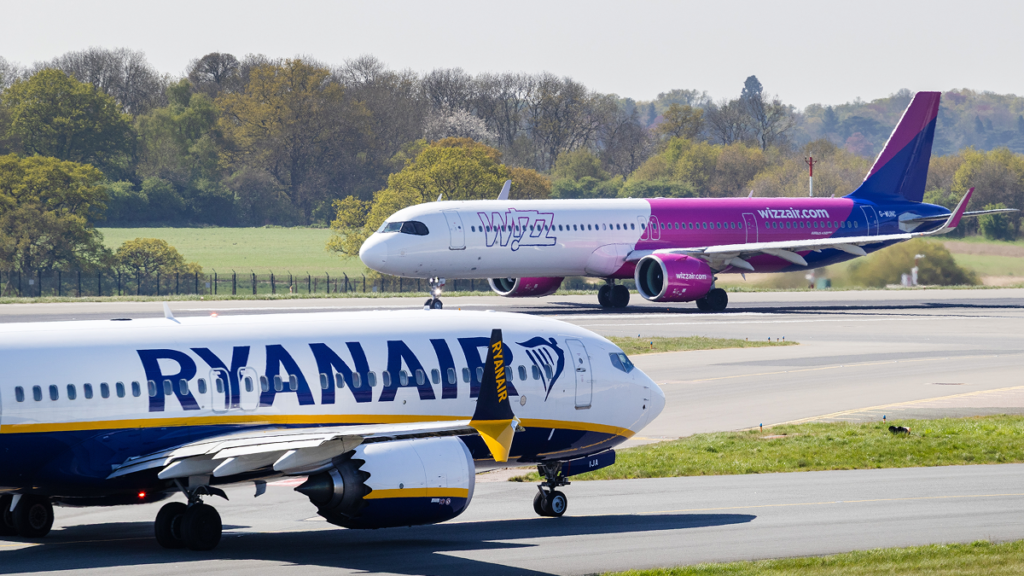
Various bomb threats have hit flights across Europe this week. Credit: Airlinephoto / Shutterstock
Passengers flying from Spain and Britain have been caught up in another wave of bomb scares across Europe, with a Ryanair flight departing Madrid among more than a dozen aircraft targeted on Thursday, November 5. A flight from London was diverted, an Aer Lingus plane landed at a French military airbase and fighter jets escorted another aircraft into Rome. So far, searches have uncovered no explosives, but the latest incidents come just two days after a bomb scare triggered a major security response at Murcia Airport.
Madrid flight caught in Thursday’s fresh wave of bomb threats
The latest alerts reached Spain on Thursday when a Ryanair flight travelling from Madrid to Sofia, Bulgaria, received a bomb threat. The aircraft landed at its scheduled destination, but passengers were evacuated and their luggage inspected while security teams searched the plane. No explosives were discovered.
Another Ryanair flight from Copenhagen landed safely in Sofia and underwent similar checks, while a third service from London Stansted was diverted to Plovdiv, around 120 kilometres from the Bulgarian capital.
Elsewhere, Aer Lingus flight EI402 from Dublin to Rome was diverted to the French military airbase at Évreux, west of Paris. All 151 passengers and six crew members were reported safe, with bomb disposal teams called in to inspect the aircraft.
The disruption spread further across Europe. Italian fighter jets escorted a Finnair flight from Helsinki into Rome, four aircraft heading for Prague received bomb warnings, and Polish airline LOT reported security alerts affecting services to Brussels and Paris.
According to Reuters, Thursday’s incidents marked the second major wave of threats against European airlines this week. Authorities have yet to establish who is responsible or whether the warnings are connected.
Earlier threats saw fighter jets scrambled
The disruption had already begun earlier in the week. On Monday, November 2, a Wizz Air flight from Luton to Sofia was flagged by NATO’s air defence alert service and diverted to Budapest.
Hungary’s defence minister said Gripen fighter jets took to the air within minutes to secure the landing. Nothing was found in the search, and the flight was due to depart again.
An earlier Austrian Airlines flight from Tel Aviv to Vienna had also been rerouted to Bulgaria following a bomb threat on October 18. That incident preceded this week’s wave of alerts, and a search found nothing suspicious on board.
Tuesday brought at least seven more flights
On Tuesday, November 3, a Ryanair flight from Lisbon was searched after landing at Rome, while two Eurofighter jets escorted another Ryanair plane in from Dublin. A LOT flight carrying 181 people from Heathrow was diverted to Warsaw Modlin, which closed briefly, and passengers were taken on to Warsaw Chopin by coach.
At Chopin, a runway was closed as an SAS flight from Copenhagen landed after the airport was told of a potentially dangerous item. In Bulgaria, two more flights bound for Sofia, from Bergamo and Dublin, were searched after landing, with border police saying they had received an email about an improvised explosive device.
Spain wasn’t spared either, with a Ryanair flight from Manchester landing in Murcia under a bomb alert before Guardia Civil officers searched it. The Metropolitan Police said it was also aware of threats against four aircraft at Heathrow and a warning about a flight at Manchester, but that no security issues were identified.
The UK government described the threats against two planes leaving Britain as malicious hoaxes, while insisting UK aviation security is robust.
A cruise ship was evacuated in Greece too
The threats weren’t confined to the air either. On Tuesday, November 3, Greek authorities received an anonymous warning that an explosive had been attached to the hull of the Crown Iris, a cruise ship docked at Syros with 940 passengers and 597 crew, and the ship was evacuated as a precaution.
A coastguard search with a sniffer dog and a diver found nothing, and passengers were allowed back on board, with the ship expected to carry on to Haifa.
Nobody knows who’s behind the threats
No one has claimed responsibility, and Bulgarian officials say they’re still trying to find the sender. Matthew Borie of aviation risk firm Osprey Flight Solutions told AP the explanations could range from copycats to one person or group sending multiple threats, or even state backed hybrid warfare.
European officials have previously accused Russia and Iran of such attacks, which both deny, but nobody has assigned blame for these threats. Another analyst, Rhys Jones, said the lack of a clear target points to general disruption of aviation as the aim.
With flights from Madrid, London, Dublin and several other European cities now affected, the latest incidents have added to the disruption facing airlines and passengers. However, investigators have not established whether the threats are coordinated, and the aircraft inspected so far have been cleared without explosives being discovered.
What passengers can expect if their flight is hit
Spanish airports have faced individual scares this year, including a Jet2 evacuation at Tenerife Sur in September and a KLM delay at Málaga lasting nearly four hours in May. Airlines generally treat security threats as outside their control, so compensation is unlikely, although they should still look after passengers during long waits, including food and drink and a hotel if you’re stuck overnight.
So if your flight is caught up in one, ask the airline for written confirmation of the reason for the delay and keep every receipt for food and transport.
Follow Euro Weekly News on Google News
Get breaking news from Spain, travel updates, and expat stories directly on your Google News feed.
Follow on Google NewsSign up for personalised news
Subscribe to our Euro Weekly News alerts to get the latest stories into your inbox!
By signing up, you will create a Euro Weekly News account if you don't already have one. Review our Privacy Policy for more information about our privacy practices.



Harry Dennis
Born in the UK and raised on the Cádiz coast, Harry brings a creative eye to his writing, sharing stories that celebrate culture and lifestyle across Spain and beyond.
Comments