Over 300 passengers held on ferry for hours after technical failure on Strait of Gibraltar route
By Molly Grace • Published: 17 Apr 2026 • 11:22 • 3 minutes read
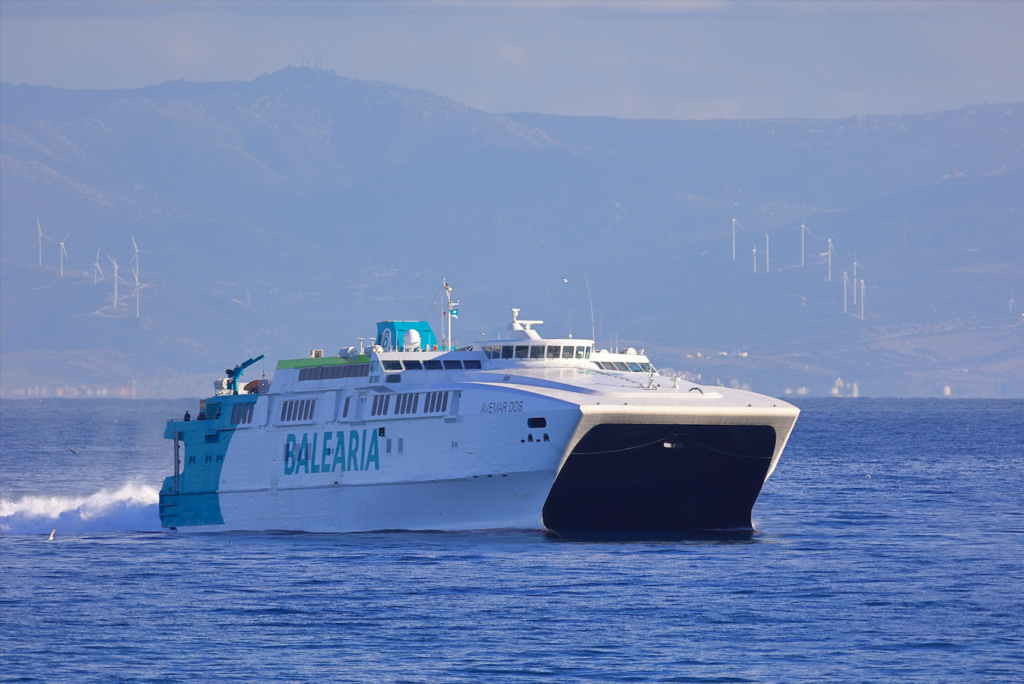
The ferry connection between Tarifa and Tangier is governed by a dual administrative framework. Photo credit: ATGImages/Shutterstock
Over 300 passengers on a ferry travelling between Tarifa and Tangier were left stranded on board for more than three hours after a mechanical fault disrupted the crossing on April 16. The vessel suffered a technical failure while operating across the Strait of Gibraltar, preventing it from completing its scheduled arrival manoeuvres at the Port of Tarifa. The breakdown meant the ferry was unable to proceed with normal docking and disembarkation procedures once it reached its destination.
The Tarifa–Tangier route operates as a short international crossing between Spain and Morocco, relying on close coordination between port authorities, ferry operators, and border control systems. Any disruption to vessel operations can therefore affect not only maritime movement but also passenger processing protocols. In this case, the fault occurred during the final phase of the journey, when arrival procedures were already in progress, creating complications in the standard sequence of disembarkation.
Passengers unable to leave vessel during extended delay
Travellers remained on board for more than three hours after the fault occurred, unable to disembark despite the ferry being close to Tarifa harbour. Passengers questioned why they were not allowed to leave the vessel once it had arrived in Spanish waters. The situation was explained to those on board as being linked to the administrative stage of the crossing, where border control procedures determine passenger status during different phases of the journey.
On this route, immigration and customs processing are structured in a way that can assign legal status to passengers before physical disembarkation takes place. When the breakdown occurred after these procedures had already begun, it disrupted the normal transition from onboard processing to terminal entry. As a result, passengers were left waiting on the vessel while authorities and crew assessed the mechanical issue and worked through the operational constraints created by the timing of the failure.
Structured border system shapes disembarkation process
The ferry connection between Tarifa and Tangier is governed by a dual administrative framework involving both Spanish and Moroccan authorities. This system is designed to manage immigration and customs checks efficiently across a high-frequency international route. Because of this structure, the legal processing of passengers does not always align directly with the physical moment of arrival at port. Instead, different stages of clearance are completed at specific points during the crossing or docking procedure.
The timing of the mechanical failure in this case meant that key procedural steps had already been initiated before the vessel became immobilised. This created a situation in which passengers could not be immediately processed for disembarkation once the ferry reached Tarifa. Although the delay lasted several hours, the situation was treated as an operational disruption rather than an emergency incident, and there is no indication that passengers were placed in danger.
Resolution following technical intervention
After an extended period, the mechanical issue was resolved and the vessel was able to complete the necessary operational steps. Once clearance procedures were finalised, passengers were allowed to disembark and normal port operations resumed.
The disruption was confined to a single crossing and did not result in wider cancellations across the route, although it temporarily affected scheduling at the Port of Tarifa. Other ferry services were able to continue once the vessel cleared docking constraints.
Operational sensitivity of short international crossings
The Tarifa–Tangier route is one of the shortest maritime links between Europe and North Africa, carrying frequent passenger services across the Strait of Gibraltar. Its efficiency depends on precise coordination between vessel performance and border control procedures.
The limited infrastructure at Tarifa, combined with high passenger turnover, means that even short technical disruptions can affect scheduling and terminal operations. The delay was affected by both the mechanical fault and the timing of border procedures. creating delays that extend beyond the immediate technical problem and affect passenger movement even after arrival.
Sign up for personalised news
Subscribe to our Euro Weekly News alerts to get the latest stories into your inbox!
By signing up, you will create a Euro Weekly News account if you don't already have one. Review our Privacy Policy for more information about our privacy practices.




Molly Grace
Molly is a British journalist and author who has lived in Spain for over 25 years. With a background in animal welfare, equestrian science, and veterinary nursing, she brings curiosity, humour, and a sharp investigative eye to her work. At Euro Weekly News, Molly explores the intersections of nature, culture, and community - drawing on her deep local knowledge and passion for stories that reflect life in Spain from the ground up.
Comments