Russia threatens one single building in Spain as a “legitimate military target”
By Adam Woodward • Published: 17 Apr 2026 • 10:59 • 2 minutes read
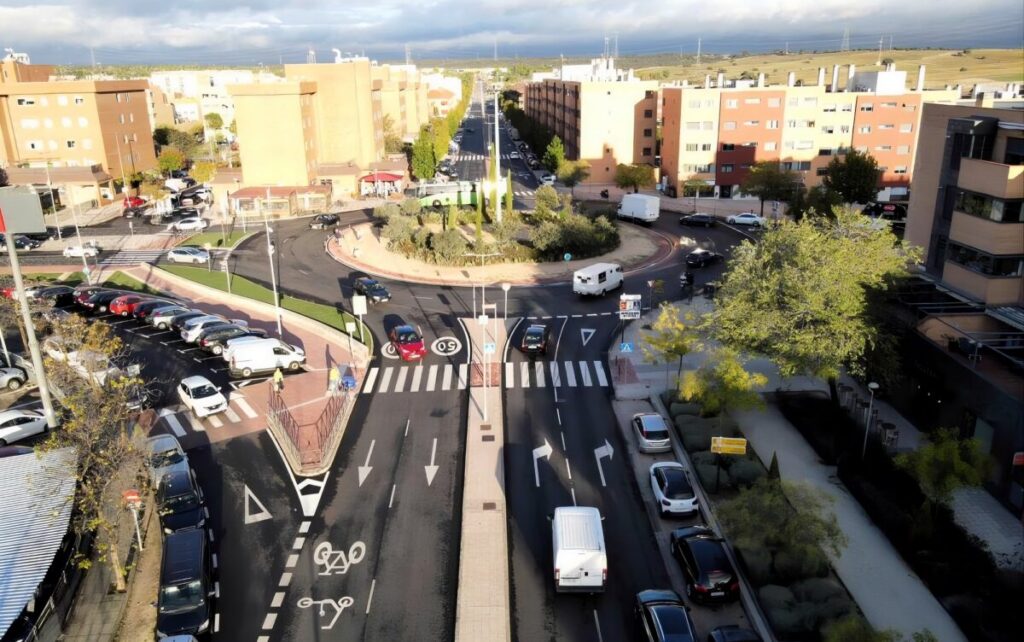
San Sebastian de los Reyes in the eye of Putin. Credit: Lucía S. Fernández Alonso FB
Moscow has directly identified a Spanish company facility in a Madrid suburb as a potential strike site. UAV Navigation, part of the Oesía Group and located in San Sebastián de los Reyes, appears on a list of 21 alleged military targets across 12 countries. Russian officials accuse the firm of supplying navigation components for drones used by Ukrainian forces. Dmitry Medvedev, former president and current deputy head of Russia’s Security Council, publicly described the addresses as potential objectives for Russian armed forces. He added that the timing of any action would depend on future developments, ending with a sarcastic warning to European partners.
Hybrid threats could intensify across the continent
Such singling out of specific sites is a worrying change from general rhetoric to precise identification. Russia has already employed hybrid tactics in Europe, including suspected sabotage, cyberattacks, and interference with critical infrastructure, not to mention poisoning.
Recent incidents in the North Sea and Baltic regions involved unusual submarine movements and cable disruptions, prompting heightened alerts from NATO members. In this context, the Spanish facility might face risks of covert operations rather than overt missile strikes, given Spain’s NATO membership. Companies in defence sectors could encounter increased insurance costs, stricter security protocols, and pressure to relocate sensitive operations.
San Sebastián de los Reyes is a large suburb on the outskirts of Madrid, home to 10’s of thousands of families, an important industrial estate, a massive out-of-town shopping centre, and the birthplace of Hollywood actress Penelope Cruz.
Wider implications for defence industry cooperation
Spain’s dealings with EU and NATO policies on Ukraine support now carries explicit warnings from Moscow. The Oesía Group has confirmed its activities fall within official Spanish and European defence guidelines. Yet this public targeting could discourage other European firms from similar collaborations. It may also dissuade new employees from joining the company. British MPs recently stressed at a Madrid forum that Europe must prepare for wider confrontation, calling for unity beyond partisan lines. If hybrid actions materialise, they might target not only production sites but also supply chains, research facilities, and personnel linked to drone technology.
Spain and allies face choices on deterrence
Few immediate public reactions have surfaced from Spanish authorities, though intelligence services monitor patterns seen in Poland and Germany. Heightened protection for critical defence sites across Europe seems likely, potentially involving more NATO coordination on industrial security. Long-term effects include accelerated efforts to diversify production, strengthen cyber defences, and invest in domestic capabilities to reduce vulnerabilities. European public may grow more aware of how commercial activities in dual-use technologies expose civilian areas to geopolitical risks.
This development goes to show how drone warfare in Ukraine now extends its shadow over allied nations, even for those thousands of kilometres from the front line.
Sign up for personalised news
Subscribe to our Euro Weekly News alerts to get the latest stories into your inbox!
By signing up, you will create a Euro Weekly News account if you don't already have one. Review our Privacy Policy for more information about our privacy practices.





Adam Woodward
Adam is a writer who has lived in Spain for over 25 years. With a background in English teaching and a passion for music, food, and the arts, he brings a rich personal perspective to his work at Euro Weekly News. As a father of three with deep roots in Spanish life, Adam writes engaging stories that explore culture, lifestyle, and the everyday experiences that shape communities across Spain.
Comments