Supreme court case could put Spain’s immigration reform on hold
By Molly Grace • Published: 07 May 2026 • 16:08 • 4 minutes read
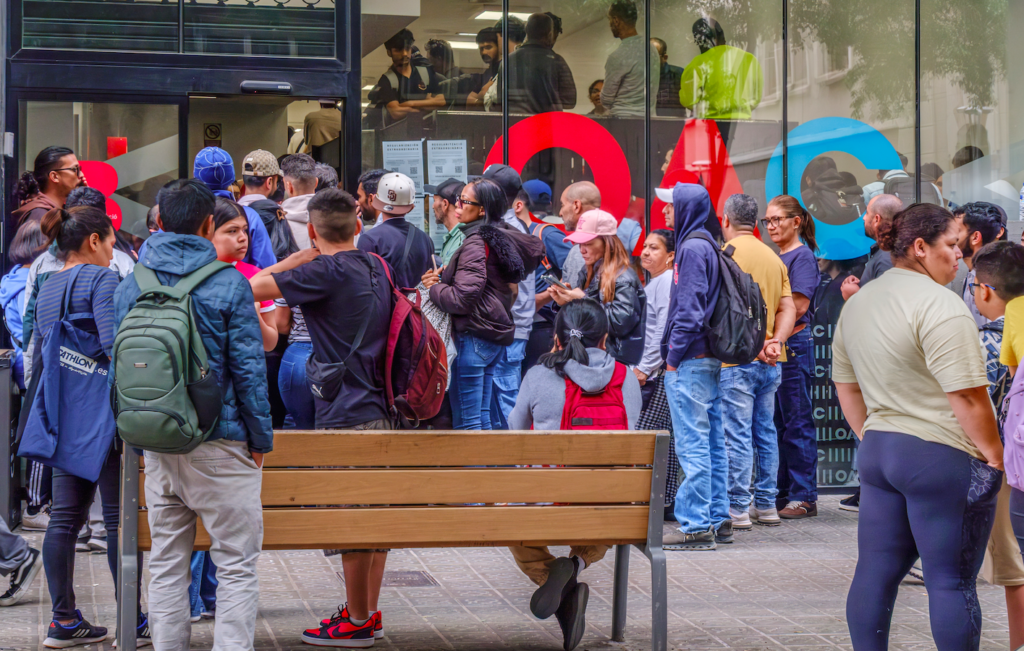
The issue has attracted significant political attention because Spain has seen sustained immigration growth in recent years. Photo credit: ikumaru/Shutterstock
Spain’s Supreme Court will examine whether to temporarily suspend the Government’s planned extraordinary regularisation process for undocumented migrants while legal challenges against the measure are considered.
The hearing has been scheduled for May 13 after the conservative organisation Hazte Oír requested precautionary measures against the initiative. The group argues that the Government exceeded its legal powers by approving the measure through decree and claims the policy could have consequences for public services and immigration controls.
Reasons behind the request to suspend the programme
Hazte Oír is also arguing that allowing the programme to continue before the courts have ruled on its legality could create administrative and legal effects that would be difficult to reverse later if the measure is eventually declared unlawful. The organisation claims the regularisation could affect migration management, residency procedures and access to certain public services while the case remains unresolved.
The Supreme Court has not yet ruled on the legality of the measure itself. The hearing will only determine whether the policy should be paused until the full judicial review is completed.
What could happen after the hearing
If the court decides not to suspend the programme, the Government would be able to continue preparing or implementing the regularisation process while the wider case proceeds. If judges agree to precautionary suspension, the measure could be delayed for months until a final ruling is reached.
The proposal is included in the Government’s current immigration policy framework and is intended to provide legal status to a large number of foreign nationals currently living in Spain without residency documentation.
Supporters of the plan argue that it would help integrate migrants already working and living in the country, while critics believe it could encourage irregular migration and place additional pressure on housing, healthcare and administration systems.
Impact on workers and public services
For many residents in Spain, the immediate impact of the Supreme Court’s decision is unlikely to be direct. However, the outcome could affect several areas of public life over time depending on whether the programme moves forward.
One of the main effects concerns the labour market. Many undocumented migrants already work in sectors facing staff shortages, including agriculture, hospitality, construction, domestic work and elderly care. Employers in some industries have argued that regularisation would allow workers to enter the legal economy formally, improving tax collection and labour protections while reducing undeclared employment.
Trade unions and migrant support organisations have also argued that giving legal status to undocumented workers could reduce exploitation, since employees without residency papers are often reluctant to report abusive conditions or unpaid wages.
Debate over housing and migration pressures
Opponents of the measure have instead warned that a large-scale regularisation could increase demand for public services at a time when many municipalities are already struggling with housing availability, school places and healthcare waiting lists. Some critics also argue that approving exceptional regularisation measures risks sending a message that irregular entry into Spain may eventually lead to legal residency.
The Government has defended the policy by pointing to Spain’s ageing population and labour shortages in key sectors. Ministers have repeatedly stated that immigration will play an important role in maintaining economic growth and supporting the pension system over the coming decades.
Spain has previously carried out regularisation programmes. The best-known took place in 2005 under the government of former Prime Minister José Luis Rodríguez Zapatero, when hundreds of thousands of undocumented migrants obtained legal status after proving employment ties and residency in the country.
Immigration remains a major political issue
The issue has attracted significant political attention because Spain has seen sustained immigration growth in recent years, both through regular migration and through arrivals without legal entry documents. Immigration has become an increasingly important topic in national political debate, particularly in regions facing housing shortages, labour demands and pressure on local services.
The current proposal sits within a wider European debates over migration policy. Several European Union member states have tightened border measures and asylum procedures in recent years, while also facing economic dependence on migrant labour in sectors with chronic worker shortages.
Under Spanish law, courts can suspend administrative measures temporarily if judges believe implementation could cause effects that would be difficult to reverse later. The court must therefore balance the Government’s objectives against the arguments presented by the challengers.
Uncertainty ahead of the court ruling
For undocumented migrants already living in Spain, the hearing may create uncertainty about whether future residency opportunities will proceed. Many are expected to wait for further clarification before beginning administrative procedures or gathering documentation linked to the programme.
Foreign residents who already hold legal residency permits are unlikely to see any immediate changes to their status regardless of the court’s decision. The case specifically concerns undocumented migrants who could potentially qualify for regularisation under the Government’s plan.
Political reactions are expected to intensify ahead of the hearing. Immigration remains one of the most divisive issues in Spanish politics, particularly as rising living costs and pressure on public infrastructure continue to shape public debate across the country. The Supreme Court’s decision on precautionary suspension could become one of the most significant legal rulings on Spanish immigration policy this year, as it may determine whether the Government can proceed with one of its most ambitious migration measures before the courts reach a final judgement on its legality.
Sign up for personalised news
Subscribe to our Euro Weekly News alerts to get the latest stories into your inbox!
By signing up, you will create a Euro Weekly News account if you don't already have one. Review our Privacy Policy for more information about our privacy practices.





Molly Grace
Molly is a British journalist and author who has lived in Spain for over 25 years. With a background in animal welfare, equestrian science, and veterinary nursing, she brings curiosity, humour, and a sharp investigative eye to her work. At Euro Weekly News, Molly explores the intersections of nature, culture, and community - drawing on her deep local knowledge and passion for stories that reflect life in Spain from the ground up.
Comments