227kg of stolen fish with drug residues stopped seconds away from public sale in Spain
By Molly Grace • Updated: 06 Jul 2026 • 16:37 • 3 minutes read
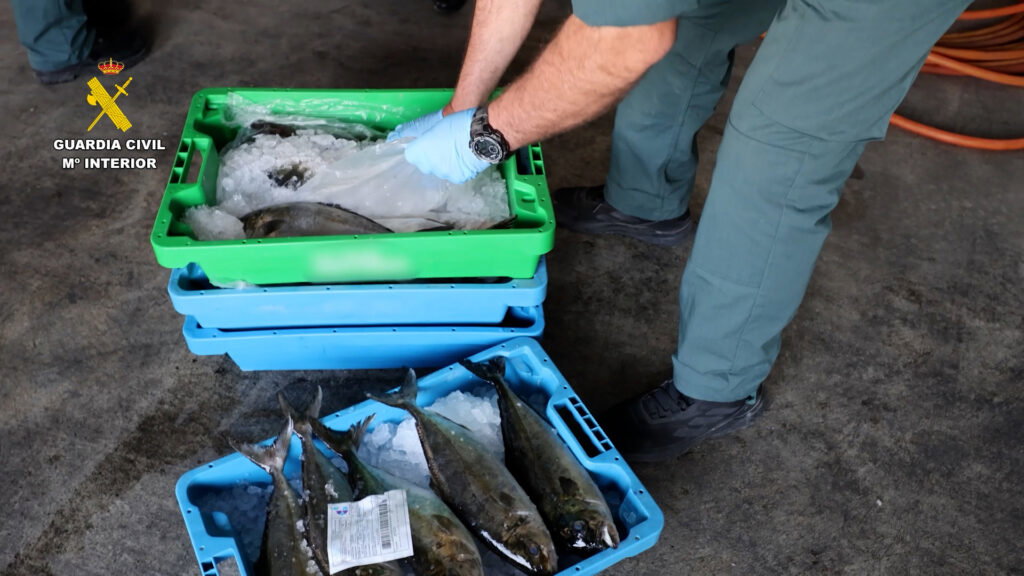
the gap between “in circulation” and “on your plate” is much smaller than most people would assume. Photo credit: Guardia Civil. es
How many times have you bought fish in Spain trusting that it was safe, properly sourced, and exactly what the label says? However, in Alicante that almost didn’t happen after a batch of 227 kilos of stolen fish was intercepted just in time before it could reach shops, restaurants, and potentially dinner tables across the country.
What makes the case particularly concerning is that the fish was not only stolen from aquaculture stock but was also found to contain traces of veterinary medicines, raising serious questions about how far it had already travelled through the supply chain before being stopped.
Just how close did this get to your plate?
The most unsettling part of this case is not where it was found, but where it could have ended up. At the point it was intercepted, the fish was already moving through distribution channels, presented as legitimate stock thanks to falsified documentation. On paper, everything appeared normal. In reality, it was anything but. That is exactly what makes this type of case difficult for consumers to connect with at first.
Nothing looks suspicious at the moment of purchase or handling. It only becomes visible once checks are carried out further along the chain. And by then, the product may already be only one or two steps away from reaching shops, fish counters, or restaurant kitchens. In this case, that final step was prevented. But the gap between “in circulation” and “on your plate” is much smaller than most people would assume.
What was actually inside the fish
Once the inspection took place, investigators found more than just irregular paperwork. The fish had been taken from aquaculture stock and showed traces of veterinary medicine residues. These substances are commonly used in controlled farming environments, but only under strict regulation, including withdrawal periods that must be respected before any product is considered safe for consumption.
The issue here is not simply the presence of treatment, but the lack of verified compliance. Without proper traceability, there is no way of confirming whether those safety steps were followed correctly. That uncertainty is what turns a routine inspection into a serious concern.
Could this have ended up in a restaurant or shop?
That is the question this case raises most directly. Authorities confirmed the batch was intercepted before it was fully traced into retail distribution, but investigations are still working to establish how far it travelled before being stopped.
Seafood supply chains are fast-moving and fragmented, often involving multiple handlers, repackaging points and transport stages. That means a single batch can change hands several times before reaching consumers. If falsified documentation is introduced at any stage, it can allow products to blend into legitimate stock without immediate detection. In other words, everything can look normal right up until the moment it is tested.
How does something like this even enter the system?
Cases like this usually follow a familiar pattern. Stock is removed illegally from controlled environments, then reintroduced into circulation using altered or false documentation. Once paperwork appears valid, the product can move through standard supply routes without raising early suspicion.
From there, it becomes increasingly difficult to separate legitimate goods from irregular ones, especially when products are repackaged or combined with other shipments. This is why detection often relies on inspections rather than routine visibility within the supply chain itself.
The moment it was stopped
The interception in Alicante came after irregularities were identified during checks on the shipment. Further inspection confirmed the inconsistencies, leading to the full removal of the 227 kilo batch from circulation before it could continue any further along the distribution route.
While investigations into the exact movement of the product are still ongoing, what is clear is that it was stopped before reaching consumers. That timing is what ultimately prevented it from entering the final stages of sale.
Why this matters more than the numbers suggest
On the surface, 227 kilos may not sound significant in the context of Spain’s food distribution system. But the importance of this case is not scale, it is proximity. This was not a distant problem caught at source. It was already inside the system, moving forward step by step, close enough that it could realistically have reached everyday meals without consumers ever knowing.
Most people never see what happens between production and purchase. They trust that what reaches the shelf has already been properly checked along the way. Cases like this show how much depends on those checks happening at exactly the right moment.
how close things can get
What this case ultimately shows us is how narrow the margin can be between safe supply and something that should never reach the public. The system worked in this instance, and the batch was removed before reaching consumers. But it also exposed how easily irregular products can move through complex supply chains when documentation appears correct on the surface. And that is the part that stays with most people. Not just that it was intercepted in Alicante, but how close it came to being something entirely ordinary on someone’s dinner table.
Follow Euro Weekly News on Google News
Get breaking news from Spain, travel updates, and expat stories directly on your Google News feed.
Follow on Google NewsSign up for personalised news
Subscribe to our Euro Weekly News alerts to get the latest stories into your inbox!
By signing up, you will create a Euro Weekly News account if you don't already have one. Review our Privacy Policy for more information about our privacy practices.





Molly Grace
Molly is a British journalist and author who has lived in Spain for over 25 years. With a background in animal welfare, equestrian science, and veterinary nursing, she brings curiosity, humour, and a sharp investigative eye to her work. At Euro Weekly News, Molly explores the intersections of nature, culture, and community - drawing on her deep local knowledge and passion for stories that reflect life in Spain from the ground up.
Comments