The luggage mistake Spain’s Guardia Civil wants every summer driver to avoid
By Farah Mokrani • Published: 06 Jul 2026 • 10:16 • 2 minutes read
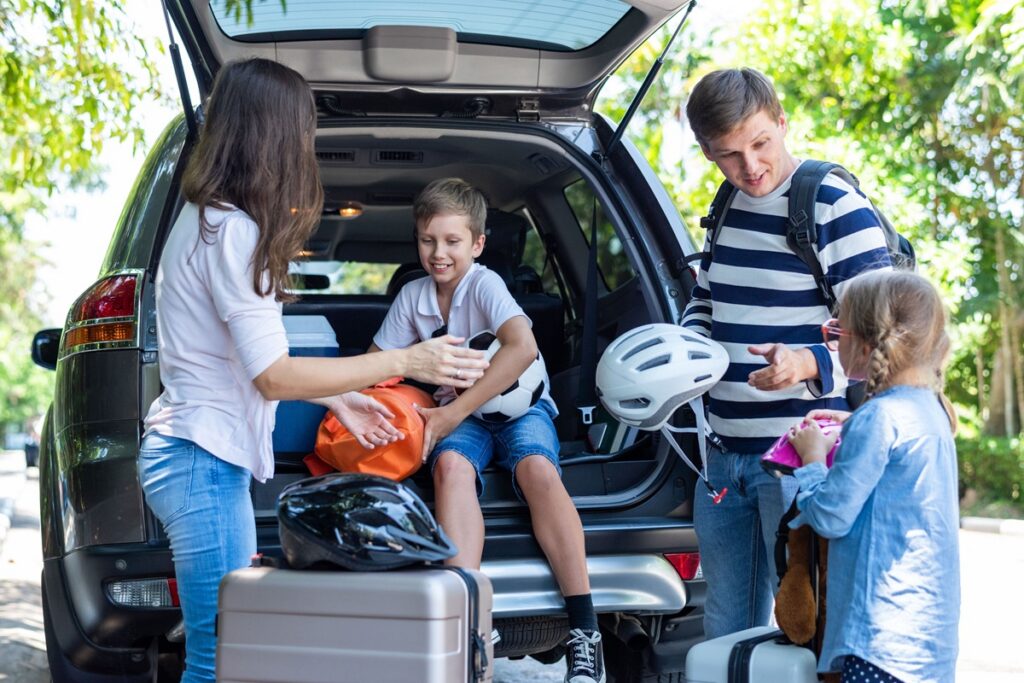
A family packs the car before heading off on their summer holiday. Credit : Rawpixel.com, Shutterstock
It usually happens in a rush. The suitcases are finally zipped, the children are waiting by the door, the beach bag is heavier than expected and someone is still trying to squeeze one last rucksack into the boot. At that point, many drivers stop thinking about safety and start thinking only about making everything fit.
But Spain’s Guardia Civil has warned holidaymakers that badly packed luggage can become a serious danger on summer road trips. A suitcase left loose in the car, or a boot packed without care, can turn into a projectile during sudden braking or a crash.
The warning is especially relevant as millions of people prepare to drive across Spain for their summer holidays, with cars often packed to the roof for trips to the coast, rural homes, campsites and family visits.
Why loose luggage can become a danger on Spanish roads
Most drivers know they should wear a seat belt. Far fewer think about whether their luggage is properly secured.
That is the problem.
According to the Guardia Civil, in a sudden stop, a suitcase can weigh up to 40 times more than its normal weight. In practical terms, that means an ordinary bag can hit passengers with huge force if it flies forward from the boot or back seat.
This is why officers are urging drivers to keep luggage in the boot whenever possible, with the heaviest items placed at the bottom. If the vehicle has fixing points or straps, they should be used.
The aim is not to pack the car like a perfect puzzle. It is to make sure that nothing can move violently if the driver has to brake hard.
The back-seat belt trick many drivers forget
One of the Guardia Civil’s simplest tips may surprise many motorists. Even if nobody is sitting in the rear seats, drivers are advised to keep the back seat belts fastened.
Why? Because in a sharp stop or collision, the belts can help reinforce the seat backs and reduce the risk of luggage from the boot forcing its way into the passenger area.
It takes seconds, costs nothing and could make a difference if the car is heavily loaded.
Drivers should also avoid leaving loose objects inside the cabin. Phones, bottles, toys, tablets, chargers or small bags can all move around during a journey and may distract the driver or become dangerous during sudden braking.
Anything needed during the trip should be stored safely in the glove compartment or another closed storage space.
A fully loaded car does not drive the same way
The other mistake many holidaymakers make is assuming the car will behave exactly as usual once it is full.
It will not.
A heavily loaded vehicle needs more distance to brake, responds more slowly and may accelerate less easily. The difference can be especially noticeable on motorways, mountain roads, roundabouts or when joining traffic.
That is why overloading the vehicle can be risky, even if everything technically fits inside.
If the boot is full, the roof box is packed and passengers still have bags at their feet, it may be time to rethink what is really needed for the journey.
For drivers heading off this summer, your luggage does not have a seat belt, but you still have a responsibility to keep it under control.
A few extra minutes spent packing the car properly before leaving could prevent a frightening moment on the road later.
Follow Euro Weekly News on Google News
Get breaking news from Spain, travel updates, and expat stories directly on your Google News feed.
Follow on Google NewsSign up for personalised news
Subscribe to our Euro Weekly News alerts to get the latest stories into your inbox!
By signing up, you will create a Euro Weekly News account if you don't already have one. Review our Privacy Policy for more information about our privacy practices.





Farah Mokrani
Farah is a journalist and content writer with over a decade of experience in both digital and print media. Originally from Tunisia and now based in Spain, she has covered current affairs, investigative reports, and long-form features for a range of international publications. At Euro Weekly News, Farah brings a global perspective to her reporting, contributing news and analysis informed by her editorial background and passion for clear, accurate storytelling.
Comments