Spain’s total solar eclipse is just 2 weeks away: Will you see totality on 12 August?
By Adam Woodward • Published: 27 Jul 2026 • 22:20 • 3 minutes read
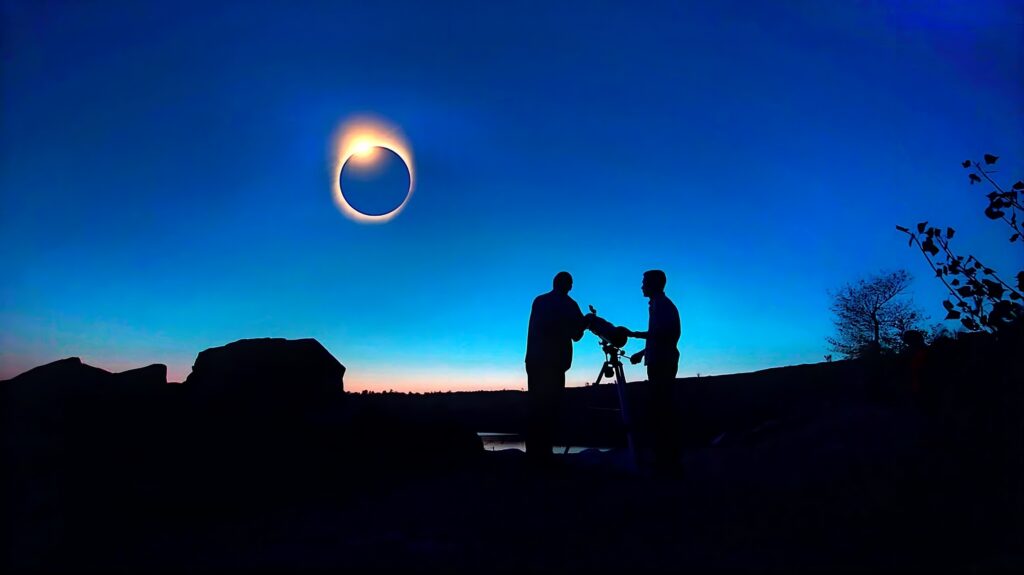
Viewing a once in a lifetime full eclipse. Credit: triodeclipses - Inst
Spain’s first total solar eclipse in more than a century is now just 2 weeks away, and millions of residents and holidaymakers are asking the same question: will I actually see totality where I live?
On 12 August, the moon will completely cover the sun across a narrow band of northern Spain, while the rest of the country will experience one of the deepest partial eclipses seen in decades. With the event taking place late in the afternoon, choosing the right viewing location could make the difference between witnessing a spectacular celestial event or missing it altogether.
Where will you see the total solar eclipse in Spain?
The path of totality stretches across northern Spain from A Coruna on the Atlantic coast to Palma in the Balearic Islands. Major cities inside the path include Oviedo, Leon, Bilbao, Zaragoza and Valencia, where the sun will disappear completely for between around 30 seconds and more than a minute, depending on your exact location.
If you’re inside this narrow corridor, you’ll experience twilight in the middle of the afternoon, stars may become visible, and the sun’s outer atmosphere, the corona, will briefly appear.
Madrid and Barcelona sit just outside the path, meaning they’ll see an impressive but still partial eclipse.
Will you see the eclipse from Costa del Sol, Costa Blanca or Andalucia?
Yes, but it won’t be a ‘total’ eclipse.
Residents across the Costa del Sol, Costa Blanca and most of Andalucia will still witness a dramatic partial eclipse, with a large proportion of the sun covered by the moon.
While daylight won’t disappear completely, the changing light and the unusual appearance of the sun will still make it one of the most memorable astronomical events visible from southern Spain for many years.
Préparez-vous à l’éclipse solaire historique du 12 août 2026 ! Horaires précis par ville et carte d’obscuration
Le mercredi 12 août 2026, l’Europe s’apprête à vivre un rendez-vous historique avec le ciel : la première éclipse solaire totale visible sur le continent depuis 1999.… pic.twitter.com/Gp4IHOd2BG— Artémisia Collège (@ArtmisiaCollege) July 20, 2026
Why your viewing location matters more than ever
Unlike many eclipses, this one reaches its maximum late in the afternoon, when the sun is already low above the western horizon. That means beaches, clifftops, terraces and viewpoints are only suitable if they offer a completely clear view towards the west or west-northwest. Buildings, hills, trees or even nearby islands could block the sun at the crucial moment.
If possible, visit your chosen viewing spot at the same time of day before 12 August to check the view.
How to watch the eclipse safely
Wherever you are in Spain, you’ll need certified eclipse glasses meeting the ISO 12312-2 standard for every stage of the partial eclipse. Ordinary sunglasses, cameras, binoculars or telescopes without approved solar filters do not protect your eyesight and can cause permanent eye damage.
Only people inside the path of totality should briefly remove their eclipse glasses during the few moments when the sun is completely covered. They must be put back on as soon as the first bright sunlight reappears.
What time will the eclipse happen where you live?
The exact timing varies depending on your location. Spain’s Instituto Geográfico Nacional (IGN) provides an official interactive map that lets you enter your municipality to see the precise start, maximum and end times for the eclipse.
Visit the IGN site to check the official calculations before making your plans.
¿Estará el cielo despejado el día del eclipse de 2026? La AEMET respondehttps://t.co/3XfaggFqSt
— Cadena SER (@La_SER) July 14, 2026
Travelling to see totality? Plan now
With only 2 weeks remaining, anyone planning to travel into the path of totality should finalise their plans as soon as possible.
Popular viewpoints and major roads are expected to become busy on the day, particularly around the largest cities inside the eclipse path. Although inland areas often enjoy clearer August skies than parts of the Atlantic coast, weather conditions can still change, so it’s worth checking AEMET weather forecasts during the final few days.
For many people living in Spain today, this will be the only total solar eclipse they’ll ever see without travelling abroad. Whether you’re watching from Valencia, Bilbao, the Costa del Sol or anywhere in between, taking a few minutes to check your location, prepare proper eclipse glasses and find an unobstructed western horizon could turn 12 August into an unforgettable evening.
Follow Euro Weekly News on Google News
Get breaking news from Spain, travel updates, and expat stories directly on your Google News feed.
Follow on Google NewsSign up for personalised news
Subscribe to our Euro Weekly News alerts to get the latest stories into your inbox!
By signing up, you will create a Euro Weekly News account if you don't already have one. Review our Privacy Policy for more information about our privacy practices.



Adam Woodward
Adam is a writer who has lived in Spain for over 25 years. With a background in English teaching and a passion for music, food, and the arts, he brings a rich personal perspective to his work at Euro Weekly News. As a father of three with deep roots in Spanish life, Adam writes engaging stories that explore culture, lifestyle, and the everyday experiences that shape communities across Spain.
Comments