TIE holders in Spain still confused by EES: Survey shows 42% wrong about e-gates
By Adam Woodward • Updated: 03 Aug 2026 • 23:05 • 4 minutes read
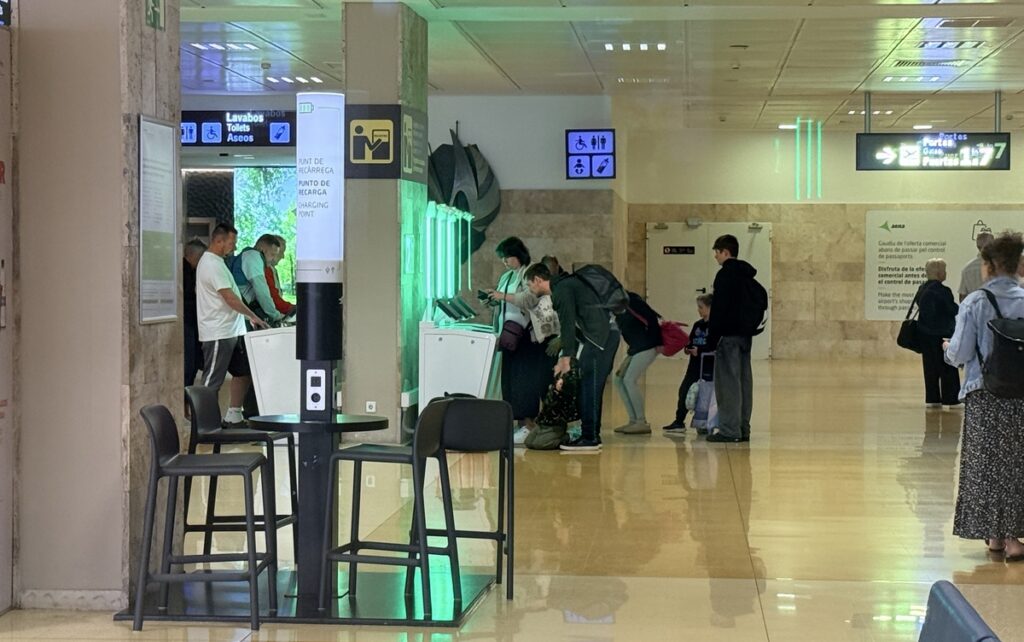
Using the EES machines at Girona Airport. Credit: Wendy lucid2711 - Shutterstock
Foreign residents in Spain are still unsure over the EU’s Entry/Exit System this summer. Airport queues and myth-information have left many uncertain whether their Spanish residency status lets them avoid biometric checks or risks logging them as short-stay visitors by mistake.
Main takeaway: Valid TIE holders are fully exempt from EES. Use the EU/EEA/Swiss citizens and residents lane, present both passport and TIE at a manned desk, and never use the e-gates.
A major new survey of expats in Spain taken in June 2026, found that one in three felt insufficient clear information had reached passengers about the system. More than a third specifically wanted better answers on whether the rules apply to people holding a Tarjeta de Identidad de Extranjero, or TIE. Confusion runs particularly deep around automated passport gates: 42 per cent thought a Spanish residency card would let them use the e-gates, while 40 per cent believed it would not.
Official rules for TIE holders
Holders of a valid Spanish residence permit are outside the EES process completely. Official guidance from the European Union’s Travel Europe portal states that the system does not apply to people with residence permits or long-stay visas. UK Foreign, Commonwealth and Development Office advice matches this, confirming that long-term residents of any Schengen country remain exempt across the whole area.
That exemption means no fingerprints, no facial image capture for the short-stay database, and no automatic counting against the 90 days in 180 rule that applies to tourists. Your biometric data is already on the TIE card. Presenting the TIE at the border simply confirms resident status and allows normal processing without the biometric enrollment required of visitors, as long as you present it with your passport. Full details appear on the official EES exemptions page and in the European Commission’s latest update on who is excluded.
Correct queue and documents at passport control
Expat residents in Spain should look for the lane marked for EU, EEA, and Swiss citizens and residents rather than joining the EES biometric lines. Keep both passport and TIE card visible in hand so officers immediately recognise the right to use that route. Staff at manned desks will check the documents visually, process entry manually, and wave people through without adding records to the short-stay system.
In fact, joining the wrong queue or using an e-gate creates real risk. Those automated gates only scan the passport. Without the residence card being read, the system can treat the traveller as a short-stay visitor and start counting days. Future trips could then cause overstayer alerts even when the person has lived legally in Spain for years. Euro Weekly News has previously covered the practical side of this for British residents in this earlier explanation of why TIE holders stay outside the EES process.
Why e-gates are still off-limits for residents in Spain
Automated gates cannot verify a Spanish residence permit. They read only the passport chip and photograph, so any TIE holder who walks through one risks an incorrect short-stay entry being created. Officers at staffed desks avoid that problem by seeing both documents together and handling the entry outside the biometric system. Reports from airports this summer show the manned resident and EU lanes often move faster than the EES queues, giving TIE holders a practical advantage once they choose the right route.
Airport signage still causes problems for many as there appears to be insufficient training at many airports across Europe. Around a third of survey respondents said clearer signs would cut confusion, while more than a quarter wanted a straightforward step-by-step guide. Previous Euro Weekly News reporting has already flagged the wider queue pressures facing British families this summer, saying that residents with a valid TIE remain the group able to avoid the biometric bottleneck if they present the card correctly – see British families flying to Spain face no guaranteed escape from border queues this summer.
Practical steps before your next trip
Double-check that the TIE remains valid and in date. Carry the physical card rather than a photocopy or digital image. At the airport, head straight for the residents’ or EU lane and have both documents ready. If staff try to redirect you into an EES kiosk, calmly show the TIE and explain resident status. Most officers recognise the exemption once the card appears.
Green residency certificates issued before full biometric TIE cards became standard no longer work for border exemption purposes. Anyone still holding the older paper version should exchange it for a proper TIE as soon as possible. GOV.UK guidance on registering as a resident in Spain and obtaining a TIE spells out why the biometric card matters at the frontier: Spain: registering as a resident and getting a TIE. Further practical advice on renewals and common mistakes appears in Euro Weekly News’ recent piece on residency and TIE renewals in Spain.
Travel insurance providers Staysure Expat ran the June survey that produced these figures, collecting 82 responses through social media channels. Respondents also asked for simpler explanations of systems like the EES, prompting further practical advice aimed at people living in Spain, France and Portugal.
Queues may continue to vary by airport and time of day through the rest of the summer, yet the underlying rule stays consistent. Valid TIE holders are still outside the Entry/Exit System. Choosing the correct lane and presenting both the passport and residence card together keeps travel straightforward and avoids accidental short-stay records that could complicate future journeys.
Follow Euro Weekly News on Google News
Get breaking news from Spain, travel updates, and expat stories directly on your Google News feed.
Follow on Google NewsSign up for personalised news
Subscribe to our Euro Weekly News alerts to get the latest stories into your inbox!
By signing up, you will create a Euro Weekly News account if you don't already have one. Review our Privacy Policy for more information about our privacy practices.





Adam Woodward
Adam is a writer who has lived in Spain for over 25 years. With a background in English teaching and a passion for music, food, and the arts, he brings a rich personal perspective to his work at Euro Weekly News. As a father of three with deep roots in Spanish life, Adam writes engaging stories that explore culture, lifestyle, and the everyday experiences that shape communities across Spain.
Comments