DGT speed camera blitz on Andalucia roads until August 9
By Adam Woodward • Published: 04 Aug 2026 • 9:49 • 3 minutes read
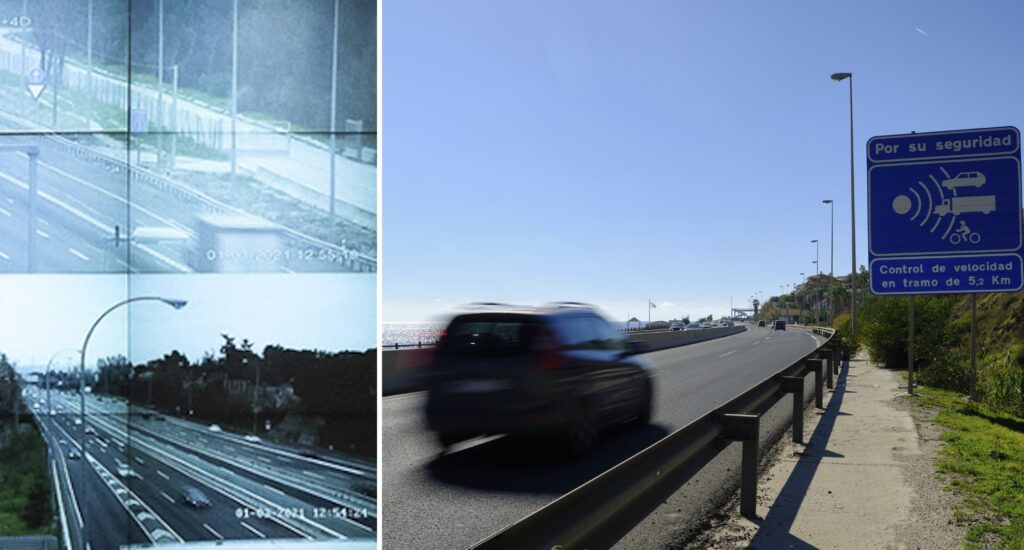
Zipping past La Cala de Mijas caught on camera. Credit: Capturing Images - Shutterstock
Drivers on Andalucia’s roads face a week of intensified speed checks starting now. Spain’s Dirección General de Tráfico (the official government department for road traffic) activated the special operation on Monday 3 August and will keep it running until Sunday 9 August. Guardia Civil traffic units are using both fixed and mobile radars across motorways, dual carriageways and conventional roads.
Inappropriate speeds are the third most common factor in road crashes, the DGT claims. Faster speeds raise collision risk and leave far worse injuries when crashes occur. Summer traffic volumes make the extra checks a priority this week.
Last year’s matching campaign checked over 275,000 vehicles across Andalucia. More than 30,000 drivers, that’s almost 11 per cent, received speeding tickets. Motorways and dual carriageways accounted for most of those infringements. Sevilla province alone saw more than 1,800 drivers fined in its local version of the same operation last year.
Where the checks are most likely
Mobile radar sites are kept close to the chest of the Guardia Civil traffic officers, yet accident records and traffic patterns point to clear priorities. High-volume tourist corridors and known black spots usually draw the heaviest presence. Don’t be surprised by extra speed camera activity on the A-7 coastal route through Cadiz, Malaga, Granada and Almeria, plus the A-92, A-4, A-45, A-49 and the main approaches to Sevilla, Malaga and other cities.
Andalucia’s riskiest roads
A recent study by Automovilistas Europeos Asociados, based on Ministry of Transport figures for 2020-2024, has identified 34 high-danger sections in the region. Those stretches logged nearly 200 accidents involving victims and more than 300 casualties in total.
Particular problem spots include:
- N-351 near La Linea de la Concepcion in Cadiz, especially around kilometre 6, which has recorded dozens of crashes and almost 60 victims over multi-year periods.
- N-431 in Huelva heading towards the Portuguese border, with repeated high victim counts around kilometres 89 and 93.
- Multiple sections of the N-630 (Ruta de la Plata) through Sevilla province.
- Stretches of the old N-340 and N-340a running through Granada, Malaga, Almeria and Cadiz.
- Residual parts of the N-4a in Jaen that still show extremely high relative danger indices despite low daily traffic.
- Sections of the N-432 and N-432a in Cordoba, together with N-323 routes linking Granada and Jaen.
Conventional roads often carry higher relative risk than the big dual carriageways. Summer holiday volumes still put the A-7, AP-7 and main radial routes under equal pressure. Permanent cameras already operate on several of these corridors; mobile units can appear anywhere along them this week.
Why Andalucia gets more fines than most
Andalucia accounts for nearly 28 per cent of all DGT speed-camera fines recorded in Spain. The region holds more cameras than any other autonomous community under direct DGT control. Busy summer routes, long holiday journeys and dense enforcement all contribute. Malaga and Cadiz provinces regularly feature among the busiest individual radar sites in the country.
Handy advice for the week ahead
Keep speeds at the posted limits. Mobile units can sit in unmarked cars or on temporary tripods and do not always carry advance warning signs. Average-speed (tramo) sections already in place on several Andalusian roads continue to operate as normal. Fixed cameras remain active on the usual high-volume stretches.
Anyone planning trips between the Costa del Sol, inland cities or the Portuguese border should allow extra time and stay legal. Fines start at €100 for modest excesses and climb quickly, with licence points lost on more serious breaches.
More details on permanent radar locations appear on the official DGT website. The AEA’s latest danger-index maps also list the full set of high-risk sections.
Related reading from Euro Weekly News:
The Andalucia roads packed with speed cameras
Shocking 180% rise in Almeria speeding fines as new cameras rake in millions
Spanish roads gain 33 new speed cameras: here is where you can find them
External sources: DGT official site and AEA dangerous roads ranking for Andalucia.
Follow Euro Weekly News on Google News
Get breaking news from Spain, travel updates, and expat stories directly on your Google News feed.
Follow on Google NewsSign up for personalised news
Subscribe to our Euro Weekly News alerts to get the latest stories into your inbox!
By signing up, you will create a Euro Weekly News account if you don't already have one. Review our Privacy Policy for more information about our privacy practices.





Adam Woodward
Adam is a writer who has lived in Spain for over 25 years. With a background in English teaching and a passion for music, food, and the arts, he brings a rich personal perspective to his work at Euro Weekly News. As a father of three with deep roots in Spanish life, Adam writes engaging stories that explore culture, lifestyle, and the everyday experiences that shape communities across Spain.
Comments