The wild deer who crossed 50km to return to his Spanish village
By Harry Dennis • Published: 06 Aug 2026 • 17:05 • 3 minutes read
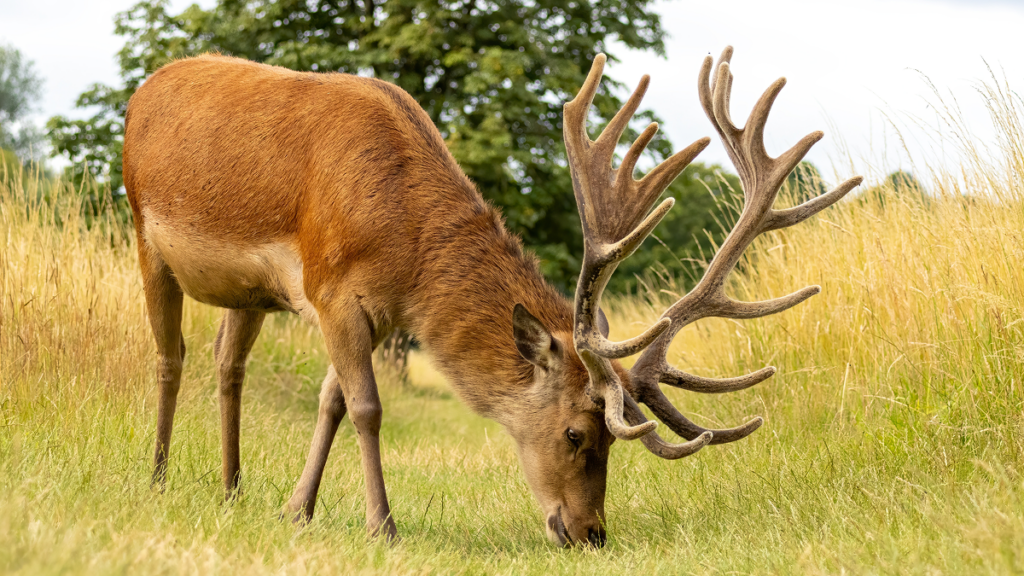
Red deer have a powerful homing instinct, although how they navigate remains a mystery. Credit: Gerdzhikov
Tomás the deer first wandered into Linarejos with an injured leg in 2024 and never quite left. His latest return has delighted the tiny community, but it has also forced residents to protect their antlered local from tourists who treat him like a pet.
Tomás reappeared beside the village fruit trees
In mid-July, Zamora’s Territorial Environment Service, part of the Castilla y León regional administration, organised a special operation to sedate Tomás and move him away from Linarejos. The intervention followed the deer’s growing fame. Residents had grown comfortable with his presence, but visitors were approaching him for selfies, stroking him, touching his antlers and offering him food. His calm manner made it easy to forget that he remained a large wild animal.The villagers therefore supported the move as the safest option for everyone, including Tomás. Officers used a dose calculated for a 180-kilo stag before releasing him in El Casal public woodland, around 50 kilometres away.
His relocation, however, did not last. Six days later, the stag was once again walking slowly through Linarejos. He returned to grazing on the abundant grass and stopping beneath apple, cherry and pear trees in search of fallen fruit, according to residents interviewed by EFE.
Science offers a few clues to his journey
The 50-kilometre figure describes the approximate distance to the release area where they left Tomás, and his return from such a long distance fits a recognised behaviour known as homing. A 2024 study published in Scientific Reports used GPS collars to follow red deer relocated by about 11 kilometres in the Czech Republic. Thirty-one of 35 translocations ended with the animals returning, with a median journey time of 4.75 days.
The deer often pointed towards home immediately after release, explored the unfamiliar area and then began a faster, straighter journey. Scientists still do not know which internal compass large mammals use. Familiar landmarks, smells and magnetic cues are all possibilities, but none has been directly proved in red deer. Tomás’s reported relocation was considerably farther than the distance tested in that experiment, making his six-day return all the more incredible.
An injured stag became Linarejos’s seasonal neighbour
Tomás first appeared in the village in early summer 2024 with an injured leg that made walking difficult. Resident Eloy Martín told EFE that, with wolves in the surrounding Sierra de la Culebra, the deer may have found the settlement a safer refuge. Since then, he has spent three summers around Linarejos, a small hamlet near Spain’s border with Portugal. Residents say his routine is seasonal. He leaves when the autumn rut begins and returns well into winter, as he has done during the previous two years.
“He is like another neighbour,” resident María José Boyano said. Yet she stressed that Tomás is not a pet and that photographs should be taken from a distance.
His welcome home now comes with warning posters
Since Tomás returned, residents have placed posters around the village reminding visitors not to approach or interfere with him. They fear a serious encounter could injure somebody and ultimately put the animal’s life at risk.
In Linarejos that fear carries a bit of history. In 2023, villagers collected around 50,000 signatures seeking a reprieve for another familiar stag, Carlitos, after he was selected as a hunting trophy. Residents later believed a deer killed nearby was Carlitos, although the regional government disputed the identification. His silhouette was subsequently painted on walls and garage doors around the hamlet.
For now, Tomás is back among the fruit trees. He will probably take his leave again when autumn comes around, following his usual pattern. Luckily, even if he does wander off a bit too far, the village and its people know he’ll be able to find his way back if he wants to. The more difficult task for Linarejos, however, is persuading visitors to let him be and remain wild when spotted in the area.
Follow Euro Weekly News on Google News
Get breaking news from Spain, travel updates, and expat stories directly on your Google News feed.
Follow on Google NewsSign up for personalised news
Subscribe to our Euro Weekly News alerts to get the latest stories into your inbox!
By signing up, you will create a Euro Weekly News account if you don't already have one. Review our Privacy Policy for more information about our privacy practices.




Harry Dennis
Born in the UK and raised on the Cádiz coast, Harry brings his background in design, music, and photography to his writing for Euro Weekly News, sharing stories that celebrate culture and lifestyle across Spain and beyond.
Comments