Portugal moves to stop pets being left behind in wildfires and floods
By Molly Grace • Published: 10 Aug 2026 • 19:52 • 3 minutes read
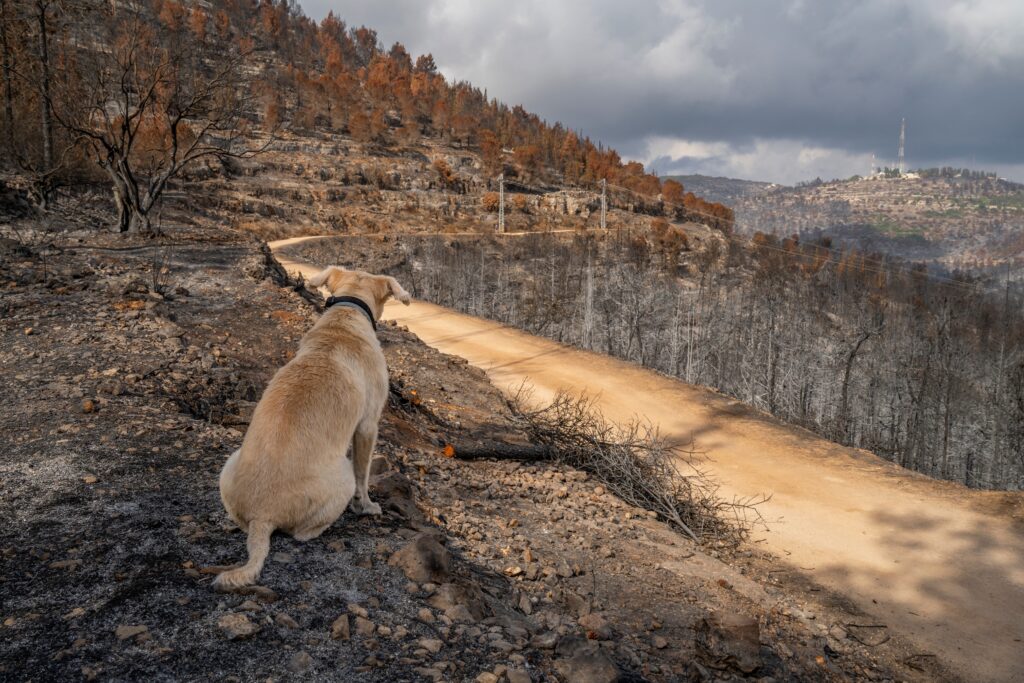
Emergency planning must now take animals into account. Photo credit: Moshe EINHORN/Shutterstock
For families forced to flee their homes during a wildfire, flood or other disaster, one of the most frightening decisions can be what to do with their animals. Portugal has now taken steps to make sure that saving pets and other animals is not left entirely to owners, volunteers or charities when an emergency strikes.
From August 8, animals are formally part of Portugal’s civil protection system, meaning emergency planning must account for their search, rescue, evacuation, accommodation and care during disasters. The move puts Portugal ahead of the debate over how governments should protect animals when communities are evacuated and raises an obvious question for Spain, where the law already requires animal-protection measures in civil protection plans.
Portugal changes the rules for animals in emergencies
Portugal’s Law No. 38/2026, published on August 3, changes the country’s Civil Protection Framework Law and came into force on August 8. The legislation establishes that civil protection is responsible for protecting and rescuing animals as well as people and property in danger. The change is particularly significant because it moves animal rescue beyond being an issue dealt with primarily by individual owners or animal charities.
Emergency planning must now take animals into account, including their search, rescue, evacuation, accommodation and supply needs. Municipal authorities will also have to incorporate these considerations into their emergency planning. That could make a crucial difference during fast-moving disasters, when residents may have only minutes to leave their homes. A family told to evacuate because of an approaching wildfire, for example, should not have to choose between getting themselves to safety and returning to find a frightened dog, cat or other animal.
What happens to animals when disaster strikes?
Animals are often among the most vulnerable victims of major emergencies. Domestic animals can become trapped inside homes, while livestock may be left behind when farms are evacuated. Shelters can also face difficulties accepting animals, leaving owners reluctant to leave without them. Portugal’s new framework seeks to address that problem before an emergency happens.
The Portuguese Veterinary Medical Association has welcomed the incorporation of animals into civil protection, highlighting the importance of planning for their rescue and evacuation. The legislation also provides for arrangements allowing animals to be received and assessed during emergency operations. That is significant because simply telling people that their animals are protected is very different from having an organised system ready to respond.
Spain already has animal protection in its emergency plans
Spain, however, is not starting from scratch, the country’s Animal Welfare Law, Ley 7/2023, already requires civil protection plans to contain measures for protecting animals in accordance with existing legislation. Spain therefore recognised the need for animal protection during emergencies before Portugal introduced its latest changes.
The difference is that Portugal has now gone further in defining animal rescue as part of the civil protection response itself. Spain’s system is divided between national, regional and local authorities, meaning the practical arrangements can vary depending on the type of emergency and where it occurs.
Recent disasters have exposed the problem
Spain has already seen how quickly animals can become caught up in major emergencies. During the devastating DANA floods in Valencia, animal-protection organisations helped rescue and care for companion animals affected by the disaster. The Government subsequently provided financial support for organisations involved in those efforts. Wildfires this year have created similar situations, with vets, sanctuaries, volunteers and animal charities repeatedly rescuing victims and taking animals from areas threatened by flames.
The scale of the problem becomes particularly clear when evacuation orders cover rural areas containing large numbers of livestock, horses and domestic animals. For owners, evacuation is not simply a matter of getting themselves into a car and driving away. Animals may need transport, temporary accommodation, food, water and veterinary attention. Larger animals can require specialist vehicles and equipment. Without advance planning, those needs can quickly overwhelm voluntary organisations.
When will Spain follow Portugal?
There is currently no announced date for Spain to introduce an equivalent Portuguese-style reform, partly because Spanish law already requires animal-protection measures within civil protection planning. That makes the comparison between the two countries more complicated than simply saying Portugal has acted while Spain has not. Spain has already established the legal principle.
What remains less clear is whether it will develop a nationwide operational system comparable to Portugal’s new approach, with clearly defined responsibilities for finding, rescuing and evacuating animals during emergencies. Spain’s civil protection framework continues to evolve as authorities prepare for increasingly serious risks, including wildfires, floods and extreme weather. New emergency-planning measures have also included provisions relating to animal protection, suggesting that the issue is already being incorporated into Spain’s wider disaster planning.
But Portugal’s move could increase pressure for further action, for Spanish pet owners, farmers and animal charities, the distinction matters. When an evacuation order arrives, knowing that animals are legally protected is reassuring. Knowing who is responsible for getting them out could be far more important. Portugal has now taken a clear step towards answering that question. Spain has the legal foundation already. The next question is whether it will turn that foundation into a system that works when the emergency is actually happening.
Follow Euro Weekly News on Google News
Get breaking news from Spain, travel updates, and expat stories directly on your Google News feed.
Follow on Google NewsSign up for personalised news
Subscribe to our Euro Weekly News alerts to get the latest stories into your inbox!
By signing up, you will create a Euro Weekly News account if you don't already have one. Review our Privacy Policy for more information about our privacy practices.





Molly Grace
Molly is a British journalist and author who has lived in Spain for over 25 years. With a background in animal welfare, equestrian science, and veterinary nursing, she brings curiosity, humour, and a sharp investigative eye to her work. At Euro Weekly News, Molly explores the intersections of nature, culture, and community - drawing on her deep local knowledge and passion for stories that reflect life in Spain from the ground up.
Comments