More than 69,000 drivers fined as Spain steps up summer speed checks
By Harry Dennis • Updated: 18 Aug 2026 • 18:10 • 2 minutes read
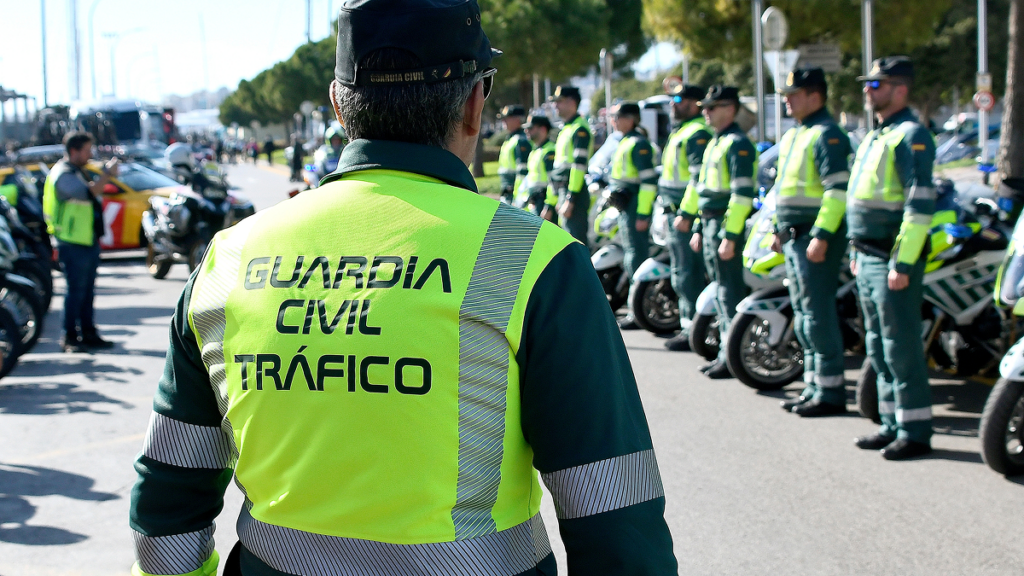
Spain fines 69,000 drivers in a week as summer speed checks spread onto ordinary roads, not just motorways. Credit: Joan Llado / Shutterstock
The radar you already know about isn’t the one that’s catching most people out this summer. In one week alone, the DGT set up more than 3,000 checkpoints nationwide, and drivers were proportionally more likely to be fined on an ordinary road than on a motorway.
More than a million vehicles were checked in a single week
Spain’s traffic authority, the Dirección General de Tráfico (DGT) fined 69,231 drivers for speeding between Monday August 3 and Sunday August 9, one of the most intensive weeks of enforcement of the summer. Officers checked 1,037,333 vehicles nationwide over the seven days, meaning 6.7 per cent of drivers that were stopped got caught breaking the limit. The Guardia Civil set up 3,466 checkpoints across the country, part of a wider enforcement campaign running from June to October.
Ordinary roads are catching a bigger share of drivers than motorways
Motorways and dual carriageways produced the highest number of fines overall, with 38,303 penalties, over half of the total. But the more telling figure is that more than 7 per cent of vehicles checked on conventional roads were fined, compared with 6.37 per cent on motorways. In other words, a driver on an ordinary single-carriageway road was more likely to be caught than one on a faster route. Urban roads accounted for the remaining fines, 2,329 in total.
Serious speeding cases have nearly tripled in two years
Nineteen drivers were referred to Spain’s courts after being caught exceeding the limit by more than 80 km/h (50mph), an offence treated as a criminal matter rather than a routine fine. That number has nearly tripled compared with the same campaign two years ago. DGT said the increase pointed to a persistent pattern of extremely dangerous driving, and suggested current rules may need to be strengthened to act as more of a deterrent.
Checks stretched across some of the country’s busiest holiday routes
In Andalucía, one of the regions most affected, checks before the campaign began covered major routes including the A-7 coastal motorway through Cádiz, Málaga, Granada and Almería, along with the A-92, A-4, A-45 and A-49. Officers also targeted conventional roads flagged as particularly dangerous, including the N-351 near La Línea, the N-431 towards the Portuguese border and stretches of the N-340.
Andalucía alone accounts for close to 28 per cent of Spain’s speed-camera fines nationally. Last year’s equivalent regional campaign checked more than 275,000 vehicles, with about 11 per cent receiving a fine, and Sevilla province alone recording more than 1,800 penalties.
What it means for foreign residents and tourists driving in Spain
For foreign residents and tourists behind the wheel this summer, the figures are a reminder that Spain’s enforcement goes well beyond the fixed radars marked on satnav apps and roadside signs. Guardia Civil units use unmarked patrol cars and portable equipment set up with no advance warning, on top of a summer that has already brought more roadside checks and the country’s permanent network of fixed and mobile radars.
Fines for speeding in Spain typically start at around €100 and rise sharply with the severity of the offence. With school summer holidays continuing and more getaway traffic expected in the coming weeks, further intensive checks are likely, including on routes that do not normally carry visible radar.
Follow Euro Weekly News on Google News
Get breaking news from Spain, travel updates, and expat stories directly on your Google News feed.
Follow on Google NewsSign up for personalised news
Subscribe to our Euro Weekly News alerts to get the latest stories into your inbox!
By signing up, you will create a Euro Weekly News account if you don't already have one. Review our Privacy Policy for more information about our privacy practices.





Harry Dennis
Born in the UK and raised on the Cádiz coast, Harry brings his background in design, music, and photography to his writing for Euro Weekly News, sharing stories that celebrate culture and lifestyle across Spain and beyond.
Comments