Almería and Málaga city join West Nile virus alert as Andalucía’s cases climb to 47
By Harry Dennis • Published: 20 Aug 2026 • 12:08 • 3 minutes read
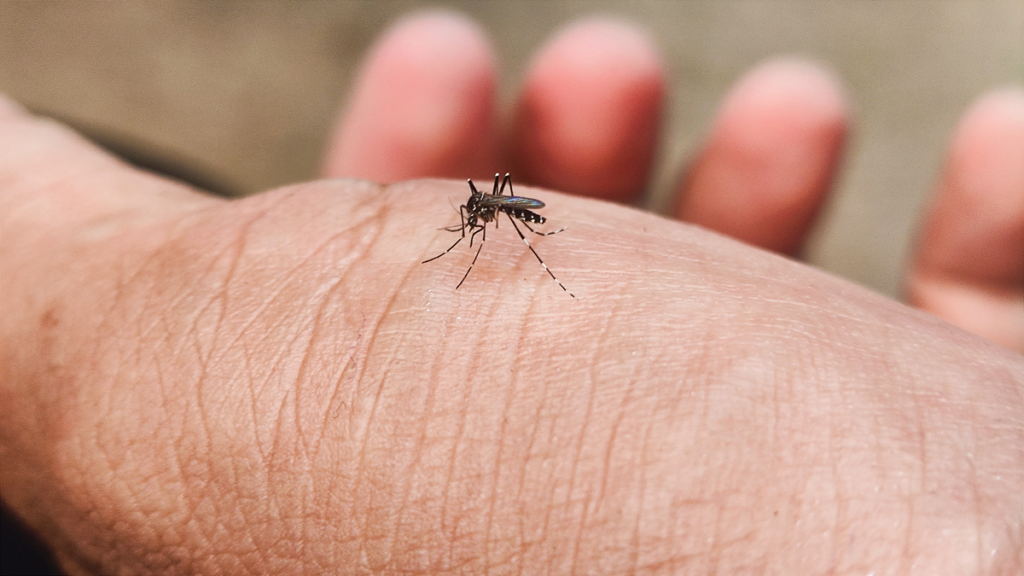
The regional alert list has flagged municipalities under extra mosquito surveillance across seven provinces. Credit: ixhsanp / Shutterstock
Two and a half weeks ago, Andalucía’s West Nile virus outbreak was limited to 19 towns on alert, mostly in rural Sevilla, with 17 cases. It has since spread within a second province for the first time, Almería and Málaga city have both joined the wider watch list, and the case count now stands at 47.
The Junta de Andalucía has confirmed 47 cases of West Nile virus so far this year. Of the total, 32 people have had mild illness and 15 have developed the more serious neuroinvasive form of the disease. Seventeen people have been hospitalised overall, with seven still receiving treatment.
One death has been recorded overall, an 82-year-old from Dos Hermanas who died after developing meningoencephalitis, a severe swelling of the brain caused by the virus. The regional alert list, which flags municipalities under extra mosquito surveillance because the virus has turned up in traps, birds or blood donors nearby, has grown from 19 towns to 27 across seven provinces. Confirmed human cases remain concentrated in just two of them.
Huelva’s first case emerged in the marshland town of Hinojos
Huelva has become the second Andalusian province with a confirmed human case this year, after a resident of Hinojos tested positive. The town sits at the edge of the Doñana wetlands, where the Junta has previously found the virus in wild birds and mosquitoes, making the area one of its known natural reservoirs in the region.
Sevilla accounts for every other case, 46 of the 47 in total. No further details about the Huelva patient’s condition have been released.
Villamanrique de la Condesa remains Sevilla’s worst-hit town
Villamanrique de la Condesa has the highest concentration of any single municipality, with 10 cases, ahead of Dos Hermanas on seven and Coria del Río on six.
Fuengirola and Mijas, alongside Málaga city, Salobreña in Granada and Lopera in Jaén, have all been on the alert list for some time. Two more provinces have since joined: Pulpí in Almería and Algodonales in Cádiz, both added after the virus turned up in mosquito traps rather than in a human case. No human cases have been confirmed in any of these six municipalities, and the alert means residents there are advised to take extra care against mosquito bites.
What it means when a case turns ‘neuroinvasive’
Most West Nile virus infections cause no symptoms at all, with national health data suggesting around eight in 10 cases go unnoticed. Those who do fall ill typically experience fever, headache and body aches that clear up within days.
A smaller number develop neuroinvasive disease, in which the virus affects the brain or spinal cord, causing high fever, a stiff neck, confusion or muscle weakness. It is this severe form, which now accounts for 15 of Andalucía’s 47 cases, that carries a real risk of death, particularly in older or already vulnerable patients.
A zoo closure adds to Cádiz’s growing watch list
Cádiz’s alert status grew further within days of Algodonales joining the list, when the Zoobotánico Alberto Durán in Jerez de la Frontera closed as a precaution on Wednesday August 19. A golden eagle and a cassowary at the zoo tested positive for West Nile virus, prompting the Junta de Andalucía to declare a specific health alert for Jerez running until September 16, extendable if further cases emerge.
No human cases or other infected animals have been confirmed at the zoo, and 12 sentinel geese used to monitor the virus locally tested negative in the latest samples. Carmen Pina, the city’s delegate for animal protection, described the two bird deaths as isolated and said the zoo was coordinating its response with regional health authorities.
Health authorities continue to urge people in and around alert areas to use registered insect repellents, wear light clothing that covers the skin, and clear standing water from gardens, patios and pools, the main breeding ground for the mosquitoes that spread the virus. Anyone showing symptoms such as high fever or confusion after a mosquito bite in an alert area is advised to seek medical attention, and to bear in mind that citronella and similar home remedies offer little real protection.
Follow Euro Weekly News on Google News
Get breaking news from Spain, travel updates, and expat stories directly on your Google News feed.
Follow on Google NewsSign up for personalised news
Subscribe to our Euro Weekly News alerts to get the latest stories into your inbox!
By signing up, you will create a Euro Weekly News account if you don't already have one. Review our Privacy Policy for more information about our privacy practices.



Harry Dennis
Born in the UK and raised on the Cádiz coast, Harry brings his background in design, music, and photography to his writing for Euro Weekly News, sharing stories that celebrate culture and lifestyle across Spain and beyond.
Comments