Sea levels swing 70cm in minutes as meteotsunami hits Costa Blanca and Valencia beaches
By Adam Woodward • Updated: 26 Aug 2026 • 9:49 • 2 minutes read
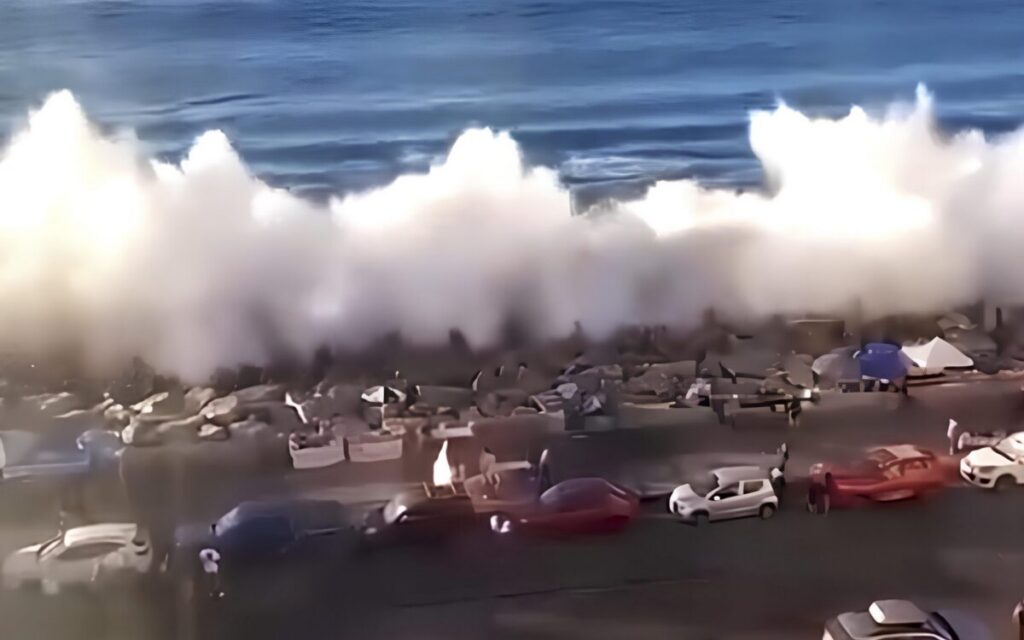
Tsunami wave breaches Javea rock protections. Credit: Viral video on X
Holidaymakers got a severe shock on Monday when the Mediterranean suddenly pulled back and then rushed forward again along stretches of the Valencian coast. AEMET, Spain’s weather service, confirmed the odd behaviour was what is commonly known as a “meteotsunami”, or also known locally as a “rissaga”, driven by rapid swings in air pressure rather than any underwater quake.
Tide gauges run by Puertos del Estado clocked a 70cm change in just a few minutes at Gandia port, jumping from +0.336m at 9.06am to –0.371m at 09.12am. Similar rapid rises and falls hit beaches and harbours from Gandia and Cullera down through Denia, Javea, Santa Pola, Elche, Torrevieja and Orihuela Costa.
Las bruscas variaciones de presión registradas en superficie esta mañana son un indicador de la presencia de ondas gravitatorias. En Xàbia se registraron esas variaciones a las 7 y las 11 de la mañana, con una oscilación máxima entre 10:10 y 10:20 hora oficial de 4 hPa. pic.twitter.com/Azh6YT54e1
— AEMET Comunitat Valenciana (@AEMET_CValencia) August 24, 2026
Where the water pulled back and suddenly returned
In Javea the sea retreated enough to leave normally submerged rocks high and dry before charging back with strong currents. Beachgoers at l’Arenal, the Canal de la Fontana and Cala En Calo watched the shoreline move in and out within minutes. Denia’s Marineta Cassiana saw level changes of around 40-50cm every few minutes, startling snorkellers and making it tricky for yachts to enter port.
Further south in Santa Pola the water pushed past the usual high-tide line at Playa Lisa and Gran Playa, reaching close to Avenida Blasco Ibanez. Local police briefly closed the road as a precaution. Cullera and parts of Elche and Torrevieja recorded the same abrupt oscillations.
How much damage occurred
No serious injuries or major structural damage have been reported. A few floating pontoons shifted and some boats found the entrance channels awkward for a short while. In Santa Pola traffic was stopped temporarily, but the water did not cause lasting problems. Most people simply grabbed their towels and stepped back until the sea settled.
How common are these events?
AEMET stresses this is nothing new for the Mediterranean. A similar episode hit Torrevieja, Elche, Santa Pola and El Campello on 23 July 2017. Milder oscillations of 10-60cm crop up several times a year, especially between May and September. Stronger events of a metre or more are less frequent, typically once or twice a year in the most exposed spots, while truly destructive ones are still very rare. while similar sea level surges were also reported in Mallorca this week
Are meteotsunamis dangerous?
They can be. Rapid currents and sudden level changes pose a real risk to swimmers, small children, small boats and anyone standing near the water’s edge. Stronger events elsewhere have flooded streets, smashed pontoons and even caused fatalities. Monday’s episode stayed moderate, but AEMET still classed it as a “rare maritime phenomenon” and encourages people to report sightings through its Sinobas system.
Anyone on the Costa Blanca or Valencian beaches should treat unexpected sea movements with respect, step back, keep an eye on children and follow local advice until conditions return to normal. Similar activity was also reported the same day on parts of Mallorca.
Follow Euro Weekly News on Google News
Get breaking news from Spain, travel updates, and expat stories directly on your Google News feed.
Follow on Google NewsSign up for personalised news
Subscribe to our Euro Weekly News alerts to get the latest stories into your inbox!
By signing up, you will create a Euro Weekly News account if you don't already have one. Review our Privacy Policy for more information about our privacy practices.

Adam Woodward
Adam is a writer who has lived in Spain for over 25 years. With a background in English teaching and a passion for music, food, and the arts, he brings a rich personal perspective to his work at Euro Weekly News. As a father of three with deep roots in Spanish life, Adam writes engaging stories that explore culture, lifestyle, and the everyday experiences that shape communities across Spain.
Comments