Skin mole check: understanding normal changes, warning signs, and the ABCDE rule
By Dr Marcus Stephan • Published: 26 Aug 2026 • 9:00 • 5 minutes read
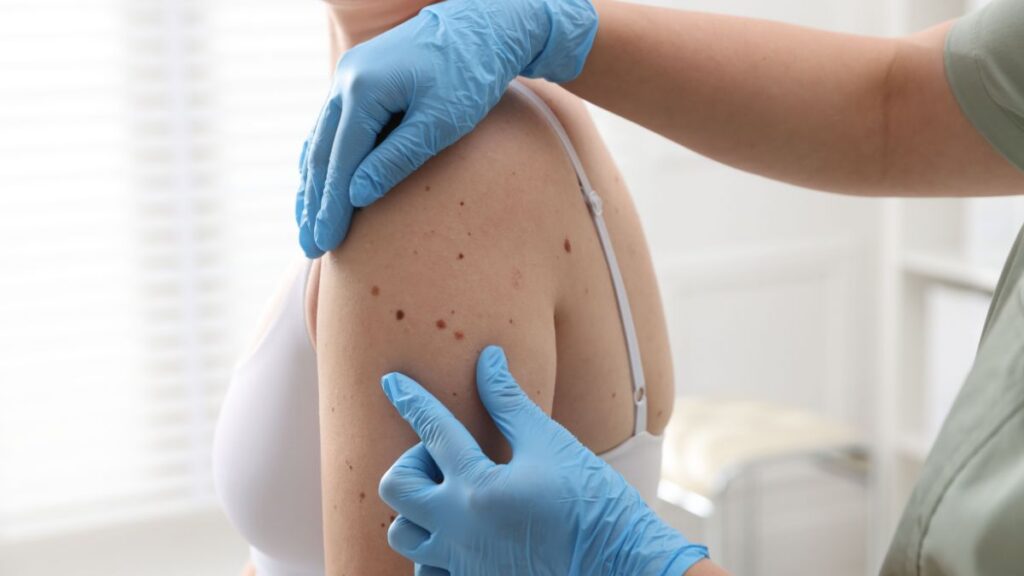
Regular professional skin checks and self-examinations help spot changing moles early, which is crucial for detecting skin conditions like melanoma. Credit: New Africa/Shutterstock
Secret agents, skin spots, and breakwaters…
Moles, moles, moles, yes, they are all moles when it comes to the English language, and it can be a bit confusing for some. When it comes to the skin spots we call moles most of us barely give our moles a second thought – until one seems to change. A darker colour, an uneven edge or a new spot that wasn’t there before can quickly raise concerns. But while it’s sensible to keep an eye on your skin, the good news is that most moles are completely harmless. Knowing what to look for can help you separate normal changes from those that deserve medical attention.
Take a close look at your skin and you’ll probably find a collection of moles scattered across your body. Despite being so common, moles often spark anxiety, particularly when stories about skin cancer make the headlines. So, what exactly are they, why do they appear, and when should you actually be worried?
What exactly is a mole?
A mole, or naevus as doctors call it, is simply a collection of pigment-producing cells known as melanocytes. Normally these cells are spread evenly throughout the skin, giving it its colour. Sometimes however they gather together in one place, creating a visible mark. Incidentally, we call these skin spots ‘moles’ as this comes from an old English word māl which means spot, or mark. It has nothing to do with those furry things that throw up mole hills.
Moles are remarkably individual. Some are flat, others are raised. They may be tan, brown, black, pink or even almost the same colour as your skin. Some are smooth, while others have a rough texture or even sprout a few hairs.
Most develop during childhood or adolescence, although it’s perfectly normal to notice new ones appearing into your thirties. Hormonal changes during puberty and pregnancy can also make existing moles appear darker or more noticeable.
Why do we get moles? Sun exposure and genetics
The number of moles you have is largely down to genetics – you can often thank your parents for your collection! But sunlight also plays an important role.
Ultraviolet (UV) rays stimulate pigment cells in the skin, and repeated sun exposure can encourage new moles to develop while increasing the risk of skin damage.
That’s why dermatologists stress the importance of protecting your skin throughout life – not just on beach holidays, and for those of us fortunate to live here in Spain, that really does mean all the time.
Did you know?
- Most adults have 10–40 moles.
- Some people have more than 100 moles and remain perfectly healthy.
- Moles can be present at birth or develop gradually over many years.
- Most moles stop appearing after about the age of 40.
When should alarm bells ring? The ABCDE rule for melanoma
One of the easiest ways to remember the warning signs is the ABCDE rule.
- A – Asymmetry: If one half of the mole looks different from the other.
- B – Border: The edges become irregular, jagged or blurred.
- C – Colour: Different shades of brown, black, red, white or blue appear within the same mole, or the colour changes noticeably.
- D – Diameter: A mole larger than 6mm should be checked, although melanomas can certainly be smaller.
- E – Evolving: Perhaps the most important sign of all. If a mole changes in size, shape, colour or texture, don’t ignore it.
Other warning signs include:
- Persistent itching
- Bleeding without injury
- Crusting
- Oozing
- Pain
- A brand-new mole appearing in adulthood that looks very different from your others.
Dermatologists also refer to the “Ugly Duckling” sign. If one mole simply looks different from all the rest, it’s worth having it examined.
Skin cancer risks and early detection
Melanoma is the most serious type of skin cancer because it can spread to other parts of the body if left untreated.
Fortunately, it’s also one of the cancers where early detection makes a dramatic difference. When diagnosed early, treatment is often straightforward and highly successful.
Several factors increase the risk, including:
- Fair skin that burns easily
- A history of severe sunburn
- Spending lots of time in strong sunlight
- Using sunbeds
- Having many moles
- A family history of melanoma
- A weakened immune system
It’s important to remember that having lots of moles doesn’t mean you’ll develop melanoma. Most people never will.
What happens during a doctor’s mole examination?
If you visit your GP because of a changing mole, they’ll examine it carefully. Many doctors use a special magnifying device called a dermatoscope, which allows them to see structures beneath the surface of the skin.
If there’s any doubt, you’ll usually be referred to a dermatologist or specialist skin clinic.
The only reliable way to know whether a mole is cancerous is to remove it and send it to a laboratory for microscopic examination. Although that sounds worrying, it’s usually a straightforward procedure carried out under local anaesthetic.
How moles are removed: surgical excision and options
Most moles never need treatment.
However, removal may be recommended if a mole:
- Looks suspicious
- Frequently catches on clothing or jewellery
- Bleeds because of repeated irritation
- Causes cosmetic concerns.
The most common treatment is surgical excision, where the doctor numbs the area, removes the mole and closes the wound with a few stitches.
Raised harmless moles can sometimes be removed using shave excision, leaving a small wound that usually heals quickly.
Laser treatment is occasionally offered for cosmetic reasons, but doctors generally avoid using it for suspicious pigmented moles because the tissue can’t then be examined properly under the microscope.
Sun protection habits to protect your skin for life
While genetics determine many of your moles, protecting your skin from UV damage remains one of the best ways to reduce your risk of skin cancer.
Simple habits make a big difference:
- Use SPF 30 or higher sunscreen every day during sunny weather.
- Reapply every two hours if outdoors.
- Wear hats, sunglasses and protective clothing.
- Seek shade during the middle of the day when the sun is strongest.
- Avoid tanning beds completely.
These steps not only reduce the risk of skin cancer but also help prevent wrinkles, pigmentation and premature ageing.
How to perform a monthly skin check
Once a month, take five minutes to examine your skin.
Don’t forget to check:
- Your scalp
- Behind your ears
- Your back
- The soles of your feet
- Between your toes
- Under your nails
Using a mirror – or asking a partner to help with hard-to-see areas – can make checking easier, or even fun…
Knowing your skin for long-term peace of mind
Most moles are simply a normal part of having skin. They come in countless shapes, colours and sizes, and in most cases, they’ll never cause a problem. The important thing is knowing your own skin. Become familiar with what’s normal for you, and don’t ignore any mole that changes, bleeds, itches or simply stands out from the rest.
When it comes to melanoma, early diagnosis saves lives. A quick appointment with your GP can provide reassurance – or, if treatment is needed, ensure it begins as early as possible.
After all, checking your skin takes just a few minutes, but it could make a lifetime of difference.
For the pub quiz experts among you; the collective noun for moles (the small troglodyte animal) is a labour of moles, while a small group of moles should be known as a company of moles. A mole is also a spy who has infiltrated an organisation, usually over a long period of time. Scientists will also know that a mole is the basic SI unit of amount of substance (from molecule) The SI symbol for mole is ‘n’. A mole is also a breakwater made from rocks or concrete shapes usually going out to sea.
Follow Euro Weekly News on Google News
Get breaking news from Spain, travel updates, and expat stories directly on your Google News feed.
Follow on Google NewsSign up for personalised news
Subscribe to our Euro Weekly News alerts to get the latest stories into your inbox!
By signing up, you will create a Euro Weekly News account if you don't already have one. Review our Privacy Policy for more information about our privacy practices.





Dr Marcus Stephan
With a career spanning more than 35 years in both the UK and internationally, Dr Marcus' passion lies in empowering individuals through knowledge, enabling them to care for themselves and others. He simplifies the science behind medicine by removing unnecessary jargon, explains common health conditions, and shares updates on the latest advances and developments in medicine.
Comments