Buying a used car in Spain? Check this tax before you pay
By Harry Dennis • Published: 08 Sep 2026 • 16:02 • 3 minutes read
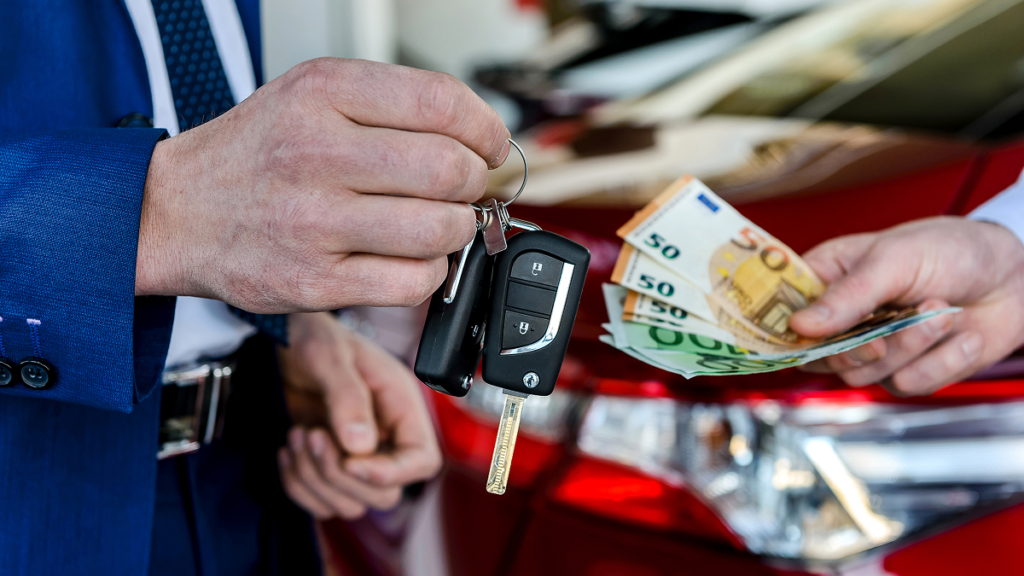
Spain's tax office does not always work from the price written on the contract. Credit: RomanR / Shutterstock
Knocking €2,000 off the asking price of a second-hand car in Spain feels like a win, right up until the tax bill arrives. Hacienda works from its own valuation of the vehicle, and it doesn’t have to accept the figure written on the contract.
Hacienda keeps its own price list, and that’s the one that counts
When a car passes between two private individuals in Spain, the buyer pays Impuesto de Transmisiones Patrimoniales (ITP), the regional transfer tax. The seller pays nothing, and no side agreement between the two can shift that obligation. The rate is set by each autonomous community rather than nationally. Four per cent is the default figure written into the national law for transfers of movable property, but regions can and do vary it. Galicia charges 3 per cent, while several communities charge more.
What that percentage is applied to is where buyers can get confused and stuck. Tax offices work from official average sale prices published each December in the Official State Gazette. The figures covering 2026 were approved on December 17 2025 and took effect on January 1 2026.
Every model carries a value when new, which is then cut by a set proportion for each year on the road. A car less than a year old is valued at the full figure, one aged between six and seven years at 34 per cent of it, and anything more than 12 years old at 10 per cent.
The rule is the higher of the two figures, not the lower
Galicia’s tax agency explains it plainly. Where the value declared by the parties or the price agreed between them is higher than market value, the greater of those amounts becomes the taxable base. In practice, the price on the sale contract only decides the bill when it beats the official table figure.
Take an illustrative case. Someone pays €6,000 for a car the tables value at €8,000. At a rate of 4 per cent, the tax comes to €320 rather than the €240 the sale price alone suggests.
Declaring the lower figure is allowed, but it does not settle the matter, as the tax agency warns it can later open a review and demand the difference plus late-payment interest.
A buyer who believes the official value is genuinely too high can request an independent appraisal under Article 135 of the General Tax Law, but only once an assessment has landed, and the appraiser’s fee falls on them.
Buying from a dealer puts the same car under different rules
Where the seller is a business rather than a private individual, the transaction generally falls under VAT rather than ITP, with the tax already built into the invoice. No separate filing is therefore needed.
On a new car the advertised price generally includes 21 per cent VAT. Registration tax is charged on top and depends on emissions: nothing up to 120 grams of CO2 per kilometre, 4.75 per cent from 121 to 159 grams, 9.75 per cent from 160 to 199, and 14.75 per cent at 200 and above. Ceuta and Melilla pay none of it, and Canarias pays less.
Nothing moves at the DGT until the tax is dealt with
The Dirección General de Tráfico (DGT), Spain’s traffic authority, will not complete a change of ownership until the buyer proves the ITP has been paid, exempted or ruled not applicable. Modelo 620 or 621 covers a private sale, and a dealer’s invoice covers the rest.
The transfer itself carries a fixed fee of €55.70, and the buyer has 30 days from signing the contract to complete it. Deadlines for filing the tax are set regionally and are typically 30 days, though Andalucía allows two months.
Gestoría fees, insurance, an ITV roadworthiness test and any repairs sit outside all of this. They are costs that should be decided between buyer and seller, not taxes. So is the annual municipal road tax, which varies enormously between town halls.
The official value can be checked before any money changes hands
Several regional tax agencies, including those in Cataluña, Galicia, Castilla y León, Extremadura, Asturias and Canarias, run free online valuation tools. Make, model, engine and year of first registration return the figure the administration will work from.
Running that check before agreeing a price turns the tax from a surprise into a known number, before the buyer actually sits down to discuss with a seller.
Follow Euro Weekly News on Google News
Get breaking news from Spain, travel updates, and expat stories directly on your Google News feed.
Follow on Google NewsSign up for personalised news
Subscribe to our Euro Weekly News alerts to get the latest stories into your inbox!
By signing up, you will create a Euro Weekly News account if you don't already have one. Review our Privacy Policy for more information about our privacy practices.





Harry Dennis
Born in the UK and raised on the Cádiz coast, Harry brings his background in design, music, and photography to his writing for Euro Weekly News, sharing stories that celebrate culture and lifestyle across Spain and beyond.
Comments