New EU Packaging Rules Put Materials Under Scrutiny
By Nicola EWN • Published: 17 Sep 2026 • 13:20 • 5 minutes read
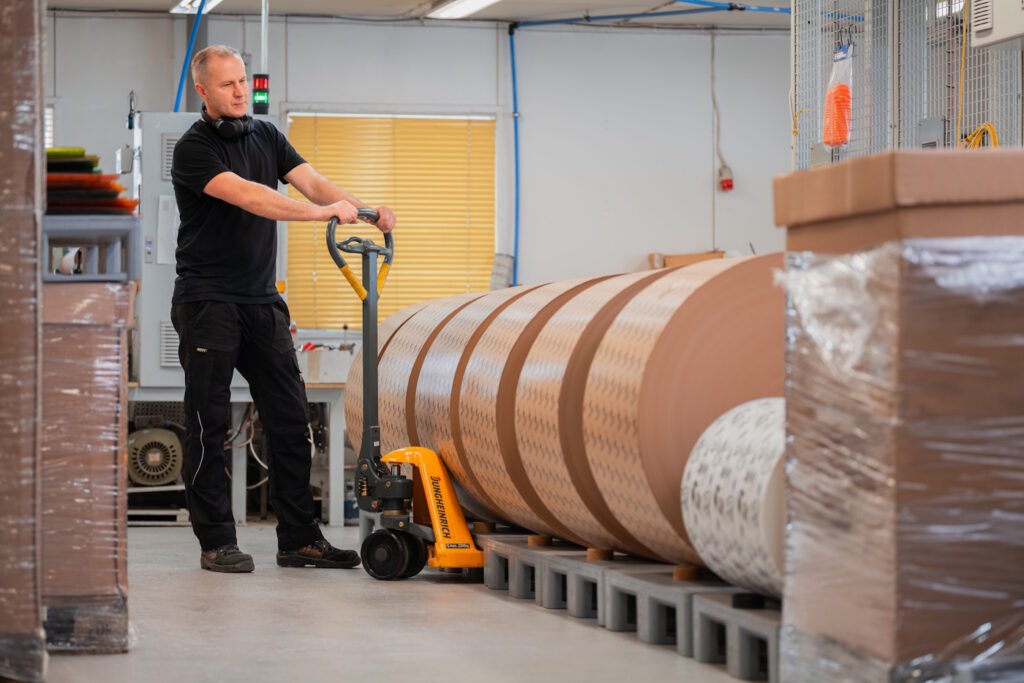
Image: Carccu
A major change in European packaging law is now under way. The EU’s Packaging and Packaging Waste Regulation (PPWR) began to apply across the European Union on 12 August 2026, bringing packaging materials, recyclability, waste prevention, chemical content, reuse and labelling under a common regulatory framework.
Carccu®, a Finnish paper packaging manufacturer and flexographic printing house that supplies customers across European and international markets, sees these changes as part of a broader development in which materials, traceability, documentation and regulatory compliance are becoming increasingly interconnected.
The regulation therefore changes the context in which packaging is designed and sourced: performance remains essential, but businesses must increasingly consider what packaging contains, how much material it uses, how it can be recycled and what evidence follows it through the supply chain.
One regulation for packaging across the EU
At the heart of that change is the move towards a common regulatory framework. The PPWR, formally Regulation (EU) 2025/40, replaces the Packaging and Packaging Waste Directive that had been in force for more than 30 years and generally became applicable on 12 August 2026.
Its scope reaches across the packaging life cycle. Alongside requirements already applying in 2026, later stages introduce more detailed rules on design for recycling, recycled content, labelling, unnecessary packaging, empty space, reuse and certain single-use formats. Businesses therefore face an evolving regulatory timetable rather than a single change completed in August.
Carccu® CEO Lasse Borg sees the changing framework as reflecting a broader shift in how responsibilities are distributed between companies:
“Many customers and manufacturers do not understand that in the future, responsibilities will run both ways in the value chain – up and down. Previously, they only flowed downwards,” Borg says.
That two-way responsibility becomes particularly relevant as companies need information from suppliers while also passing compliance information on to customers. Some of the requirements making this increasingly important are already tangible – particularly where packaging comes into contact with food.
PFAS restrictions have already arrived
One immediate change concerns substances used in food-contact packaging. New PPWR limits for per- and polyfluoroalkyl substances, or PFAS, took effect on 12 August 2026. Meanwhile, the transition period for the EU ban on bisphenol A (BPA) in food-contact materials had ended the previous month.
Because PFAS has been used to provide resistance to grease and water, their restriction connects chemical compliance directly with packaging performance. For paper applications, however, grease resistance can also be achieved without fluorinated substances: parchment-style papers can use a tightly compacted cellulose-fibre structure, while other products can use PFAS-free barrier solutions.
Food-contact applications are only one part of a much wider paper-packaging field. Carccu®’s packaging-related range, for instance, extends from baking, greaseproof, parchment, deli and cheese papers to paper bags, kraft papers, wrapping and flower wrapping papers, tissue paper and newsprint paper. Although these applications place different demands on materials, the PPWR brings questions of composition, recyclability and documentation into packaging decisions across the sector.
Chemical composition is therefore one part of a larger design question: alongside what a package contains, the new framework directs attention towards how its structure will behave after use.
Recyclability starts at the design stage
This brings recyclability into the process much earlier. All packaging placed on the market must be recyclable under the PPWR, while more detailed design-for-recycling criteria follow later in the implementation timetable.
As a result, coatings, labels, sleeves and multiple layers need to be considered not only for their functions but also as parts of the material combination that eventually enters a recycling stream.
Printing, in turn, can form part of that same design equation. Flexographic printing, which transfers ink directly onto paper and is used with water-based inks on paper substrates by manufacturers such as Carccu®, can provide branding, instructions or other information without a separate label where the application allows. In this respect, printing is subject to the same broader consideration as coatings, labels and other additions: each element has to fulfil its required function while also being considered as part of the packaging structure and its intended end-of-life route.
Those functions naturally vary. Food packaging may require grease or heat resistance, a paper bag sufficient strength, and wrapping used for retail, floristry or protective purposes its own properties. The PPWR does not remove those differences; rather, it requires them to be considered alongside recyclability.
Yet what happens after use is only one side of the waste question. The other is how much packaging enters the system in the first place.
Reducing waste means looking at how much is used
While recyclability concerns packaging after use, waste prevention starts earlier. The PPWR therefore also targets unnecessary packaging and introduces measures concerning empty space, reuse and certain single-use formats.
This brings ordinary design choices such as dimensions, layers, labels and protective material into focus. Packaging must still perform its intended function, but the amount and complexity of material used become part of the equation.
Here too, function matters. A paper bag, a grease-resistant sheet, flower wrapping and paper used to protect or separate products cannot simply be substituted for one another. The underlying question, however, is the same: can the necessary function be achieved without unnecessary material or complexity?
Material and design choices alone do not establish compliance. Businesses also need information that allows those choices to be documented and verified.
Compliance increasingly needs evidence
Manufacturers need evidence from suppliers, while customers further down the chain may need corresponding information from packaging manufacturers. This is the practical documentation dimension of the two-way responsibility described earlier.
In practice, meeting these requirements involves several forms of documentation and verification. At Carccu®, PFAS and heavy-metal limits are verified through the supply chain, food-contact requirements are covered by Declarations of Compliance, and the origin of virgin certified fibre is documented through FSC® Chain of Custody and PEFC Chain of Custody certification, alongside ISO 9001 and ISO 14001 quality and environmental management systems.
Such information may originate several stages upstream before being needed downstream. Documentation and traceability therefore allow relevant information to accompany packaging through the value chain.
Moreover, that information does not necessarily relate to the PPWR alone: a single packaging product may sit at the intersection of several regulatory requirements.
Packaging rules do not operate in isolation
The changes taking effect in summer 2026 demonstrate this overlap. PPWR requirements include the new PFAS limits, while the transition period for the BPA ban in food-contact materials ended in July and existing EU food-contact requirements continue to apply.
For food-contact papers, intended use and chemical compliance therefore have to be considered together with the wider packaging framework. In forest-based packaging, raw-material traceability adds another documentation dimension. The practical task is to identify which requirements apply to a particular packaging product and ensure that the necessary information supports it.
This interaction also helps explain why the PPWR transition extends beyond its August 2026 application date.
2026 is the beginning, not the finishing line
Although 12 August 2026 is a major date for the PPWR, implementation continues beyond it. More detailed requirements will take effect in stages, meaning that manufacturers, retailers and packaging buyers will need to follow the developing framework while making decisions about products that may remain in use for years.
Taken together, the changes point towards a more integrated way of assessing packaging. Composition affects performance and chemical compliance; structure influences recyclability; material quantity matters for waste prevention; and supply-chain information is needed to demonstrate compliance. Under the PPWR, these increasingly become parts of the same packaging decision.
For businesses, the practical consequence is an ongoing need to adapt as the regulatory framework develops. That provides a direct link between the PPWR transition and Borg’s broader view of operating in a changing international environment:
“When we do our best, I trust that it will be enough; we are capable of rapid changes, so we can keep pace with the world,” he says.
Follow Euro Weekly News on Google News
Get breaking news from Spain, travel updates, and expat stories directly on your Google News feed.
Follow on Google NewsSign up for personalised news
Subscribe to our Euro Weekly News alerts to get the latest stories into your inbox!
By signing up, you will create a Euro Weekly News account if you don't already have one. Review our Privacy Policy for more information about our privacy practices.




Nicola EWN
Nicola is a writer and strategist working across culture, media, and digital editorial. With broad industry experience, she helps brands and publications shape compelling narratives and engaging online content.
Comments