Spain’s Transport Minister Óscar Puente resigns after 115 deaths in two Spanish train disasters
By Molly Grace • Published: 03 Nov 2026 • 21:56 • 3 minutes read
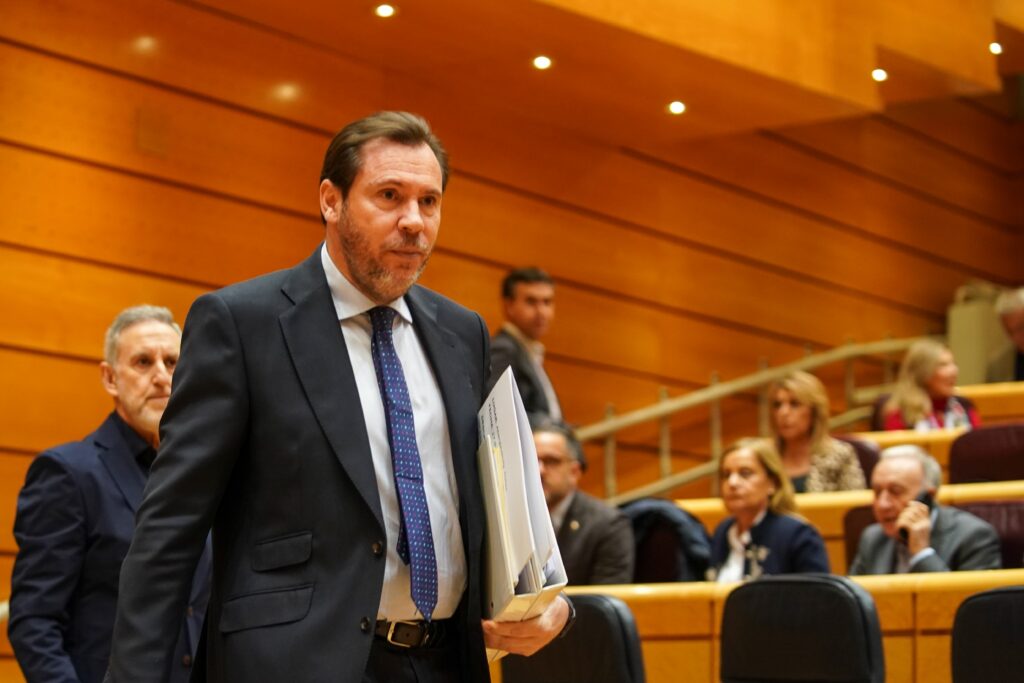
Puente's appearance in Congress had become a major political test. Photo credit: Gil Corzo/Shutterstock
Spain’s railway passengers have been left with fresh questions about the safety of the country’s high-speed network after Transport Minister Óscar Puente announced his resignation following two devastating train disasters that claimed 115 lives in less than a year. His departure comes after mounting pressure from opposition parties and several of the Government’s parliamentary allies, with families of the victims still waiting for answers about how the latest collision could have happened.
A long awaited resignation
Puente announced his resignation on Tuesday evening, November 3, at the end of his appearance before the Permanent Deputation of Congress, where he had spent more than four hours answering questions about the Urda railway disaster. Explaining his decision, he said: “A Transport Minister in a country like Spain cannot remain in office after two accidents of this severity in less than a year.
However different they may be, and whether or not he has direct responsibility for them, it is a matter of political dignity, consistency and empathy with the victims.” He also confirmed that he would not stand as the PSOE’s lead candidate for Valladolid in the November 29 general election.
Two railway disasters in less than a year
The latest tragedy occurred near Urda, in Toledo, on October 28, when two high-speed trains collided, killing 69 people and leaving more than 200 injured. The accident followed another devastating collision in January near Adamuz, Córdoba, where 46 people died. Together, the two disasters have left 115 people dead and raised serious questions about the management, maintenance and safety of Spain’s high-speed railway network.
For passengers who regularly use the AVE and other high-speed services, the incidents have brought renewed attention to the systems designed to prevent trains from entering occupied sections of track. In the Urda collision, a signalling system failure caused several trains to stop. According to the account given by Puente, a controller at Adif’s Madrid control centre subsequently authorised a Renfe train to resume normal running despite an Iryo train remaining stationary ahead. Investigators estimated that the collision occurred at between 160 and 200 kilometres per hour. The precise circumstances remain under investigation.
Pressure from opposition and Government allies
Puente’s appearance in Congress had become a major political test, with the PP and Vox demanding his resignation alongside several parties that support the Government. PP spokesperson Ester Muñoz criticised his handling of the disasters and questioned whether explaining what had happened was enough when so many people had died. She also challenged the minister over the handling of information surrounding the accident.
Vox spokesperson Pepa Millán questioned how many more people would have to die before political responsibility was accepted. The criticism was not confined to the opposition. Sumar, ERC and the PNV also called for Puente to leave his post, arguing that political responsibility did not necessarily depend on establishing personal blame for the collision. Junts criticised years of railway investment priorities, arguing that maintaining existing infrastructure should have received greater attention.
What happens to Spain’s railway network now?
Before announcing his resignation, Puente outlined several measures intended to prevent another disaster. Among them was a reduction in the number of services operating on the Madrid-Sevilla line until a safety review had been completed and the delayed European Rail Traffic Management System (ERTMS) had been installed.
The Government also plans to introduce a requirement for two controllers to validate instructions when signalling systems fail, alongside a speed limit of 40 kilometres per hour when drivers have to rely on visually checking the track ahead. Additional recruitment and improvements to working conditions in railway control centres are also planned.
Another proposed measure involves artificial intelligence technology to monitor conversations between train drivers and controllers, identifying unusual situations that could indicate a developing safety problem. The Government has also approved an emergency assistance package worth €30 million for victims and their families. It includes direct payments of over €72,000,00 for each fatality, alongside financial assistance for injured passengers.
Puente also withdraws from election race
His resignation was accompanied by another political decision. Puente confirmed that he would not stand as the PSOE’s lead candidate for Valladolid in the November 29 general election. His departure follows an extraordinary day in which he initially defended his right to remain in office, faced criticism from across the political spectrum and ultimately decided to step aside.
For the families of the 115 people killed in the two railway disasters, however, the departure of the minister does not answer the questions surrounding either collision. The investigations into what happened in Urda and Adamuz remain crucial to establishing how the failures occurred, whether warnings were missed and what must change to prevent another tragedy.
Follow Euro Weekly News on Google News
Get breaking news from Spain, travel updates, and expat stories directly on your Google News feed.
Follow on Google NewsSign up for personalised news
Subscribe to our Euro Weekly News alerts to get the latest stories into your inbox!
By signing up, you will create a Euro Weekly News account if you don't already have one. Review our Privacy Policy for more information about our privacy practices.
Molly Grace
Molly is a British journalist and author who has lived in Spain for over 25 years. With a background in animal welfare, equestrian science, and veterinary nursing, she brings curiosity, humour, and a sharp investigative eye to her work. At Euro Weekly News, Molly explores the intersections of nature, culture, and community - drawing on her deep local knowledge and passion for stories that reflect life in Spain from the ground up.
Comments