Spain braced for Easter traffic chaos as DGT rolls out biggest road crackdown of the year
By Adam Woodward • Updated: 26 Mar 2026 • 14:24 • 3 minutes read
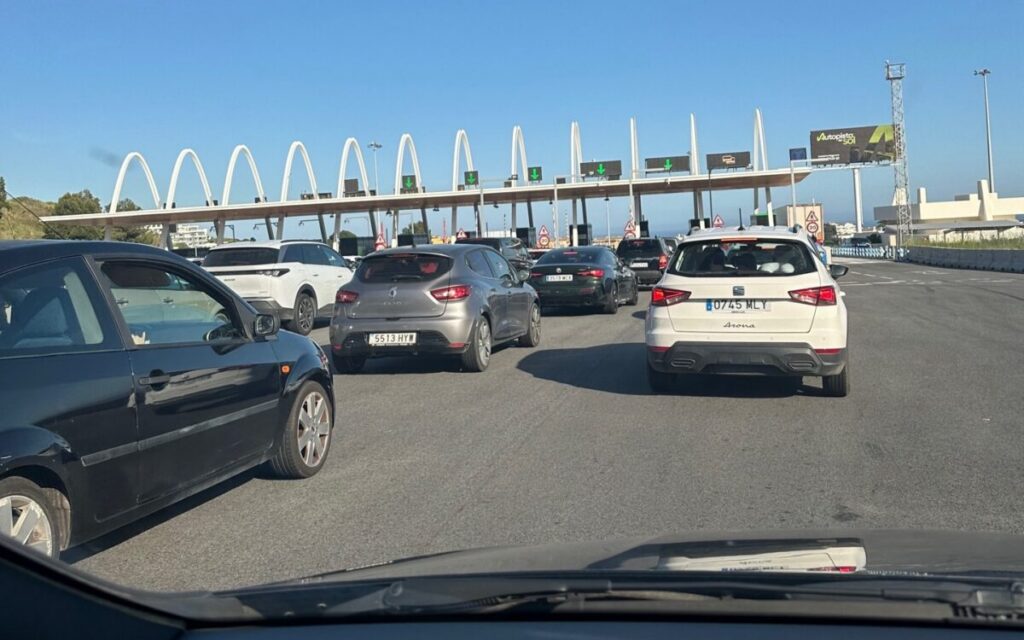
Tired drivers arriving at the AP-7 toll. Credit: fuengirolasequeja
Millions of drivers will soon flood Spanish motorways as Easter week holidays begin, the first chance for many inland to get to the coast since Christmas. As every year, this is causing the Spanish traffic’s governing body, Dirección General de Tráfico (DGT) and Guardia Civil to launch their toughest surveillance operation of the season. Authorities want to prevent accidents during this high-risk period when tired families head south for sun, processions, and beach breaks. With trouble on high-speed train routes and risks in the Middle East, the government is predicting many more will be driving to Spain’s coast this Semana Santa.
Why intensified controls and what drivers face
Heavy outbound flows from major cities towards coastal destinations will create bottlenecks, especially on routes feeding Alicante, Murcia, Almeria, and Malaga. Inbound returns later will clog approaches back to urban centres. Historical data from previous Easters shows prolonged queues on key arteries like the A3, A4, A-7, A-70, and AP-7, with delays stretching several hours during peak times.
The DGT will activate the full Operación Especial Semana Santa 2026 to manage the increase safely. Officers will deploy every tool available: fixed and mobile speed cameras, drones for aerial oversight, helicopters, and hidden surveillance vehicles that catch mobile phone use or seatbelt violations without warning. Roadside checks will intensify, with camouflaged Guardia Civil vehicles patrolling unexpectedly. Agents plan to inspect documents, tyre pressures and tread depth, vehicle condition, alcohol and drug levels, plus driver fatigue signs.
Drivers are also being warned about a €200 fine for failing to form an emergency corridor during traffic jams, see what the rule means and how to avoid it.
Extra controls will target speed, distractions, and overtaking risks on busy stretches. Motorways leading to the eastern and southern coasts will bear the brunt, where second homes and tourist spots draw the heaviest traffic.
Key dates for the operation
Checks will ramp up in phases. The first Operación Salida (operation exit) runs from 3pm on Friday, March 27, until midnight on Sunday, March 29, covering the pre-Easter weekend. A larger second phase kicks off at midday on Wednesday, 1 April, and covers Thursday, 2 April, with the main Operación Retorno (operation return) taking place on Saturday, 4, and Sunday, 5 April, ending at midnight on Sunday, 5 April.
Traffic will build steadily from late Friday 27 March, peak midweek, then reverse sharply over the final weekend of the Easter week. Coastal arrivals should brace for exhausted drivers after long hauls, increasing risks of rear-end collisions or loss of control near beaches and resorts.
Worst-hit areas on the coast
Congestion will hit hardest around Alicante and the Costa Blanca, Murcia’s coastal routes, Almeria’s A-7 corridor, and Malaga’s busy approaches via the A-7 and AP-7. These popular destinations always fill up over Easter week and therefore see the longest tailbacks as families converge on apartments and hotels. Inland links feeding these zones, such as the A-31 or A-92, may also snarl up.
Police will wait at strategic points to pull over vehicles for full checks on papers, lights, tyres, and loads. Random breath tests and drug screenings will feature prominently.
What to watch out for on the road and when over Easter 2026
When does the heavy traffic really start?
Outbound pressure begins Friday afternoon, 27 March. A worker in Madrid, for example, will probably finish around 2 pm and head off for the coast with family in tow between 4 and 5 pm. For a journey to Malaga, for example, they would probably arrive around 10pm if traffic is smooth.
Will there be more speed traps than usual?
Yes. DGT always combines permanent cameras with mobile units, drones, and unmarked cars for round-the-clock enforcement.
Should drivers check before the rush begins?
Officers will scrutinise tyre condition, valid insurance, ITV certificates, and overall driver fitness during roadside stops. Expect more roadside alcohol and drugs tests, especially at night, as well as rerouted traffic to manage flows. Privately run toll roads will no doubt crank up the price of passing on quicker routes, such as the AP-7 Costa del Sol section. Be sure to check maps for inner-town restrictions, such as low-emissions zones.
People already living on the Costa Blanca, Costa Calida, or Costa del Sol will notice noticeably busier local roads from late March onwards. Supermarkets, beaches, and procession routes may fill quickly with arrivals who have just driven long distances while battling traffic and enforcement.
Those planning short breaks should factor in extra journey time and prepare vehicles thoroughly. Safe, patient driving remains the best way to enjoy Easter without fines or incidents. DGT is encouraging everyone to respect limits, avoid distractions, and arrive fully awake.
Sign up for personalised news
Subscribe to our Euro Weekly News alerts to get the latest stories into your inbox!
By signing up, you will create a Euro Weekly News account if you don't already have one. Review our Privacy Policy for more information about our privacy practices.



Adam Woodward
Adam is a writer who has lived in Spain for over 25 years. With a background in English teaching and a passion for music, food, and the arts, he brings a rich personal perspective to his work at Euro Weekly News. As a father of three with deep roots in Spanish life, Adam writes engaging stories that explore culture, lifestyle, and the everyday experiences that shape communities across Spain.
Comments
Steve B
25 March 2026 • 19:37The world is becoming more and more pathetic and this is solely designed to make money from fines, imo.
I’m all in favour of safety but things are going way too far.
All this “vehicle safety” like lane assistance especially, is ridiculous and massively distracting.
Comments are closed.