Buying a used imported car in Spain? That shiny new number plate could be hiding a 15-year-old car
By Adam Woodward • Published: 28 Jul 2026 • 10:19 • 2 minutes read
Second-car showroom. Credit: Shutterstock
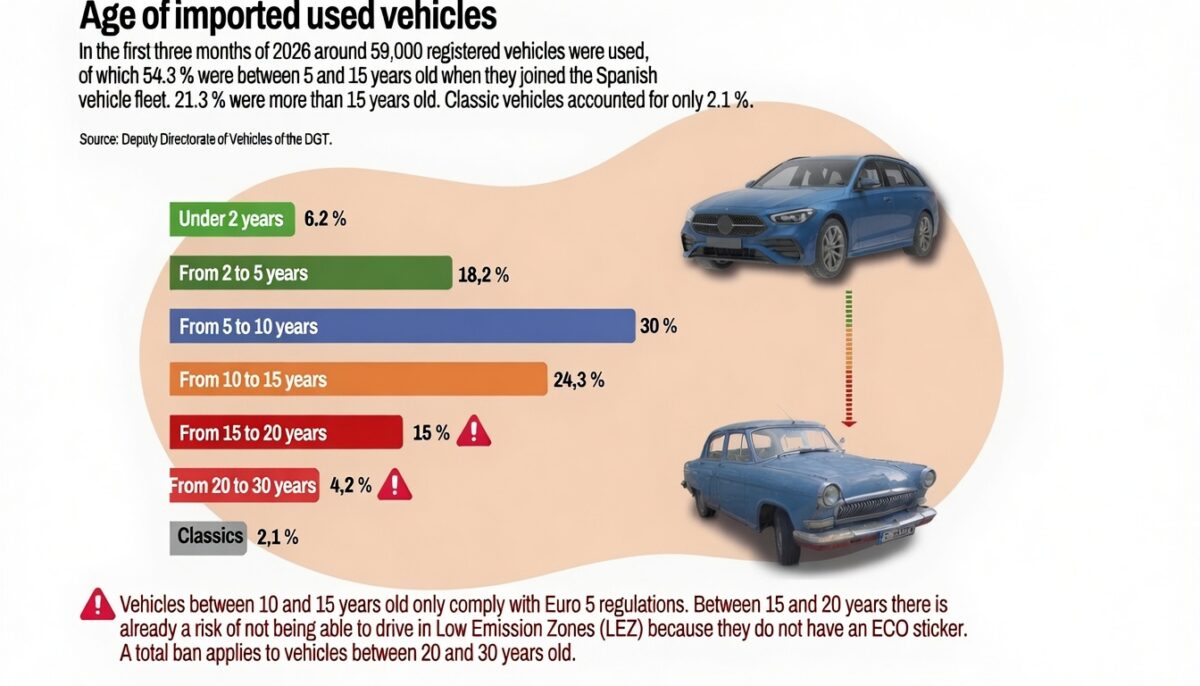
Spain’s vehicle fleet famously is getting even older as thousands of “new” registrations appear every month. Almost 11 per cent of all new registrations in the first quarter of 2026 were used cars, vans and SUVs imported mainly from other European countries. Those 55,241 vehicles averaged 10.5 years old, and more than one in five had already passed 15 years. Once they receive Spanish plates they count as brand-new entries in the official register, yet their real working life is already well advanced.
Where these “new” plates really come from
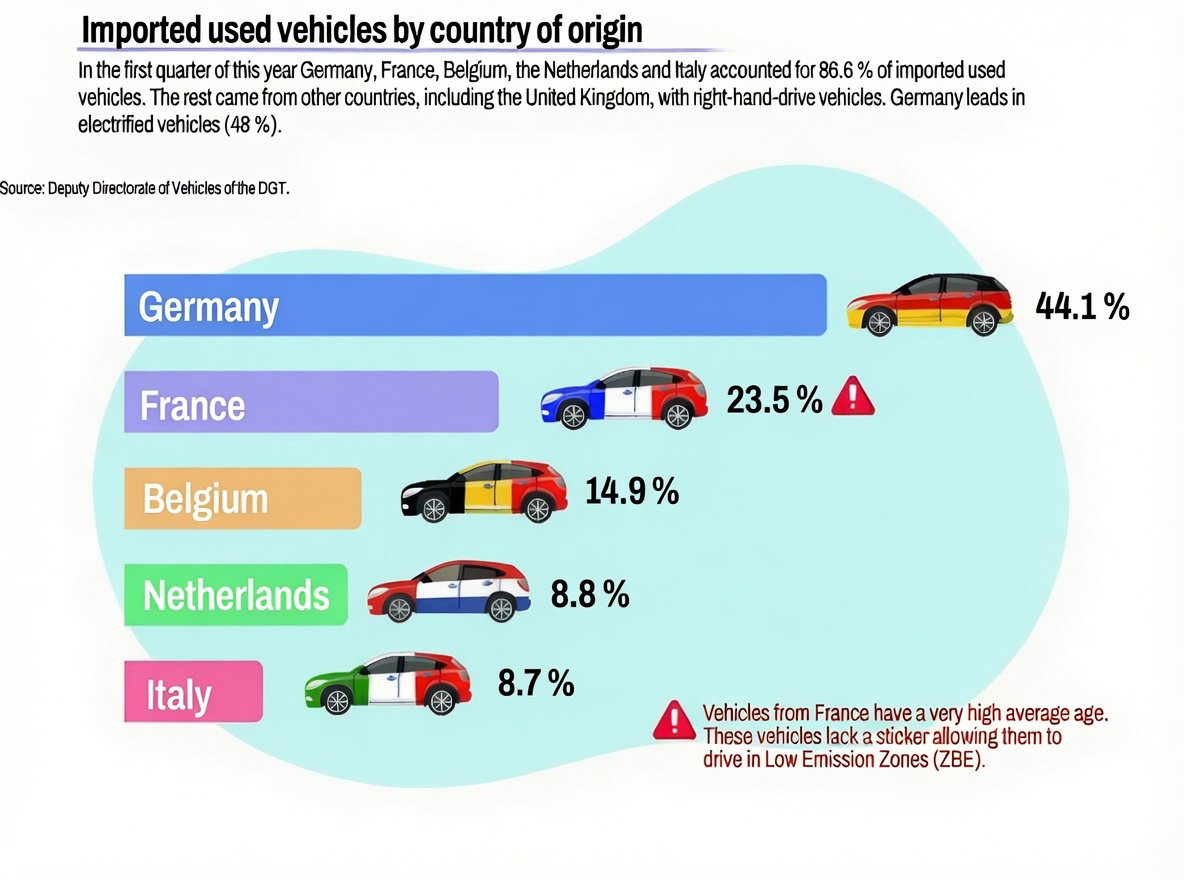
Germany supplies 44 per cent of the used imports and usually sends cleaner, better-equipped cars that meet Euro 6 rules. France often ships much older models that struggle to qualify for any environmental sticker at all. Belgium, the Netherlands and Italy make up another large share and tend to sit in the middle of the age range. Across the board, 86.6 per cent of these vehicles arrive from inside the European Economic Area, so free-movement rules let them receive Spanish registration without extra barriers.
Passenger cars among the imports average at 10.4 years old, vans 8.4 years and 4×4 or SUV models 9.4 years. Around 30 per cent fall into the five-to-ten-year band and still meet Euro 5 or Euro 6 standards. The remaining 43.2 per cent sit between ten and thirty years old. Those older examples cannot claim an ECO or CERO sticker and face growing restrictions in low-emission zones of any town with more than 50,000 residents.
Safety and sticker problems for older imports
These days, modern cars have to carry advanced driver-assistance systems that cut collision risk. Many of the imported used models lack those features by a long way. Coral Sevillano, deputy director of vehicles at the DGT, says that an import built to Euro 5 standards can improve safety if it replaces a Spanish car from 2005, yet the same purchase can also block someone from buying a brand-new vehicle packed with the latest mandatory aids. Incomplete service records and unknown previous inspection history add even more uncertainty for buyers.
What to check before you buy
Request the full DGT vehicle report before any money changes hands. That document shows the true first-registration date rather than the date the Spanish plate was issued. Go for German Euro 6 cars under nine years old when possible. Confirm the environmental sticker status and check whether the car will still enter local low-emission zones in the years ahead. Annual ITV costs rise once a vehicle passes ten years, so factor those bills into the running total.
Why cheaper imports are still important for many drivers
Lower-income households often rely on these older European cars because they replace even older Spanish vehicles that would otherwise stay on the road. Economic pressure and uncertainty about future fuel and technology choices keep demand high. Stronger scrappage incentives would speed genuine renewal, yet for now the second-hand import route remains one of the few affordable ways most drivers can stay mobile. A fresh Spanish number plate may look newer, but the car underneath can still be fifteen years old or more.
Follow Euro Weekly News on Google News
Get breaking news from Spain, travel updates, and expat stories directly on your Google News feed.
Follow on Google NewsSign up for personalised news
Subscribe to our Euro Weekly News alerts to get the latest stories into your inbox!
By signing up, you will create a Euro Weekly News account if you don't already have one. Review our Privacy Policy for more information about our privacy practices.





Adam Woodward
Adam is a writer who has lived in Spain for over 25 years. With a background in English teaching and a passion for music, food, and the arts, he brings a rich personal perspective to his work at Euro Weekly News. As a father of three with deep roots in Spanish life, Adam writes engaging stories that explore culture, lifestyle, and the everyday experiences that shape communities across Spain.
Comments