Spain processionary caterpillar warning as Rincon de la Victoria treats 700 pine trees
By Adam Woodward • Published: 25 Aug 2026 • 17:56 • 1 minute read
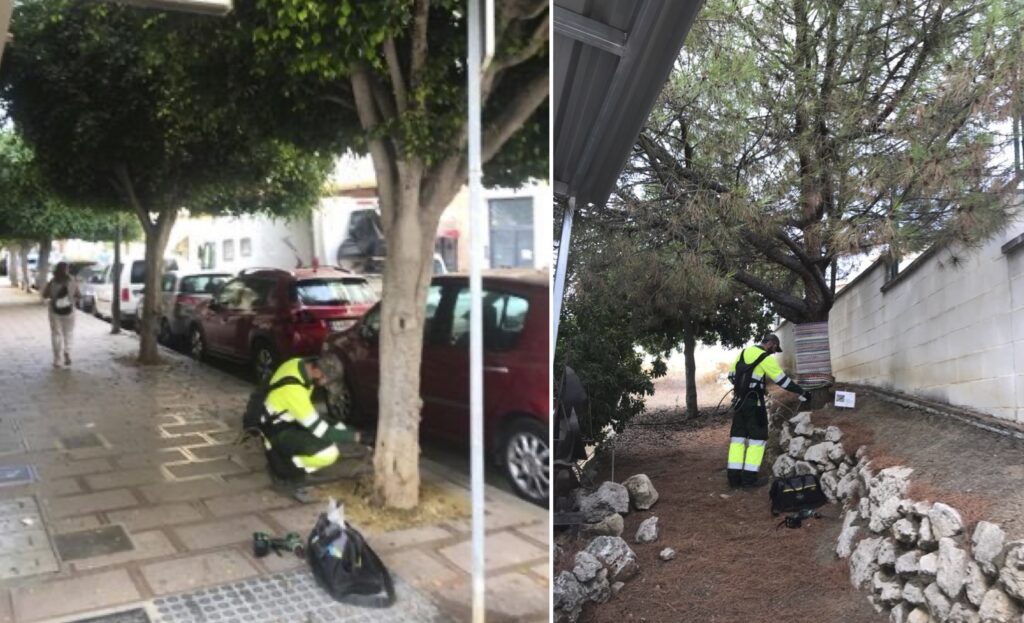
Council treating pine trees in Rincon de la Victoria against caterpillars. Credit: Ayto
Dog owners and families in Malaga Province are being encouraged to take extra care around pine trees as processionary caterpillar season gets underway.
Rincon de la Victoria has launched its annual prevention campaign against the pine processionary caterpillar (Thaumetopoea pityocampa), with around 700 additional pine trees being treated in public areas, including Parque Victoria and around the Benagalbon football ground.
Top priority is being given to schools, roundabouts, public parks and children’s play areas, where contact with the caterpillars could put people and pets at risk.
Treatment is being carried out using endotherapy, which involves injecting an authorised product directly into the tree’s vascular system rather than spraying chemicals into the surrounding air.
Why dogs are particularly vulnerable
Curious dogs are especially at risk because they naturally investigate strange objects with their noses and mouths. Processionary caterpillars can release thousands of tiny irritating hairs, which may cause intense swelling and inflammation.
A dog that has sniffed, licked or eaten one can quickly develop excessive drooling, a swollen tongue or mouth, vomiting and breathing difficulties. Severe cases can result in tissue damage or potentially fatal airway problems.
Euro Weekly News has previously reported warnings about processionary caterpillars in the Axarquia area, while earlier coverage has also examined the threat to dogs across Malaga Province.
What to do after contact
Anyone who touches a processionary caterpillar should avoid rubbing the affected skin, wash it thoroughly with water and seek medical advice if symptoms are severe or breathing becomes difficult. Contact with the eyes requires careful rinsing with plenty of water.
Dogs need faster action. Move the animal away from the area, avoid touching the affected parts with bare hands, gently rinse the mouth or other affected areas with plenty of water without rubbing, and contact a vet immediately. Veterinary guidance stresses that suspected contact should be treated as an emergency.
Keeping dogs on a lead near pine trees and avoiding any caterpillar processions or nests remains the safest option.
Follow Euro Weekly News on Google News
Get breaking news from Spain, travel updates, and expat stories directly on your Google News feed.
Follow on Google NewsSign up for personalised news
Subscribe to our Euro Weekly News alerts to get the latest stories into your inbox!
By signing up, you will create a Euro Weekly News account if you don't already have one. Review our Privacy Policy for more information about our privacy practices.




Adam Woodward
Adam is a writer who has lived in Spain for over 25 years. With a background in English teaching and a passion for music, food, and the arts, he brings a rich personal perspective to his work at Euro Weekly News. As a father of three with deep roots in Spanish life, Adam writes engaging stories that explore culture, lifestyle, and the everyday experiences that shape communities across Spain.
Comments