Guardia Civil busts black market census scam: Big business of migrant economy
By Adam Woodward • Updated: 05 Sep 2026 • 13:23 • 4 minutes read
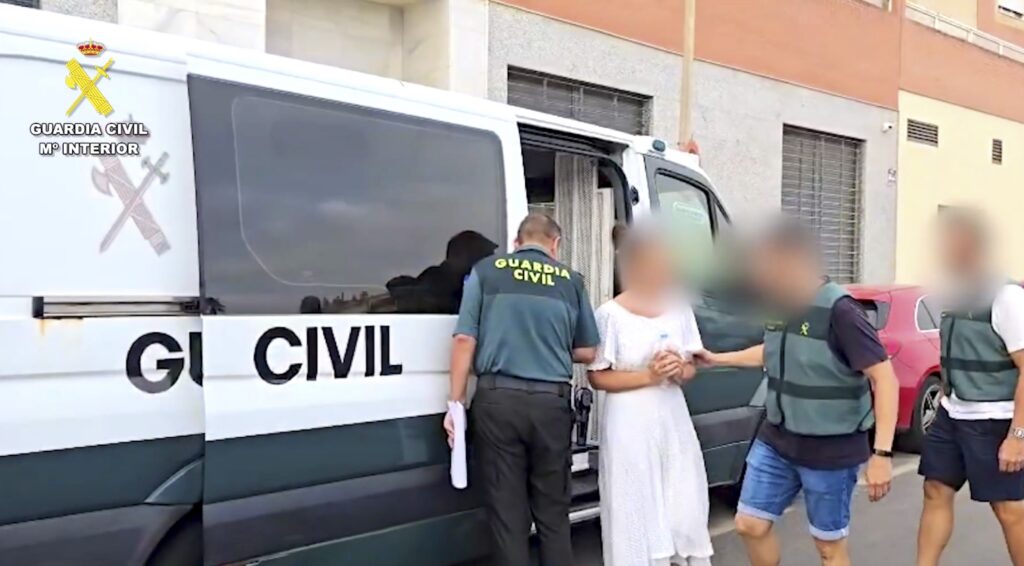
Illegal 'padron' racket taken away by police. Credit: GC X
Police in El Ejido have rounded up 14 people after a paper trail of invented home addresses in Roquetas de Mar in the Almeria province. Operation Costa, run by the Local Immigration and Borders Brigade, treats the local municipal register as what it has become for many newcomers: a product you can buy for a hefty price. Owners of two houses, a go-between who booked town-hall slots, and 11 migrants who used the certificates in residence files now sit on document-forgery files.
Proof of a roof over your head is the first step in Spain’s residency machine. Without an “empadronamiento” (census entry), school places, health cards and many claims to legal residency through the so-called “arraig” method stall. It’s the proof many agencies need to demonstrate that you live in the country. That bottleneck has a price list.
Investigators say clients handed over as much as €600 to the gang to appear on a padrón they never slept under. Two foreigners already questioned in a separate job admitted they had paid to be listed at a house they never occupied, then fed those papers into Extranjeria. Officers later found seven foreign names on one property in Aguadulce, Roquetas de Mar, with the owner’s say-so. A second house in Almeria city, owned by the first suspect’s mother, carried four more names. Eleven of those listed now face charges for using irregular registrations in official residence procedures.
Similar tricks are not new on the Spanish Costa. Euro Weekly News has already reported a Valencia case where 18 people were stacked onto one address for up to €800 each and an earlier Almeria probe that used a dead person’s identity. Readers who actually live here still need a genuine listing; our guide to keeping your padron current is worth a look if you are not sure yours is.
Why a town-hall stamp now sells like contraband
#OperacionesGC | 18 detenidos por 188 empadronamientos fraudulentos en Roquetas de Mar (#Almería)
📍 Operación TABULA RASA: Desarticulados 3 grupos criminales que presuntamente cobraban entre 800 y 2.500 € a cambio de facilitar el padrón.
📄 Los investigados presuntamente… pic.twitter.com/wfdATC1vzG
— Guardia Civil (@guardiacivil) September 5, 2026
Spain spent spring 2026 trying to pull hundreds of thousands of people already in the country onto legal footing. Queues spilled onto pavements. Applicants slept outside Almeria offices to hold their place. Appointment touts moved in. Brokers selling fake contracts and fake census entries filled the gaps the state left. Demand did not vanish when the extraordinary window closed at the end of June; it just went back into cash.
Irregular arrivals by sea and land are only part of the picture. Spain’s Interior Ministry recorded 12,138 sea and land arrivals from 1 January to 30 June 2026, down on the same stretch of 2025, while the Western Mediterranean corridor from Algeria stayed busy. Then late July blew a hole in those quieter figures: tens of thousands crossed into Ceuta in two days. Italy and Spain later put extra checks on each other’s travellers. Europol-backed raids have already smashed speedboat gangs running from Algeria to Almeria. Smugglers even touted a UK-to-Spain package with “guaranteed citizenship” after the regularisation headlines. Greece, Italy and the Canaries still take their share of the same routes. Papers, not just boats, are the commodity once people are ashore.
Official tallies are with the Ministry of the Interior’s irregular immigration bulletins and UNHCR’s Spain arrivals notes. Frontex route maps tell the same story in colder language: Algeria, Morocco, Mali and Senegal keep turning up on the western approaches.
Cheap labour on northern building sites
A census certificate is only half the trade, and there is big money to be made off the backs of those so-called “irregular migrants”. Guardia Civil officers in the north of Spain say they have pulled apart a labour ring that fed building sites in Asturias, Cantabria and the Basque Country with men who could not lawfully work. Operation Ambotan-Canapu has three company bosses in custody, two picked up in Vizcaya, one in Alava, and a fourth person under investigation in Alava. At least 41 foreign workers, five of them found in Vizcaya, were identified. Forty of the 41 had no legal status in Spain. Most carried someone else’s ID.
Some of those men had paid as much as €30,000 to reach Spain, often via Greece and Italy, and arrived already deeply in debt. Judicial Police first clocked the pattern last summer. A company with its money trail in Vitoria-Gasteiz and its main operator in Vizcaya gathered crews at points around Vitoria at dawn, then drove them hundreds of kilometres to sites. Distance from base meant inevitable weekday lodgings in Asturias and Cantabria; those flats are now part of the investigation file. Labour inspectors joined in February 2026. Workplace accidents followed. At least two injured men went to hospital and then lost their jobs as a result.
More than 70 officers and inspectors later hit 10 sites. Seven showed alleged labour breaches. Workers at first clammed up; several later said they had paid facilitators for the crossing and the job. Three searches in Vizcaya and Alava seized papers and phones. Santander’s courts now hold the case. Investigators have not closed the book.
Construction in Spain has long been short of bricklayers and site hands. That shortage is exactly what a gang selling “cheap” crews exploits: no contract, no Social Security, long vans, borrowed names. Many of Almeria’s greenhouses are often said to run on a similar bargain, as do kitchens and care homes across Europe. Legal foreign workers keep pensions and harvests moving. The black-market version keeps people frightened, injured and easy to exploit.
Check who’s on your padron at the local town hall
Homeowners in Roquetas de Mar, Aguadulce and Almeria city would do well to ask the town hall who is listed at their door. Anyone who finds strangers on their padron should tell the council and call 091 or 062. A €600 stamp may look like a shortcut. For the people who buy it, and for the sites that run on borrowed papers, it is just another invoice in a business that treats addresses and labour as stock.
Follow Euro Weekly News on Google News
Get breaking news from Spain, travel updates, and expat stories directly on your Google News feed.
Follow on Google NewsSign up for personalised news
Subscribe to our Euro Weekly News alerts to get the latest stories into your inbox!
By signing up, you will create a Euro Weekly News account if you don't already have one. Review our Privacy Policy for more information about our privacy practices.





Adam Woodward
Adam is a writer who has lived in Spain for over 25 years. With a background in English teaching and a passion for music, food, and the arts, he brings a rich personal perspective to his work at Euro Weekly News. As a father of three with deep roots in Spanish life, Adam writes engaging stories that explore culture, lifestyle, and the everyday experiences that shape communities across Spain.
Comments